
Ashadhi Ekadashi Wari 2025 at Shri Vitthal Rukmini Temple
Shri Vitthal Rukmini Temple is dedicated to Lord Vitthal (a form of Lord Krishna) and his consort, Goddess Rukmini. Located in Pandharpur, in Maharashtra, India, this temple attracts devotees throughout the year. The highest influx occurs when devotees participate during the Ashadhi Ekadashi festival that falls on the eleventh lunar day (Ekadashi) in the Hindu month of Ashadha (June–July). Devotees undertake a pilgrimage known as Ashadhi Ekadashi Wari (wari meaning pilgrimage in Marathi) to honor and express devotion to Lord Vitthal during the festival.
A large number of pilgrims, known as warkaris, undertake the Ashadhi Ekadashi Wari on foot in large processions referred to as dindi. The warkaris walk approximately 550 kilometers to arrive at the Shri Vitthal Rukmini Temple a few days before the Ashadhi Ekadashi festival.
This pilgrimage is a long and strenuous journey filled with weather-induced challenges. Since this pilgrimage occurs in June–July, during the monsoon season, warkaris often face heavy rainfall along the route. It comes as no surprise that many warkaris are in need of medical attention.
Sant Baljit Singh Ji, in his teachings, often emphasizes service to humanity. In one of his teachings, he said, “When we serve humanity, we serve anyone and everyone.” Inspired by his teachings, Vishav Manav Ruhani Kendra (VMRK) offers services during various pilgrimages and actively seeks new opportunities to extend service to devotees. This year, VMRK was grateful to the local administration for the opportunity to serve the large gathering of warkaris for the first time. In 2025, Ashadhi Ekadashi fell on July 6, and the local administration permitted VMRK to organize a free medical camp and provide ambulance services from July 2 to 7.
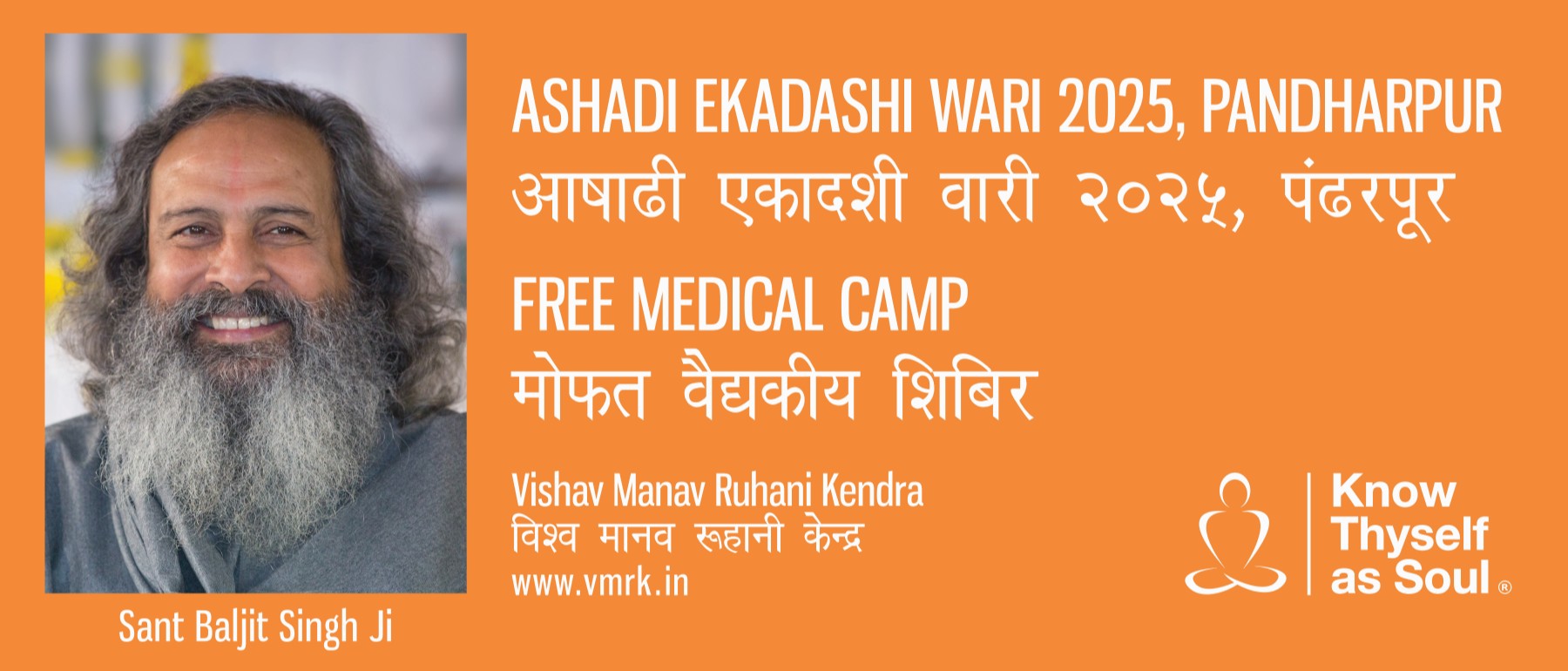
July 2–7, 2025
FREE MEDICAL CAMP 24 HOURS DAILY SERVED BY MEDICAL PROFESSIONALS ASSISTED BY VMRK VOLUNTEERS
PILGRIMS RECEIVED MEDICAL CARE FOR INJURIES AND AILMENTS SUFFERED DURING THE WARI
Site visit and preparations
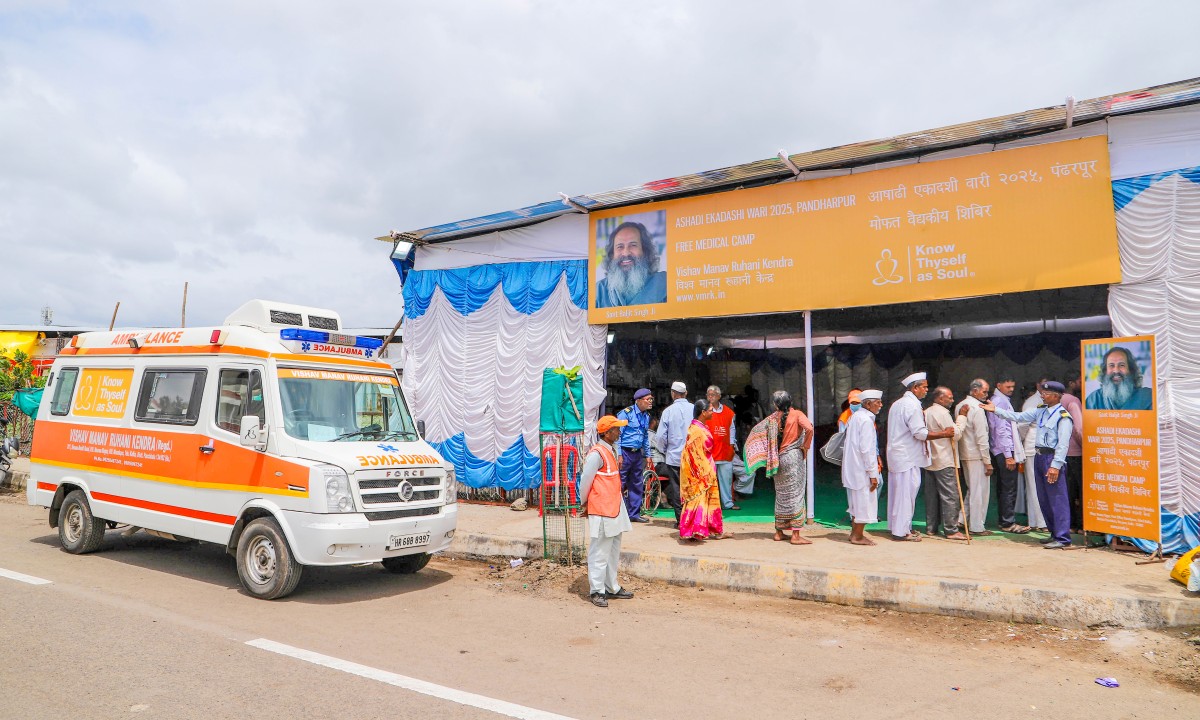
After receiving permission to serve the warkaris, VMRK started looking for a site nearest to the temple for the medical camp. Our volunteers found a suitable location 800 meters from the temple and arranged for a metal tent spanning 60 feet by 45 feet to be set up there. VMRK also arranged volunteer accommodation at another location approximately a kilometer from the medical camp.
Following this, VMRK volunteers at the Pimpalner center began sourcing and packing the necessary materials for the service. VMRK put out a call for volunteers from the nearby region who could offer services for six days. A large number responded, allowing VMRK to identify 55 volunteers organized into four teams: a medical team, a team to assist the medical staff, a reception team, and a food service team to prepare and serve meals to the VMRK volunteer teams.
On the afternoon of June 29, an ambulance departed early from Pimpalner center for Pandharpur. En route, it collected 24 boxes of medicines from another VMRK center. Meanwhile, volunteers at the Pimpalner center loaded all the packed materials, including utensils, food ingredients, and thin foam mattresses, onto a pickup truck. Late the next morning, this pickup truck, along with two cars and a team of 15 volunteers, departed for Pandharpur.
Arrival and setup
On June 30, a team of volunteers arrived at the medical camp site and began checking the tent setup and arranging the mats and tables. The remaining volunteers and the fleet of vehicles, including the ambulance, arrived the following day, on July 1. The volunteers spent the entire day preparing the medical camp, volunteer accommodation, and food service. At the medical camp, they stocked the medicine racks and positioned the banners.
24-hour medical services
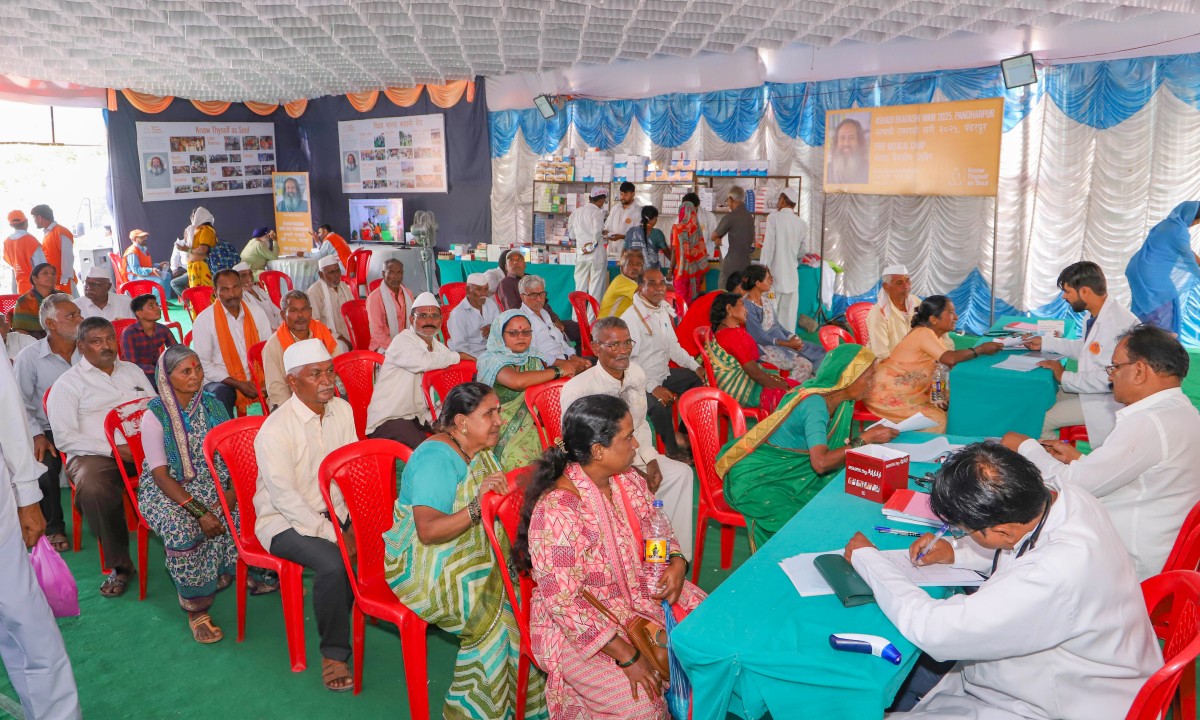
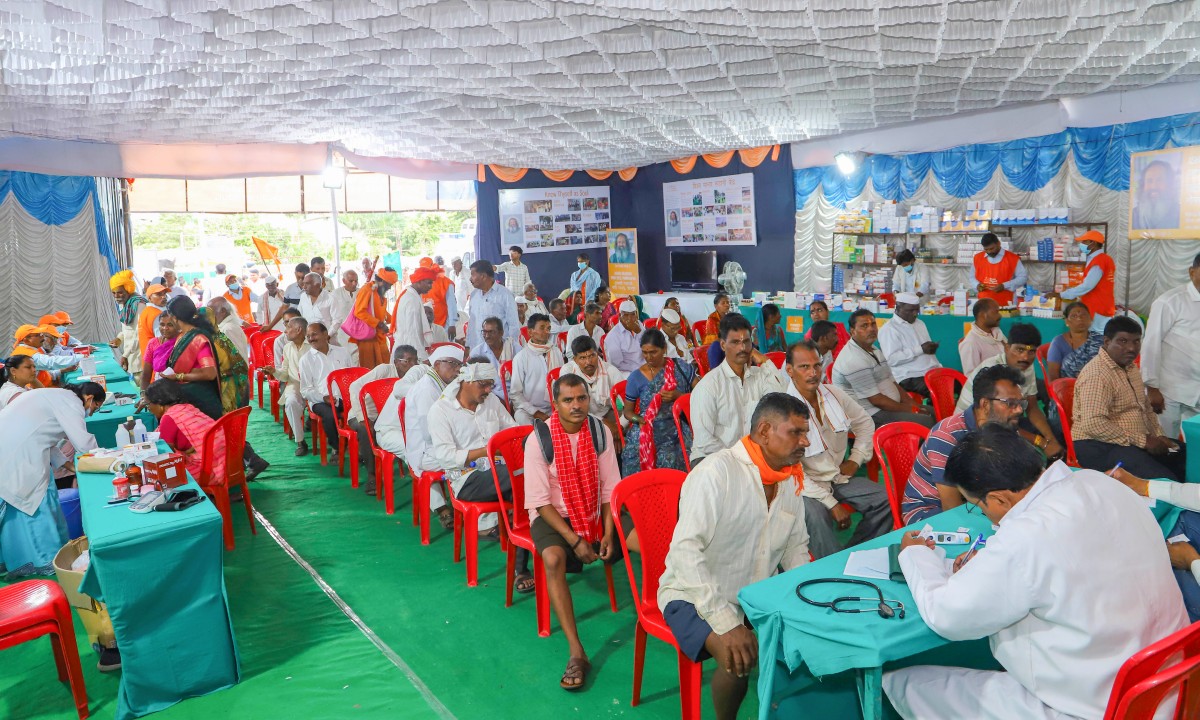
The medical camp became operational on July 2, staffed by a team of 4 doctors, 4 nurses, 2 pharmacists, 2 paramedical staff, and 25 volunteers. At the front of our camp, an ambulance was stationed on standby. This ambulance transported patients with severe health conditions to the nearest hospital for further diagnosis and treatment.
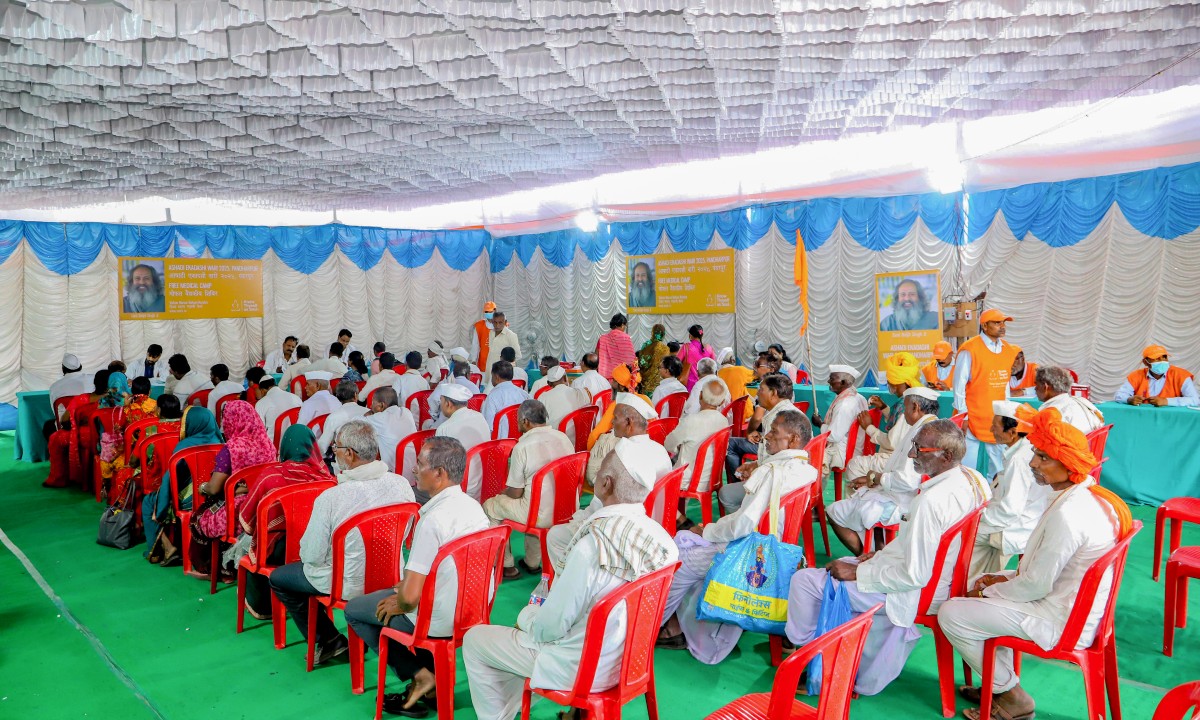
Several dindis passed the road adjacent to the camp so our volunteers used loudspeakers to inform the warkaris about the free medical services. Within the camp, devotees first registered as patients before waiting in the seating area. Then VMRK volunteers guided them to the next available doctor, giving priority to elderly devotees and those requiring immediate assistance.
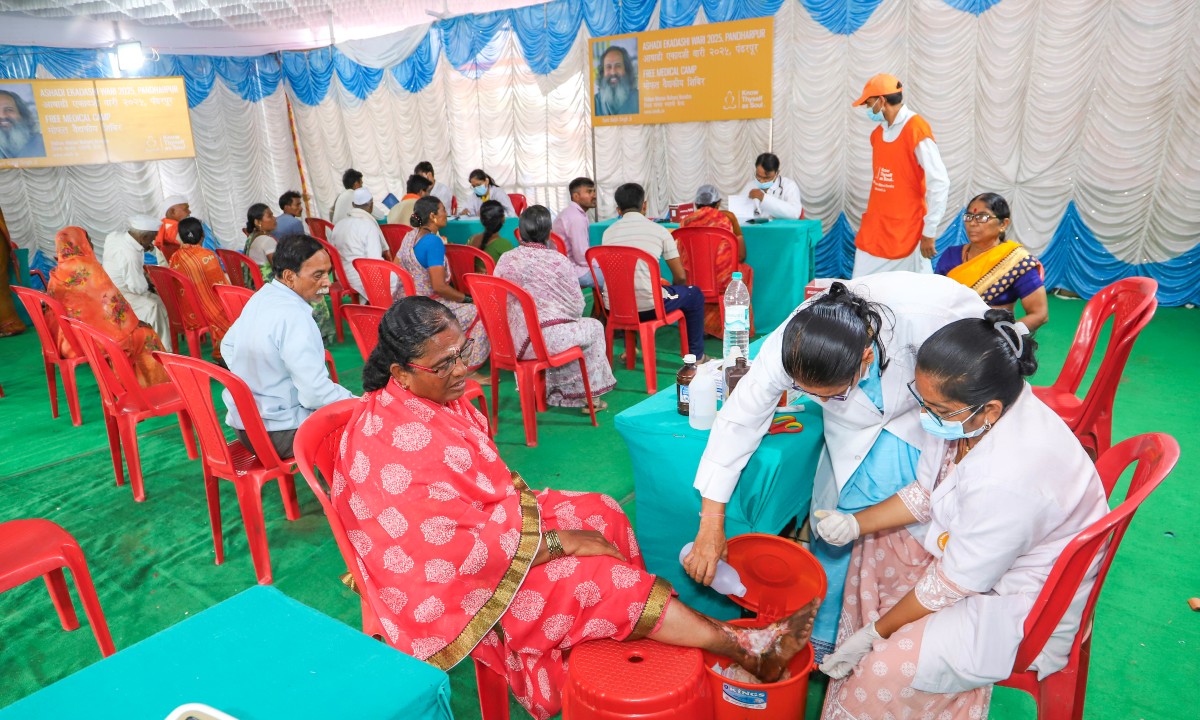
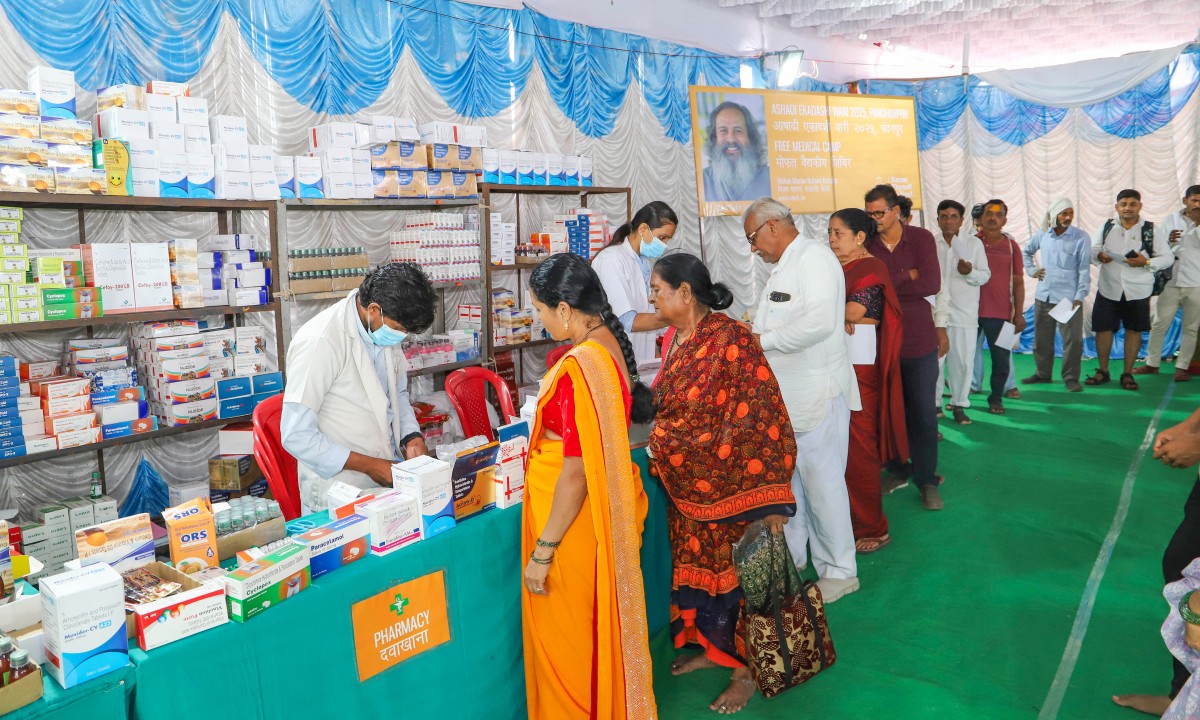
Many pilgrims sustained foot blisters, bruises, and cuts after walking barefoot during the wari. Devotees also had to cope with rainy weather, which further increased the risk of injuries, and many caught colds and coughs. The medical staff attentively treated their injuries and ailments. After consultation, patients received free medicines prescribed by the doctors.
A large number of pilgrims arrived at the medical camp with body pain, muscle cramps, and leg sprains. After medical consultation, devotees received foot massages.
On July 7, as the warkaris commenced their return journey, the number of patients significantly dropped. In response, VMRK concluded the service by the afternoon of the same day. Throughout the six days, VMRK offered medical care to more than 6,160 devotees.
Visitor feedback
Many people left comments in our visitor log, some are listed below:
The free medical camp services offered by the volunteers of VMRK, inspired by Sant Baljit Singh Ji, are commendable. Through their team, this service is being provided free of charge to the underprivileged, needy people, and warkaris with great enthusiasm and dedication. As a warkari, I pray to Lord Vitthal that the work of this organisation continues in the same spirit and that they keep serving society in this noble way.