
Caring for devotees at Shri Amarnath Ji Yatra 2025
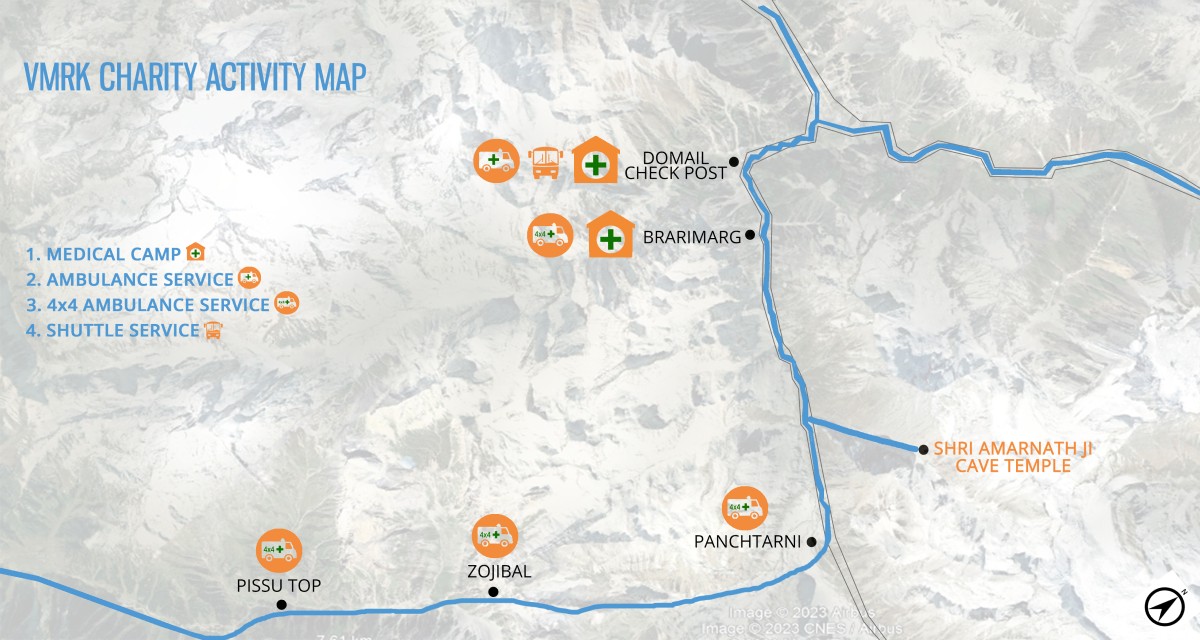
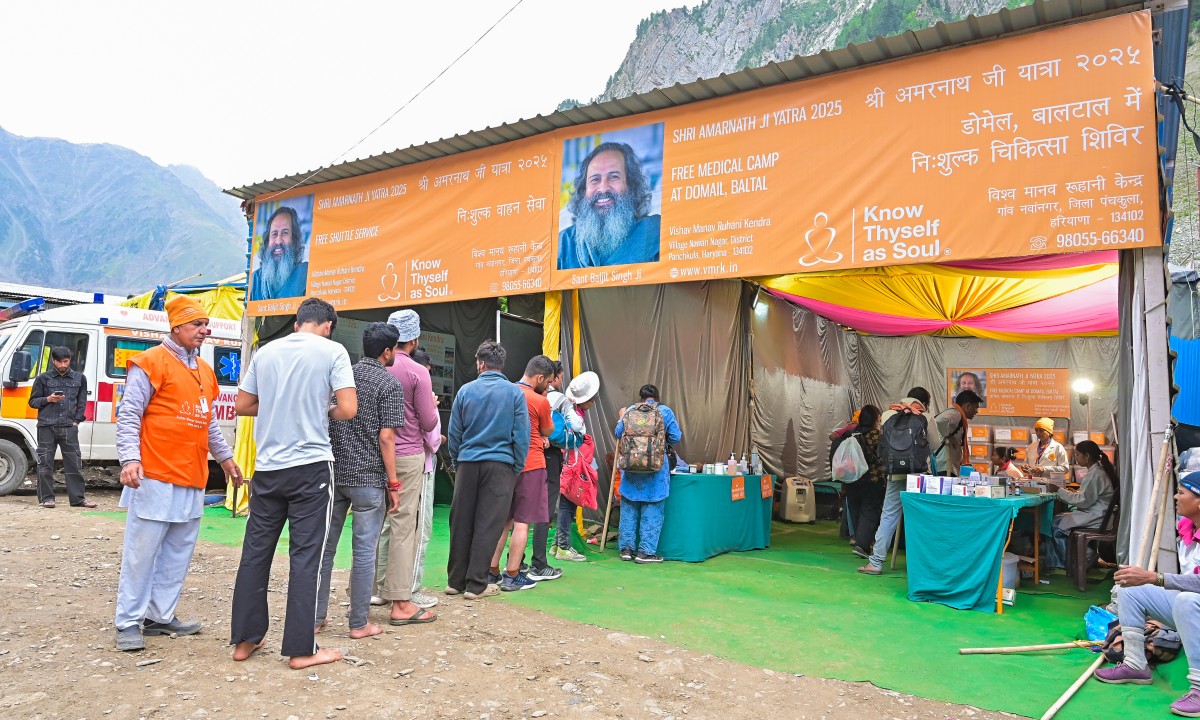
As in past years, Vishav Manav Ruhani Kendra (VMRK) was grateful for the opportunity to serve devotees again during the Shri Amarnath Ji Yatra 2025. Along the Baltal route, VMRK was permitted to organize medical camps at Domail and Brarimarg, and offer ambulance, stretcher, and shuttle services. Additionally, along the Pahalgam route, VMRK was allowed to offer ambulance services.
This year, the yatra was scheduled from July 3 to August 9. However, heavy rainfall caused landslides, which led to the premature conclusion of the yatra on August 3. In accordance with directions from the local administration, VMRK concluded its services on August 3, except for the ambulance service, which continued until August 9.
Preparing to serve pilgrims
The site at Domail, situated 11.25 kilometers from the Holy Cave, was located in a highland area. Meanwhile, the site at Brarimarg, 6.25 kilometers from the Holy Cave, was situated along a mountainside. VMRK tailored the setup for each site according to the terrain and space available. At Domail, VMRK planned to set up a metal shed measuring 30 x 30 feet. For the Brarimarg camp, a sturdy Swiss tent, measuring 12 x 24 feet, was chosen.
On June 21, VMRK volunteers began loading all materials, including 126 boxes of medicines and medical equipment, onto a truck. Early the next morning, a team of VMRK volunteers, accompanied by the truck and a fully equipped ambulance, departed to prepare the setup before the yatra commenced. The medical team and additional volunteers followed shortly thereafter.
Setting up the medical camps
The first batch of 14 volunteers reached Domail on the afternoon of July 23. The volunteers began setting up the medical camp by leveling the rugged terrain before assembling a metal shed on the rocky ground.
In the following days, some volunteers trekked to Brarimarg, located at an elevation of 3,674 meters, while others continued with the remaining setup at Domail. Since the site at Brarimarg was situated along the mountainside, right off the pilgrims’ path, it had very limited space for setting up the medical tent. Medicines and tent materials were then transported to the site using hired mules and porters. The Brarimarg and Domail medical camps were ready by June 29 and June 30, respectively, well before the yatra commenced.
Medical camps at Brarimarg and Domail
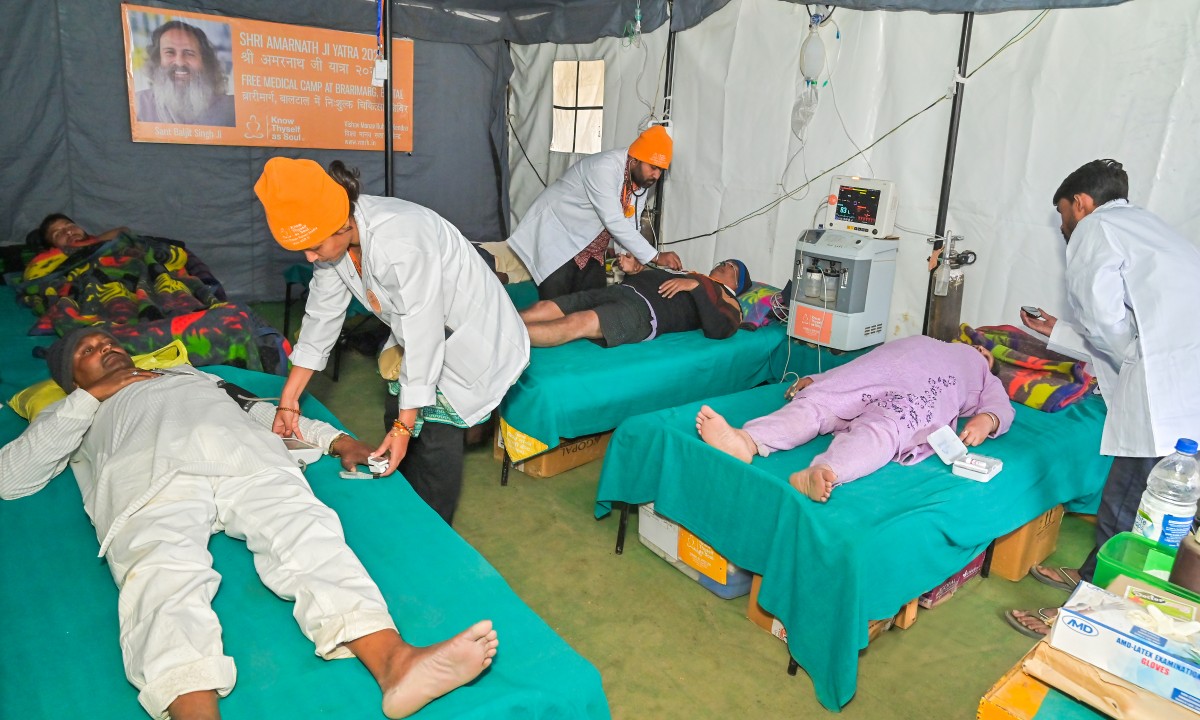
Both medical camps at Domail and Brarimarg, with 4-bed and 6-bed clinical treatment centers respectively, operated around the clock to serve devotees arriving at any time of the day. These camps were staffed by a team of 3 doctors, 3 pharmacists, 2 nurses, and 20 volunteers.
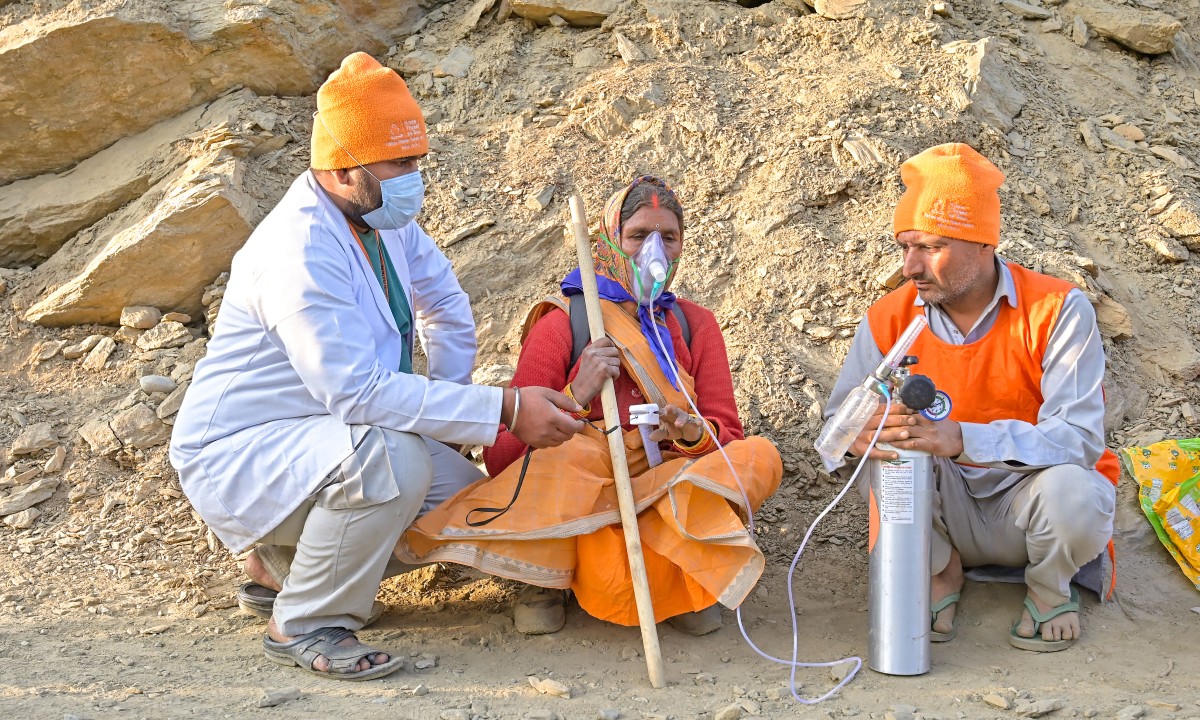
A large number of pilgrims visited the camps, with breathlessness, headaches, and dizziness due to the thin air at high altitudes. To provide relief, the medical camps were equipped with multiple oxygen cylinders and oxygen concentrators. Additionally, a large number of pilgrims suffered from fever, cold, cough, and body aches as a result of the long trek and exposure to rain along the route.
Before visiting the Holy Cave, many pilgrims bathe in the Amravati and Panjtarni rivers, which flow along the route and carry glacier-melted water. Bathing in such chilly water amid cold weather and high elevation was a shock to the system and many pilgrims visited the Brarimarg medical camp with hypothermia and related illnesses. To offer warmth to them, the camp was equipped with room heaters.
Pilgrims returning from the Holy Cave trek a steep and physically demanding ascent to reach the Kali Mata Temple, approximately 2 kilometers from Brarimarg. Due to the physical exertion and high elevation, many experienced breathlessness along this track. Each evening, the medical team at Brarimarg, along with volunteers carrying oxygen cylinders, visited the site to offer medical assistance to the returning pilgrims.
Along the route, many pilgrims used pony rides, which made the pilgrimage track very dusty due to pony foot traffic. To offer some respite, masks were distributed at both camps.
Over 32 days, VMRK provided free medical services to more than 37,030 pilgrims. Among them, over 1,300 patients received treatment at the clinical center.
DAYS OF 24X7 FREE MEDICAL SERVICE
PILGRIMS RECEIVED MEDICAL CARE
PATIENTS AT THE CLINICAL TREATMENT CENTERS
PATIENTS TRANSFERRED BY AMBULANCE SERVICE


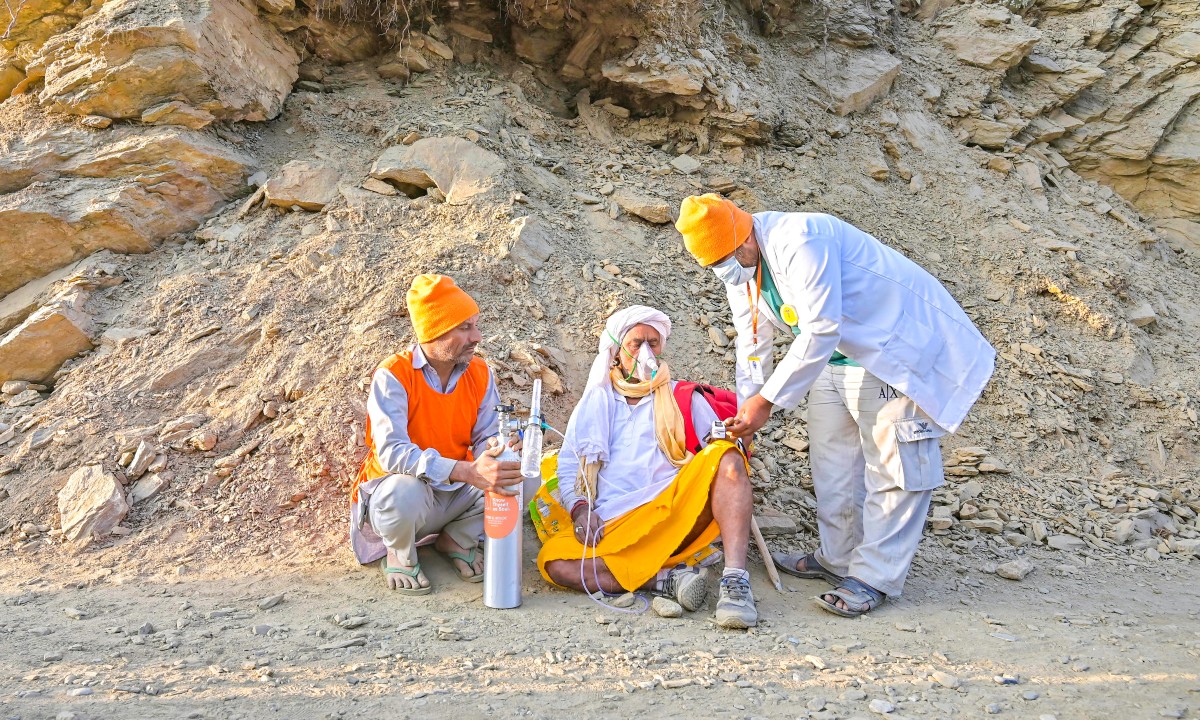
24×7 Ambulance service
VMRK customized its ambulance service to suit the track assigned by the administration. The stretch from Baltal to Domail has wide roads. Therefore, a fully equipped ambulance along with a driver and a technician was stationed at Domail to provide services across this segment.
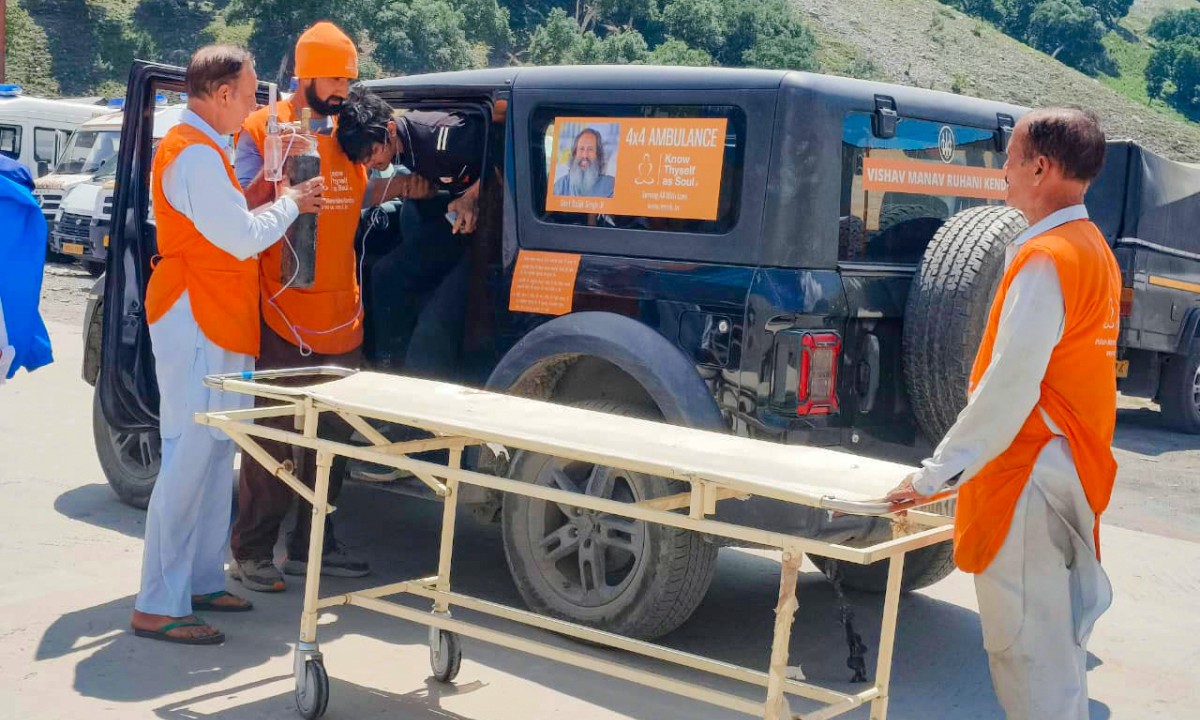
Since the Baltal route from Domail to the Lower Cave the stretch is steep, narrow, and inaccessible to regular ambulances, VMRK deployed two 4×4 ambulances along this track.
Additionally, VMRK was permitted to provide services along the 8-kilometer track from Chandanwari to Zojibal on the Pahalgam route. This stretch, also largely steep and narrow, was served by two more 4×4 ambulances, making VMRK the first organization to offer ambulance services along this path.
Each year, the Amarnath Yatra concludes with a procession that treks to the cave via the Pahalgam route. To serve these devotees, VMRK continued its 4×4 ambulance service until August 9 as requested by the administration. Throughout the yatra, more than 300 patients were served by VMRK’s ambulance service.
Stretcher service
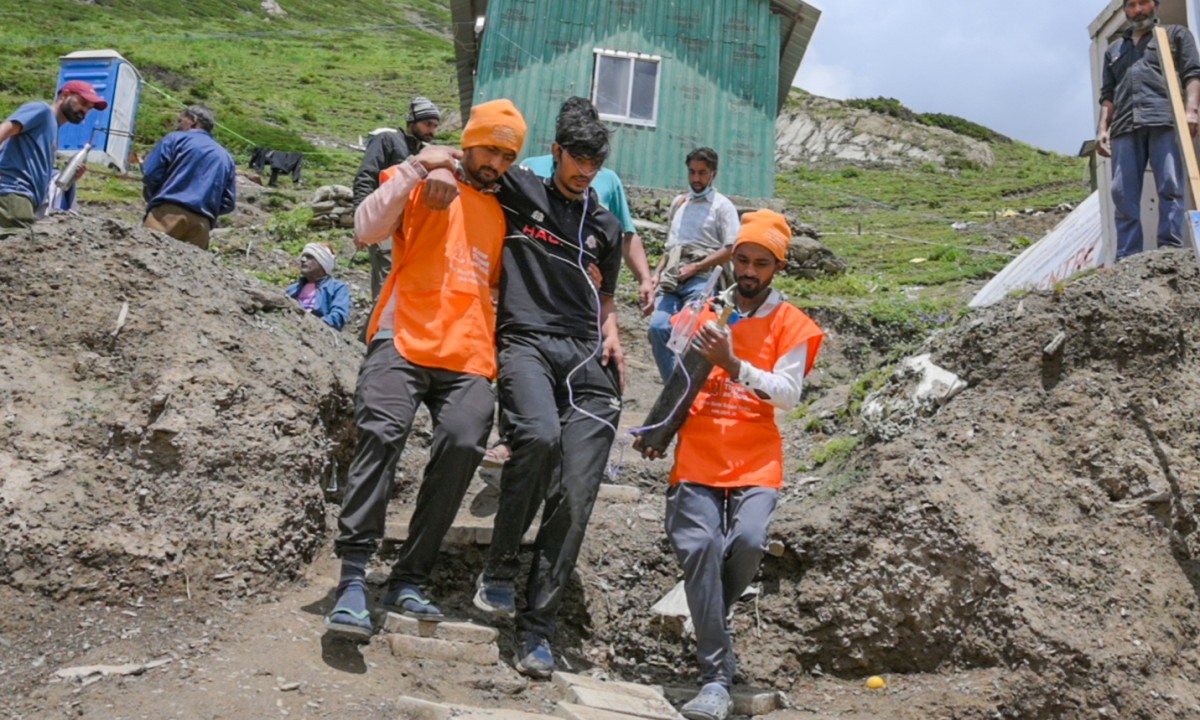
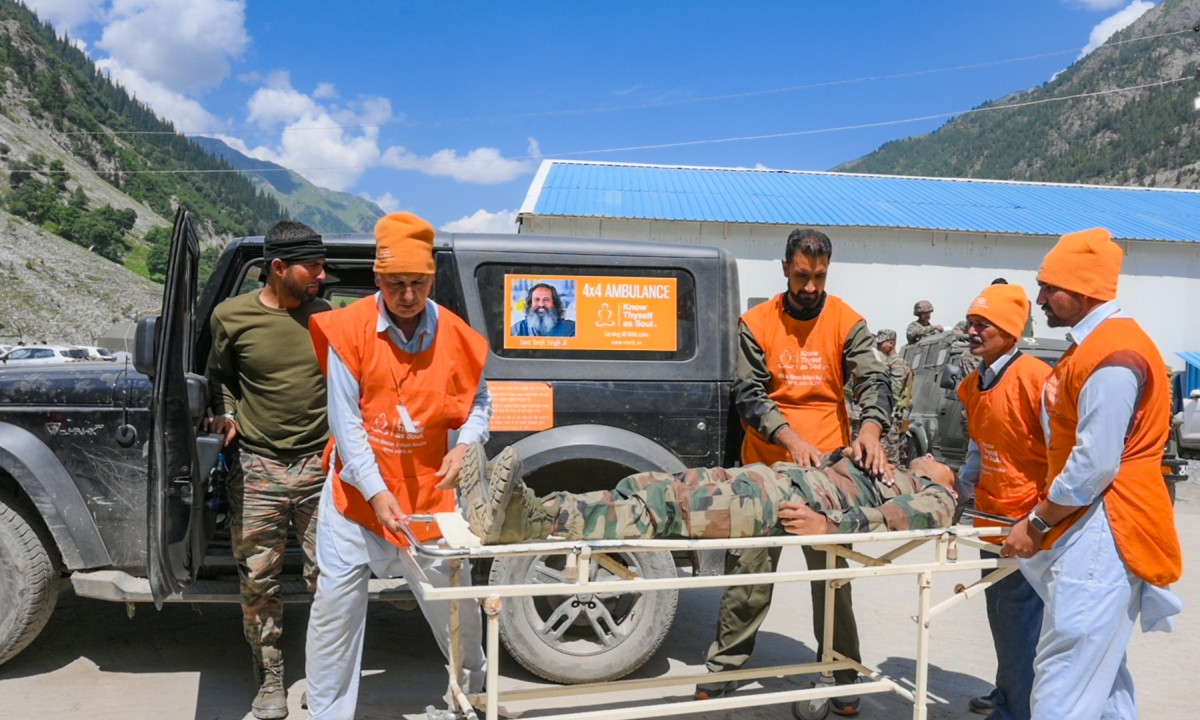
Local security personnel coordinated with VMRK to provide stretcher services to support pilgrims in distress. Whenever incidents such as fatigue, dizziness, or injuries caused by the slippery track were reported to local security personnel, they reached out to us. Promptly, a team of four volunteers rushed to the site with a stretcher stocked at the camps. The team then carried the pilgrims to the designated medical camp.
Passenger vehicle shuttle service
The Pahalgam route is traditionally believed to be the path God Shiva took on his way to the Holy Cave. This belief is one reason many pilgrims choose the longer Pahalgam route to reach the Holy Cave. However, on their return journey, these pilgrims often opt for the shorter Baltal route. On trek for several days, these pilgrims usually become extremely exhausted on the way back.
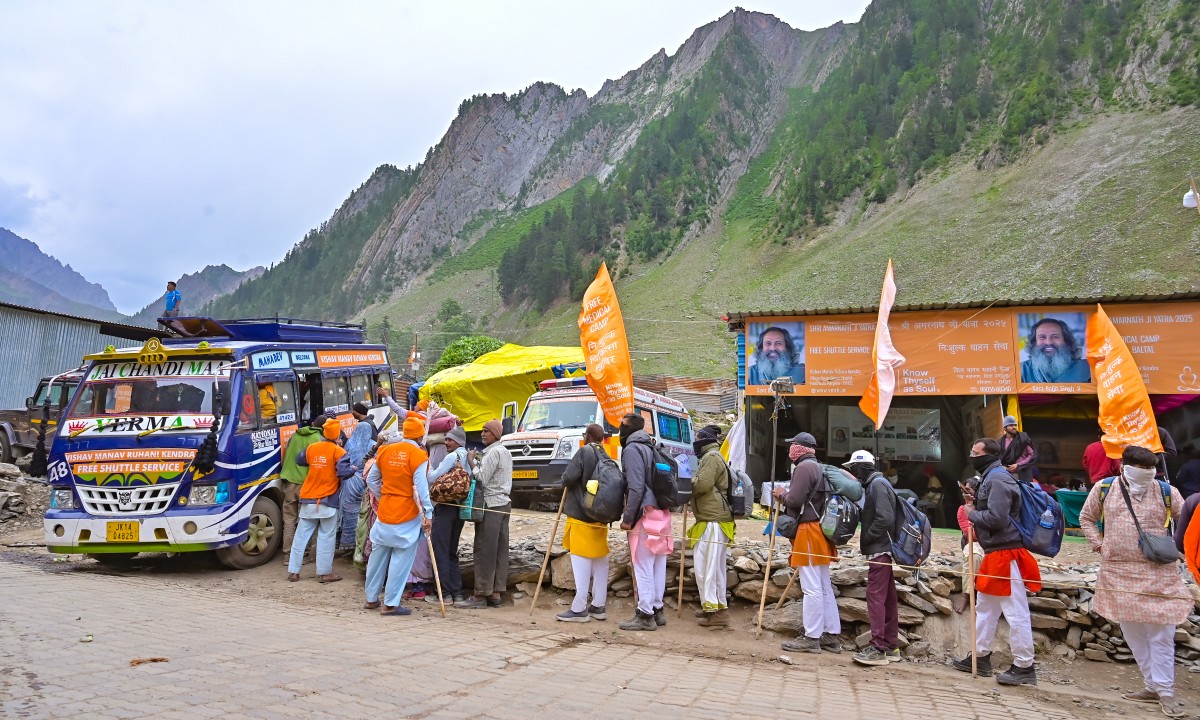
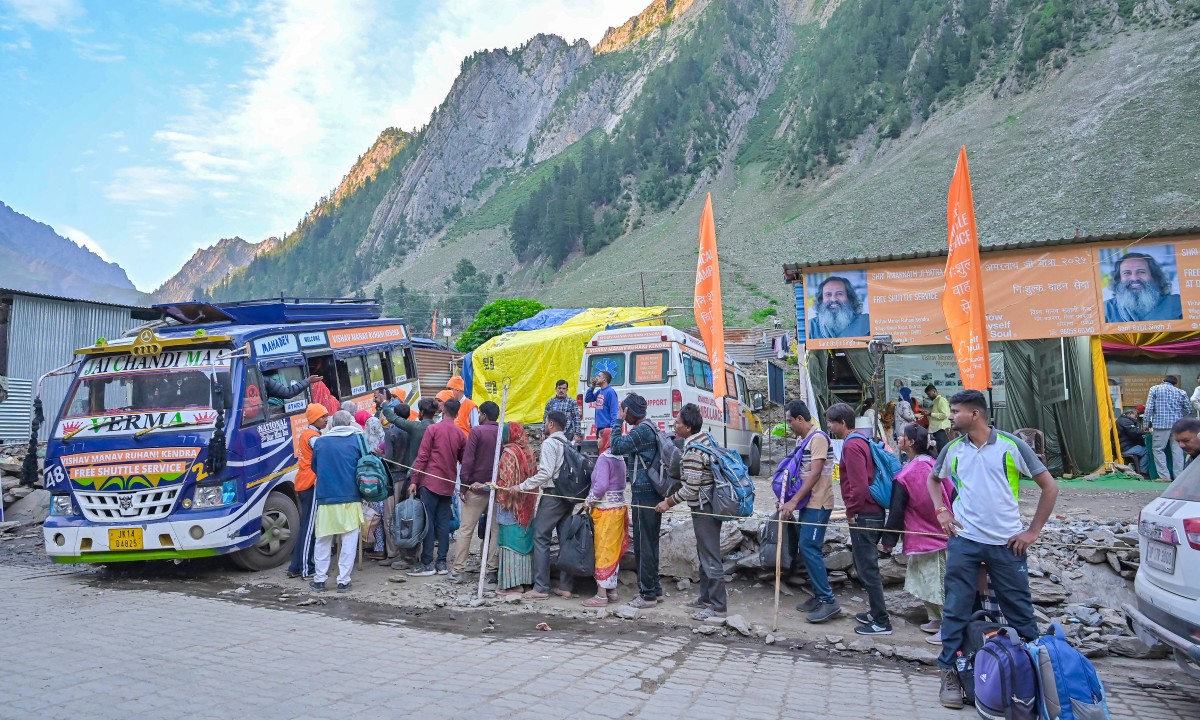
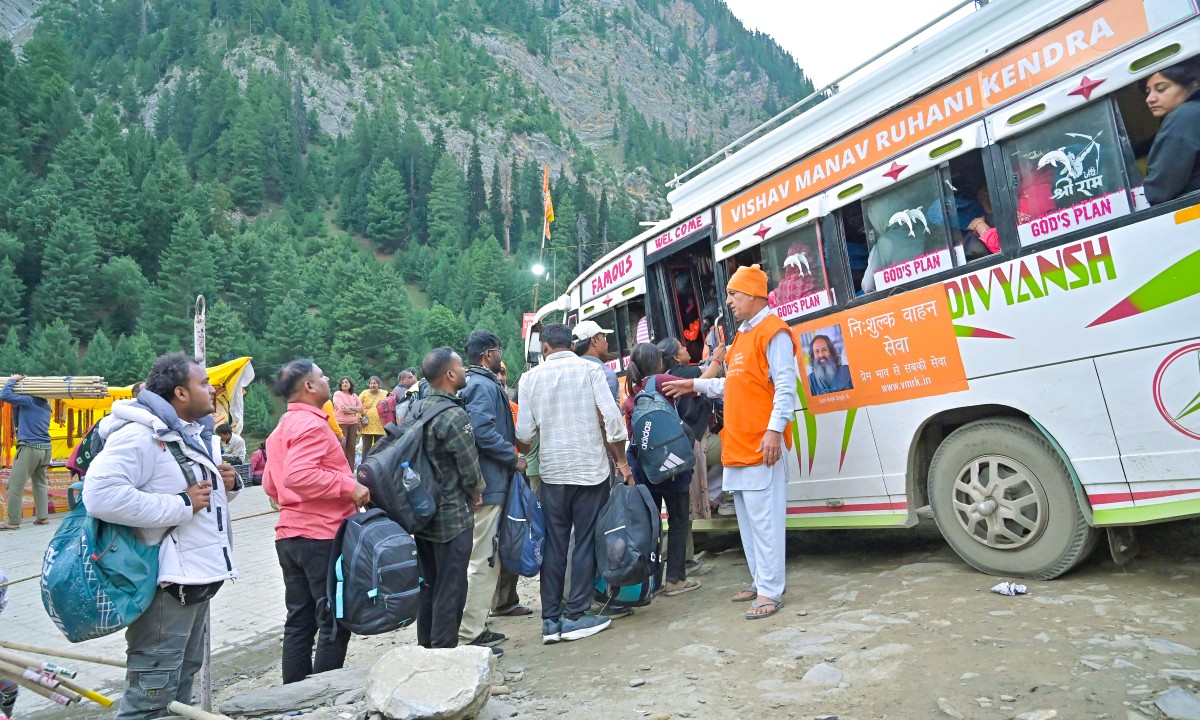
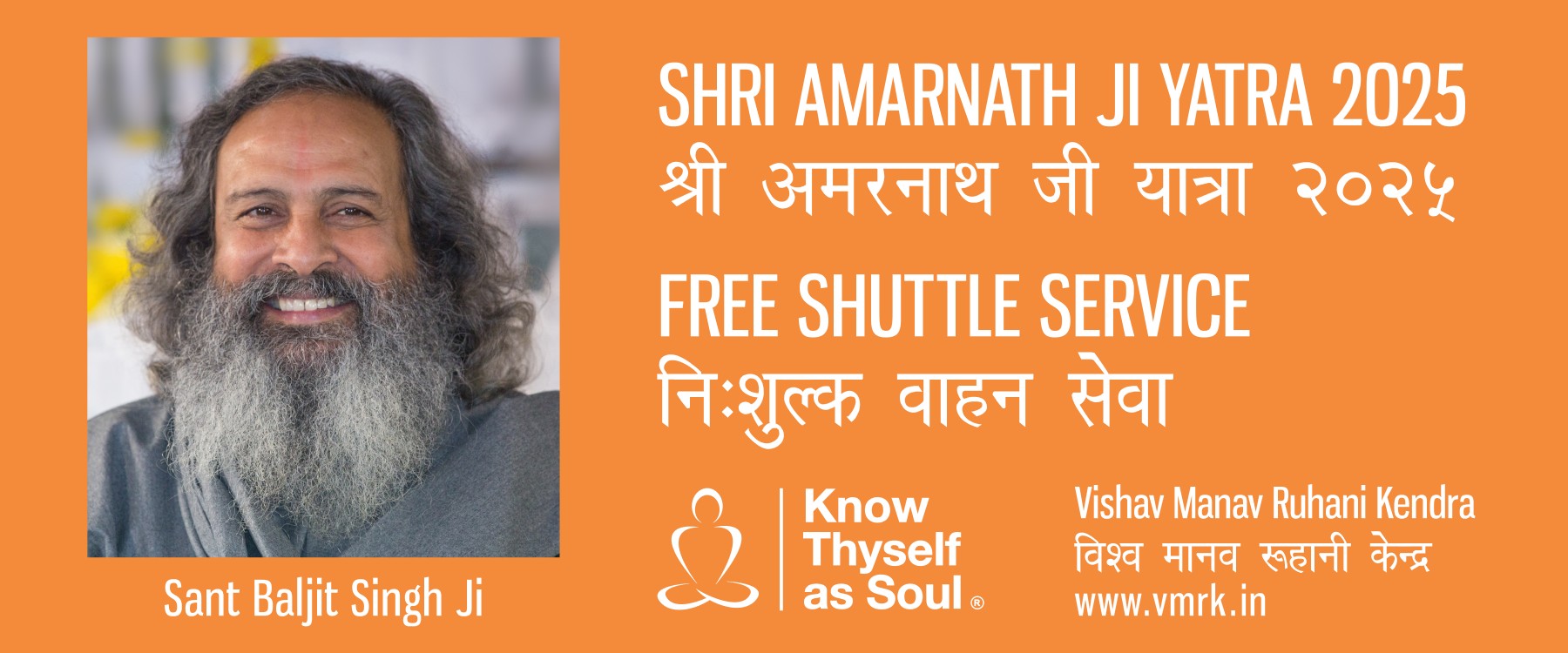
To assist devotees on their return journey, VMRK offered a shuttle service covering approximately a 3-kilometer stretch from Domail to the parking area at Baltal. Two minibuses, with a combined seating capacity of 44 pilgrims, commenced service in the evening as pilgrims began to arrive. The shuttles operated non-stop, often running late into the night as long as pilgrims continued to arrive.
Over the course of the service period, more than 21,130 pilgrims were transported in more than 580 shuttle trips.
The Divisional Commissioner extended appreciation for the round-the-clock services offered by VMRK to the pilgrims from July 3 to August 9, 2025.

DAYS OF FREE SHUTTLE SERVICE
SHUTTLE TRIPS WERE MADE
PILGRIMS USED THE SERVICE
Visitor feedback
Many people left comments in our visitor log, some are listed below:
During the Shri Amarnath Ji Yatra, I saw VMRK volunteers serving patients with great care. Patients along the route from the Holy Cave were transported by them to the medical camp and were treated with free medicines. In doing so, they were truly serving the poor and those in need.