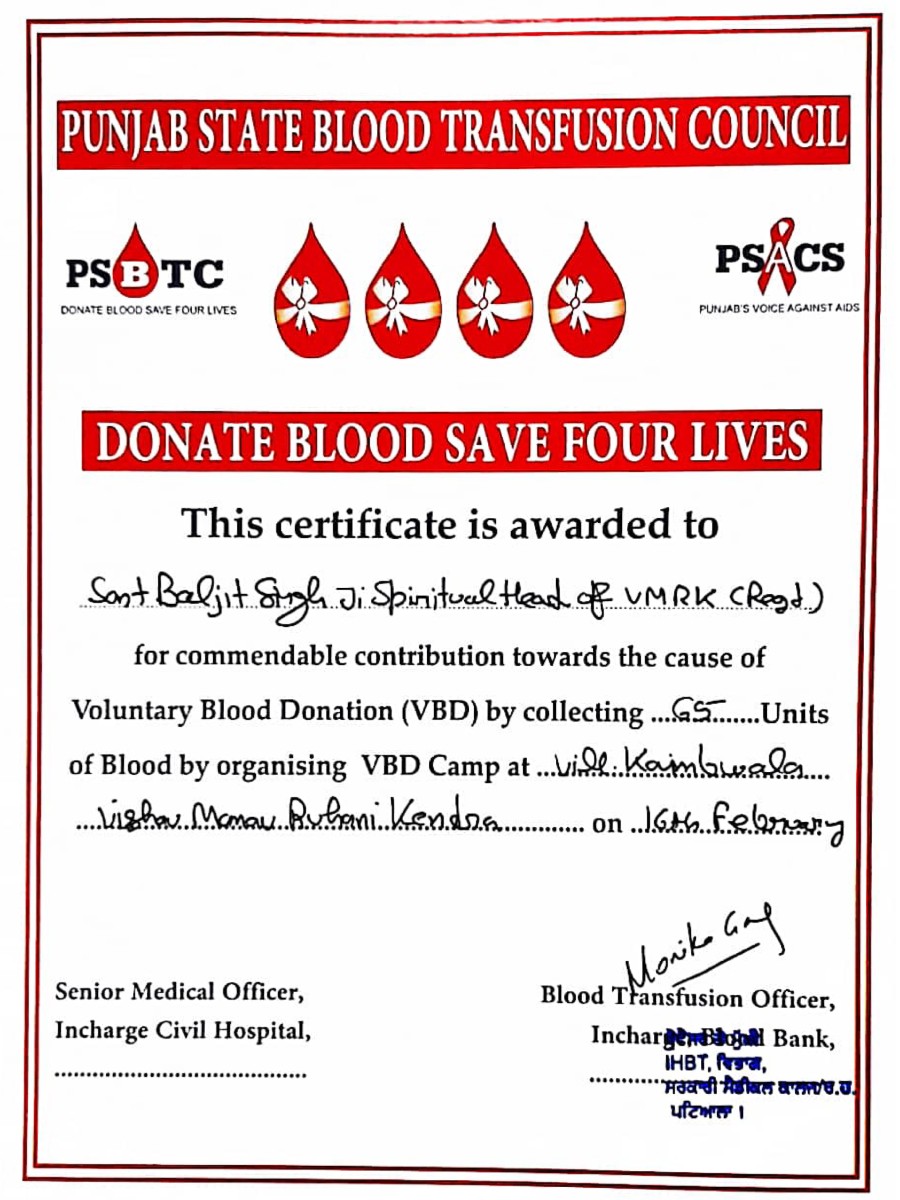
Blood donation camps 2025: Every drop counts
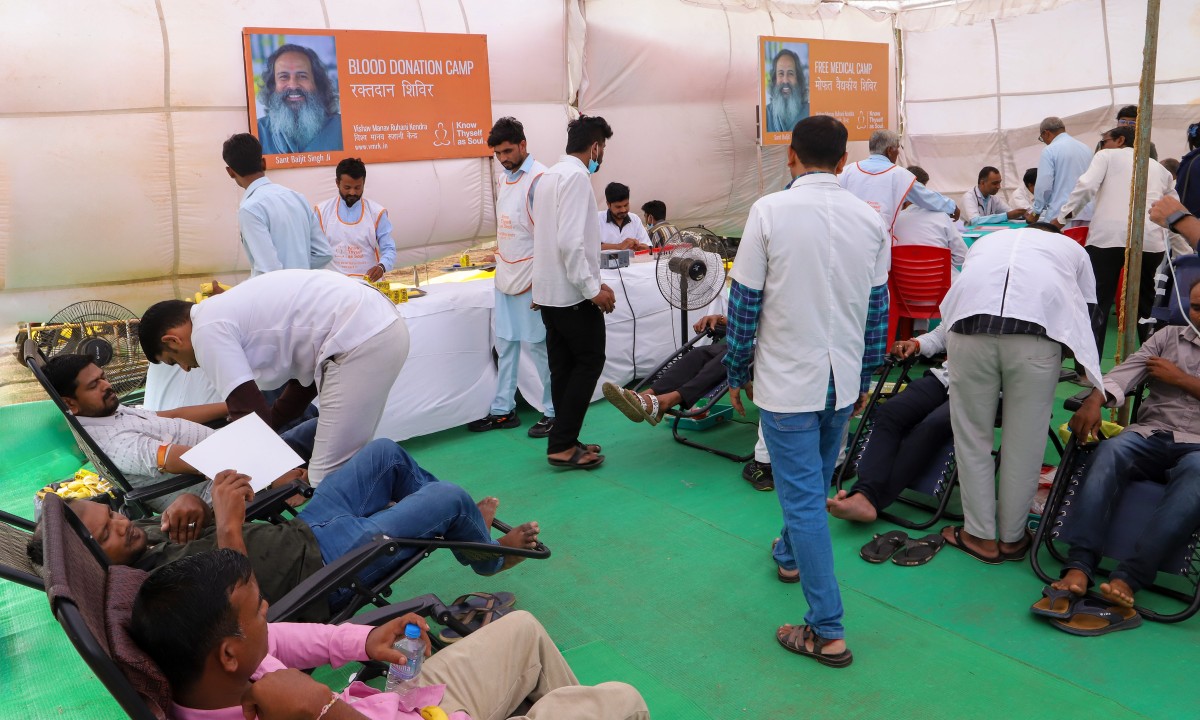
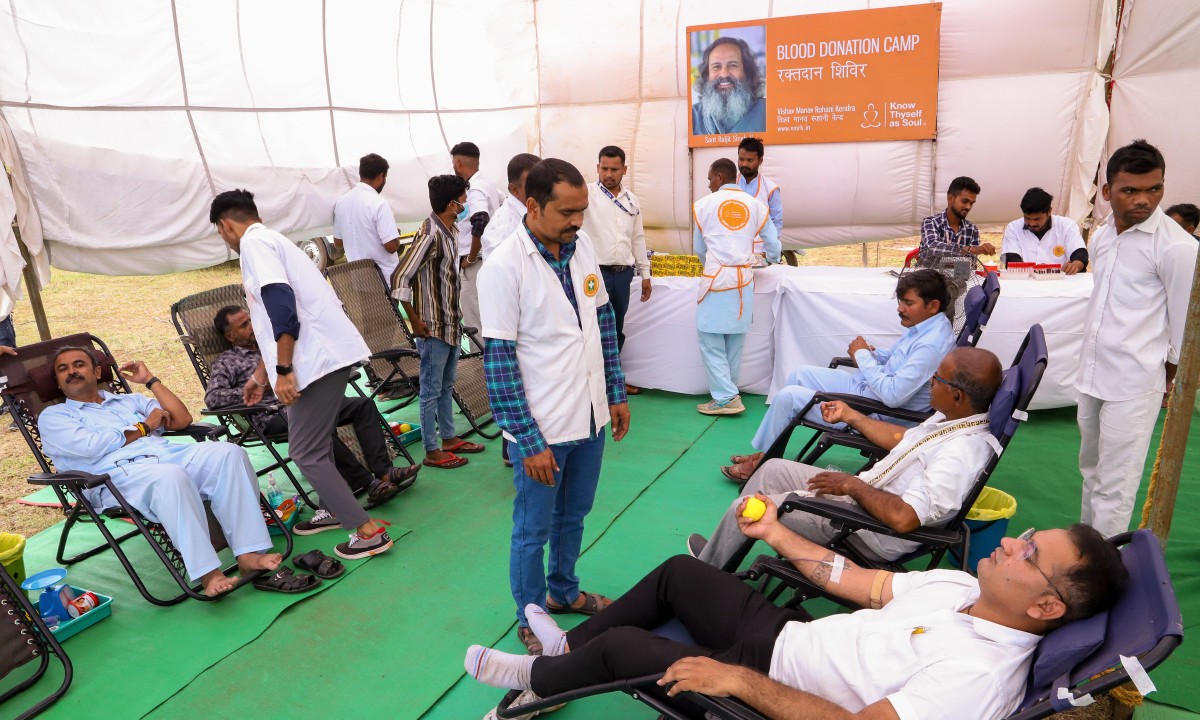
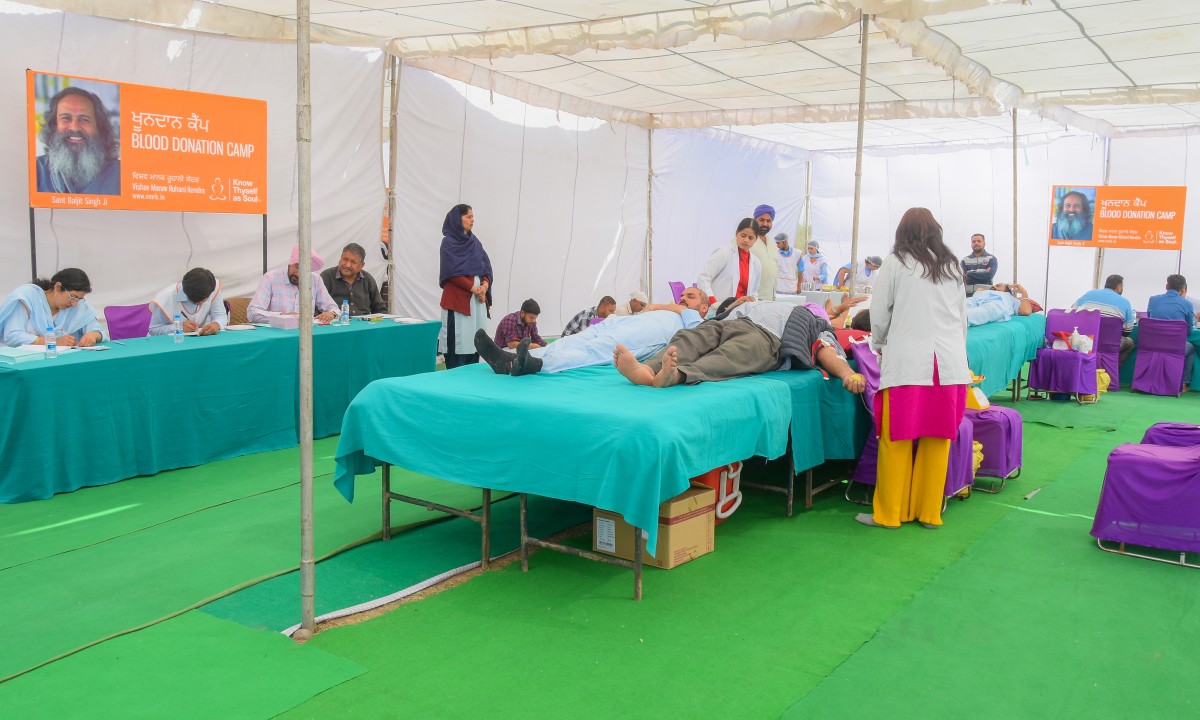
Blood donation is widely regarded as a precious life-saving gift, as every drop counts toward saving lives. Guided by this spirit, Vishav Manav Ruhani Kendra (VMRK) continued to organize blood donation camps throughout 2025. A total of 22 blood donation camps were held, during which 1,247 individuals voluntarily donated blood. These camps took place across Haryana, Punjab, Himachal Pradesh, Maharashtra, and the Union Territory of Chandigarh. The majority of these camps were held alongside the charitable services organized during the following events celebrated at VMRK centers:
Charitable services at 2025 Autumn (Ashvin) Navratri
Charitable services at Guru Purnima 2025
Charitable services at 2025 Spring (Chaitra) Navratri
Charitable services at Spiritual Discourse March 2025, Nawan Nagar, Haryana
Charitable services at Spiritual Discourse March 2025, Nagpur, Maharashtra
Charitable services at Spiritual Discourse February 2025, Pimpalner, Maharashtra
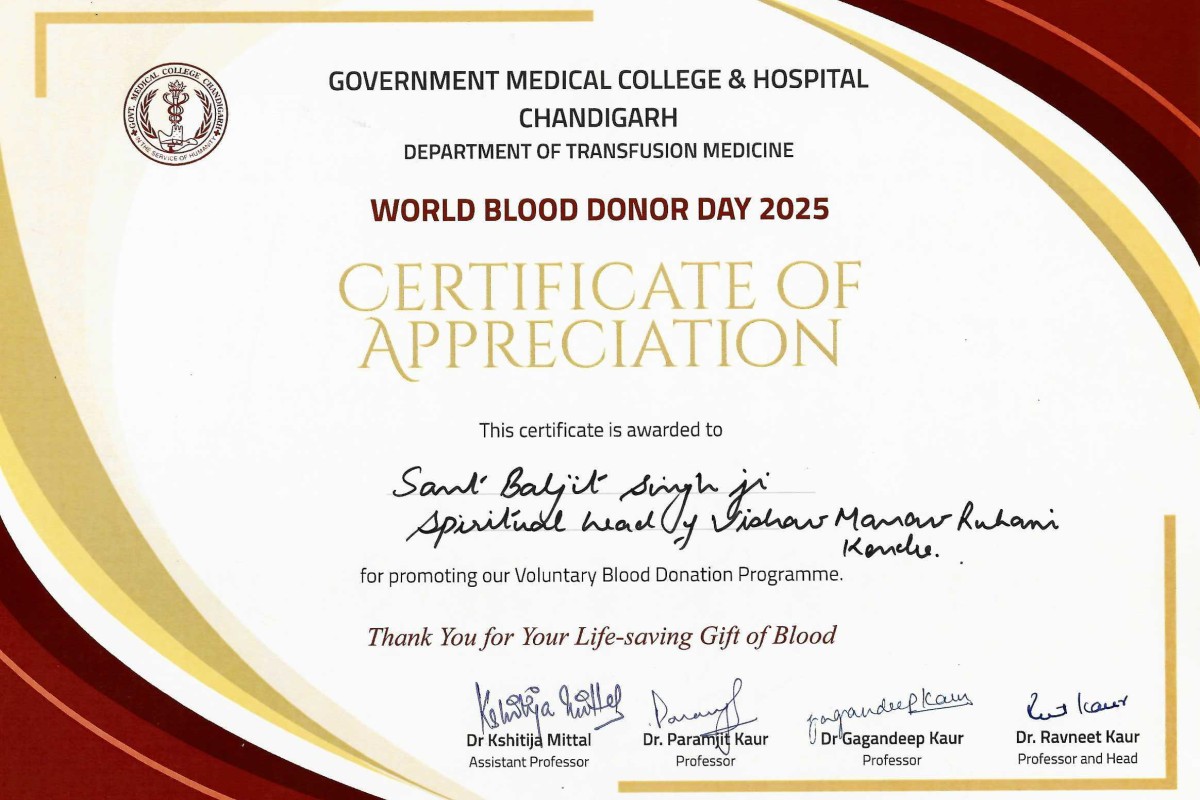
Each blood donation camp was carefully planned for dates and locations that would encourage maximum participation. To that end, we selected the large-scale events celebrated at VMRK centers with participants from across India and the events celebrated with local attendees. Since these celebrations were typically organized on weekends, they helped draw larger crowds.
Once the dates and locations were confirmed, VMRK volunteers contacted various government hospitals to collaborate with their blood bank teams. Our volunteers applied administrative guidelines to arrange the materials to run the camps. At the same time, we enthusiastically promoted the camps. Our volunteers leveraged every available communication channel from announcements in local newspapers to personal outreach within families and friend circles.
On the day of the camp, our volunteers made reminder calls to individuals who had shown interest during earlier appeals. Those who came forward were first assessed by doctors to ensure they were fit to donate blood. This included checks for hemoglobin levels, body weight, blood sugar levels and blood pressure.
After donating blood, donors were taken to a resting area where they were served refreshments. In many camps, arrangements were also made to serve them meals. The donors remained under observation for a short period before leaving. Where required, volunteers also made follow-up calls to check on donors’ post-donation well-being.