
Adi Kailash Yatra 2026: Medical support for pilgrims
For the third year in a row, Vishav Manav Ruhani Kendra (VMRK) provided free medical services to pilgrims traveling on the Adi Kailash Yatra. Many pilgrims set out on this multi‑day journey to offer their devotion to God Shiva. As the days progressed, the climb grew steeper, the air thinner, and breathing more difficult. Step by step, they slowly adjusted to the thin mountain air and made their way toward Jolingkong, which sits at about 4,389 meters. From there, most trekked another 2–3 kilometers, pausing often to catch their breath. Eventually, they reached the base of the sacred Adi Kailash at roughly 5,600 meters, where the cold is sharp and the oxygen level is very low.
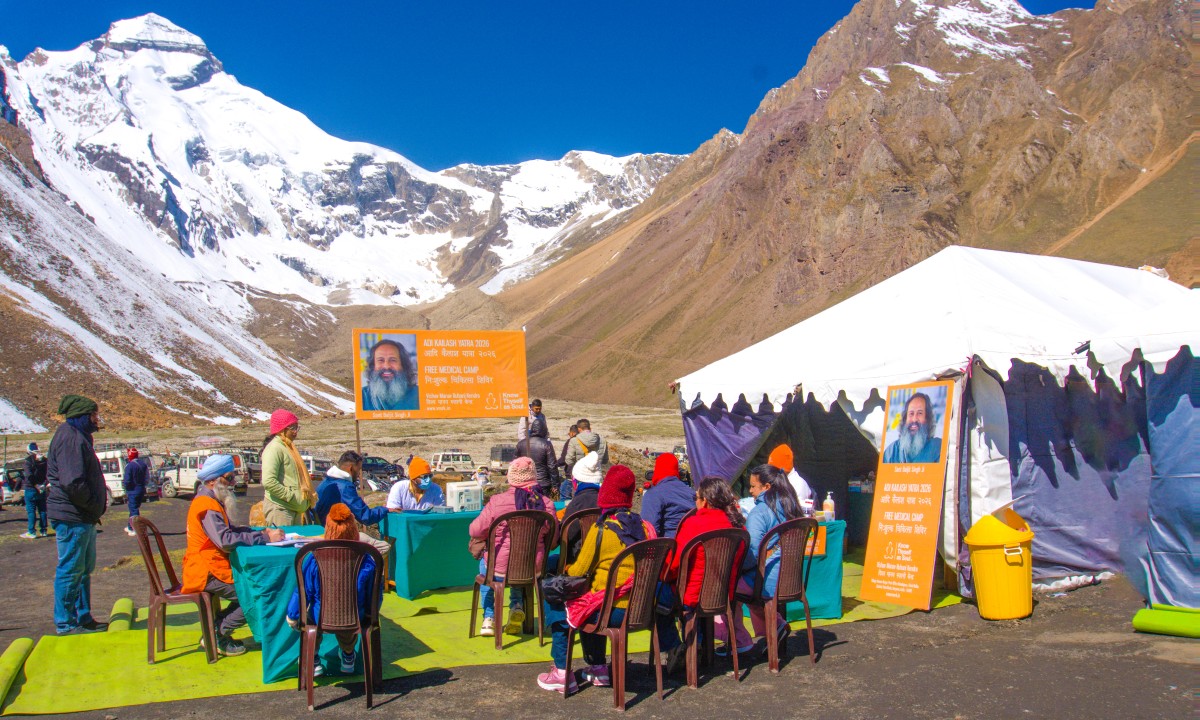
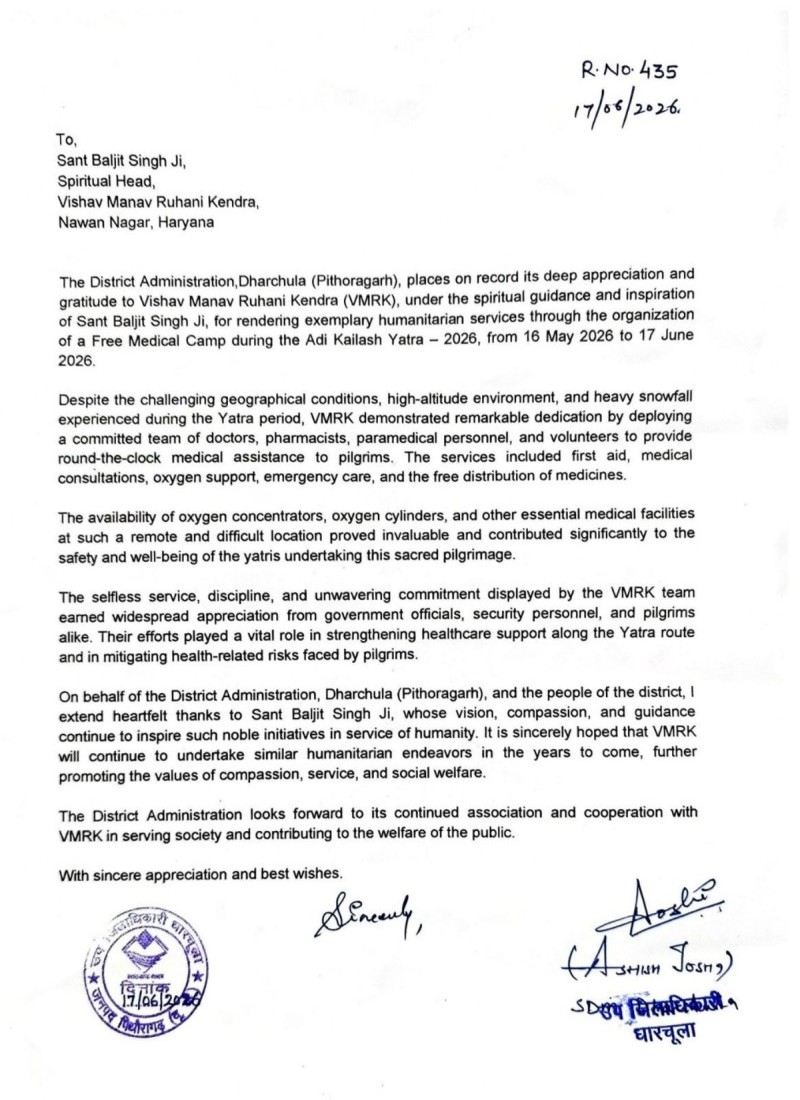
To help pilgrims during this last remote stretch, VMRK set up a medical camp at Jolingkong, near the vehicle parking area. The camp opened on May 16 with initial approval to run until June 10. However, the local administration later requested VMRK to extend the service period to June 17.
Planning and preparation
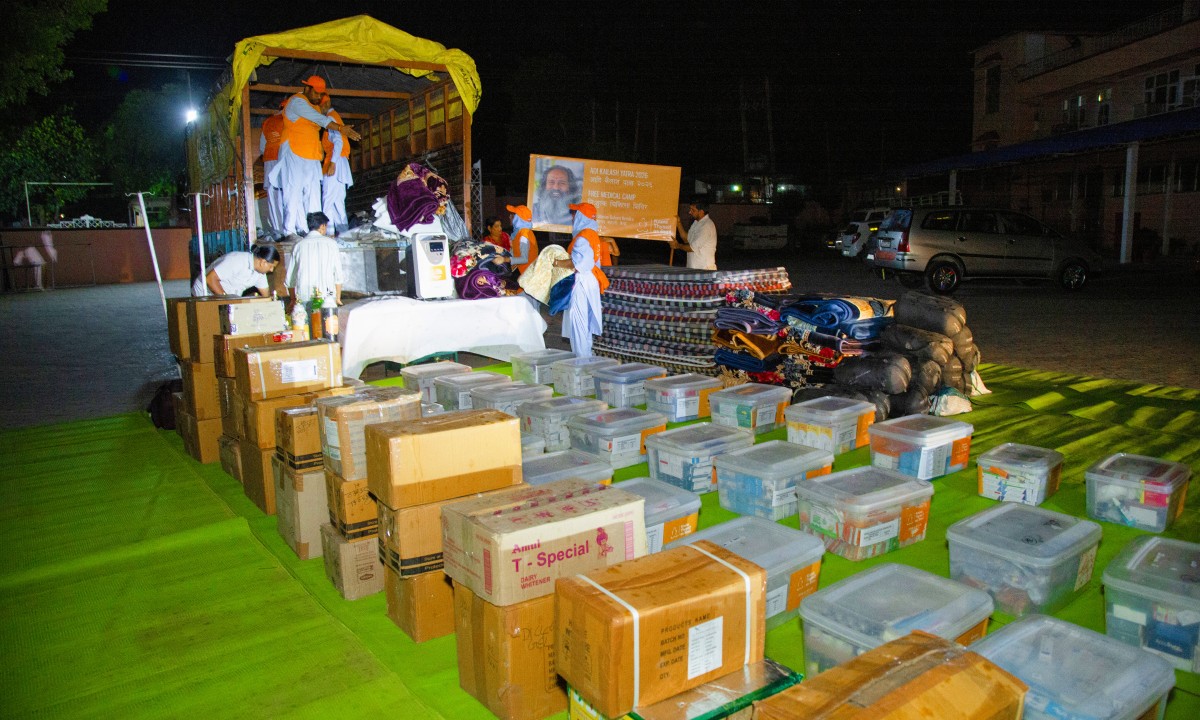
Before the yatra began, VMRK organized several volunteer teams, each with a clear role. Based on past experience and expecting more pilgrims this year, the team estimated the medicines needed for about 4,000 people. They gathered the required supplies and packed them into 36 boxes. As with most high‑altitude pilgrimages, the equipment included oxygen cylinders, concentrators, and multipara monitors. They also packed two large Swiss tents measuring 12 × 24 feet, that were used at last year’s yatra.
Although the yatra takes place during summer, temperatures at Jolingkong often fall below freezing, especially at night. Winds can be harsh, and sudden snowfall is common. These extremes are challenging to endure. With this in mind, VMRK redesigned the volunteer schedules. In previous years, VMRK scheduled fewer volunteer batches with longer service periods. Expecting even tougher conditions this year, VMRK increased the number of batches and shortened each one’s service period. This approach allowed volunteers to stay fresh and fit throughout the entire yatra.
On May 13, volunteers loaded all the packed materials onto a truck. Although it started to rain during the process, the team continued loading carefully while keeping everything dry. The truck left late that night.
Journey and setup
Reaching Jolingkong was challenging. The team traveled along a narrow, steep, and uneven track along the mountainside. Heavy rain had triggered landslides, leaving large boulders and loose mud across the path. After navigating these difficult conditions, the team arrived by noon on May 16.
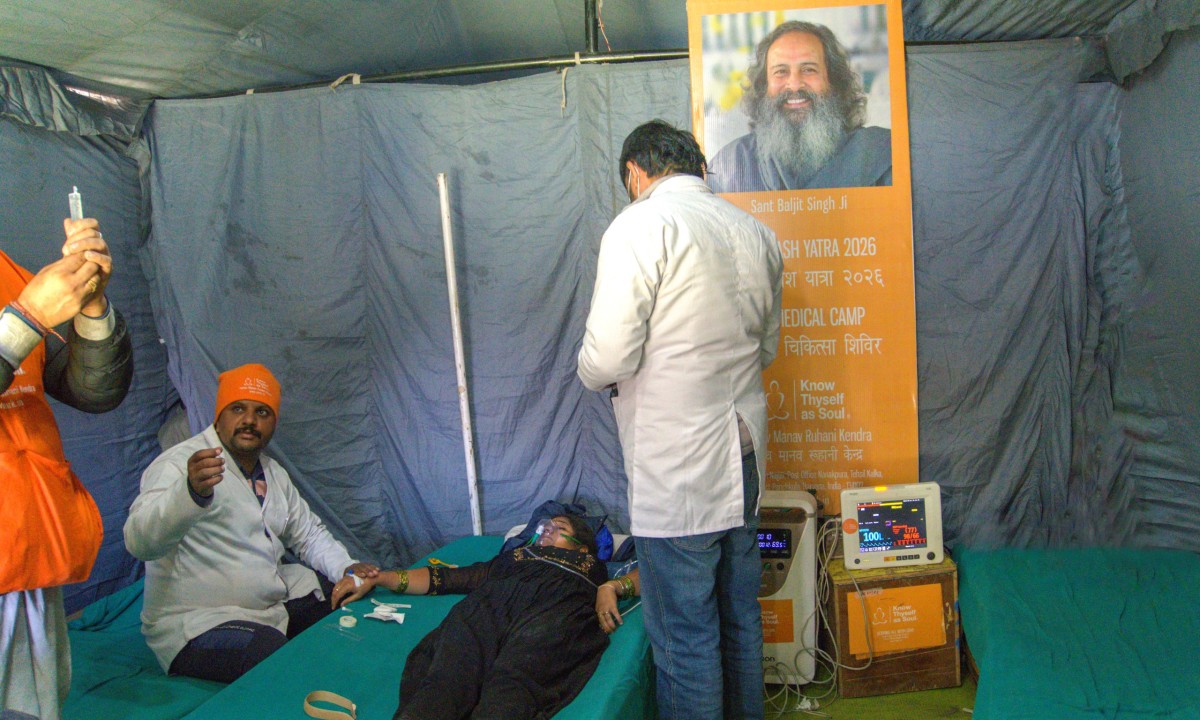
Upon arrival, the teams immediately began unloading the truck and arranging tables, chairs, and medicines. Within a few hours, the medical camp was ready, offering free consultations, medicines, and first aid. Meanwhile, other volunteers set up two tents—one for a three‑bed clinical treatment area and the other for volunteer accommodation.
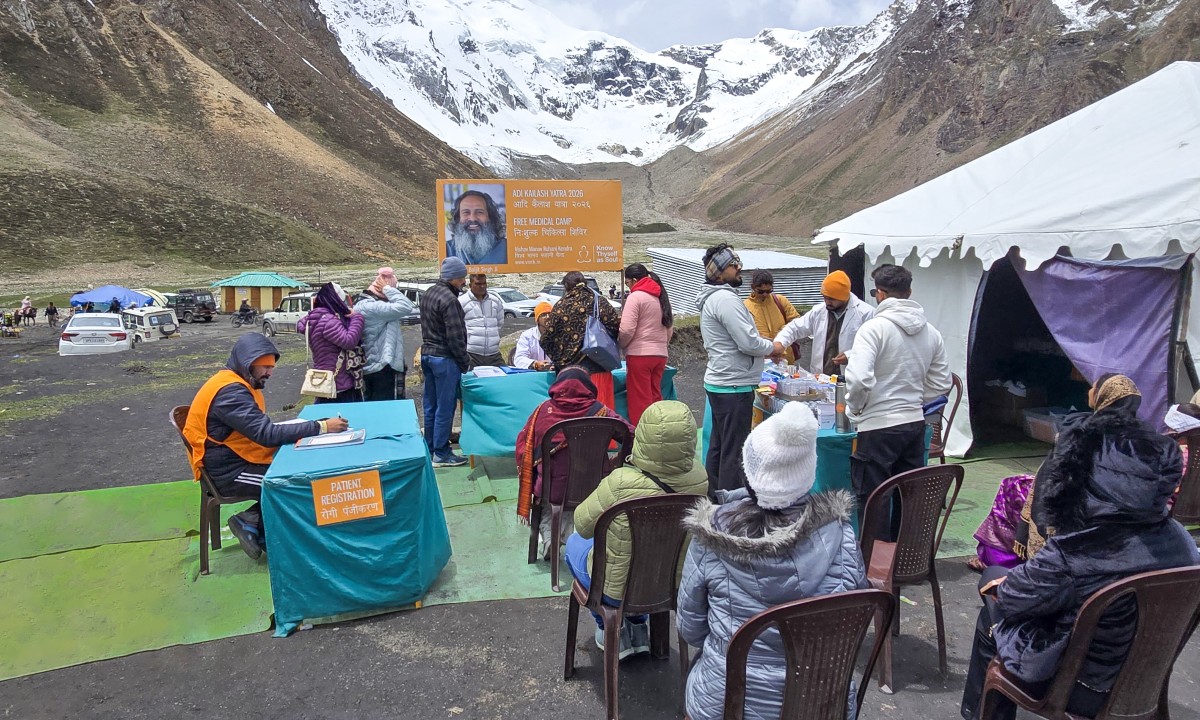
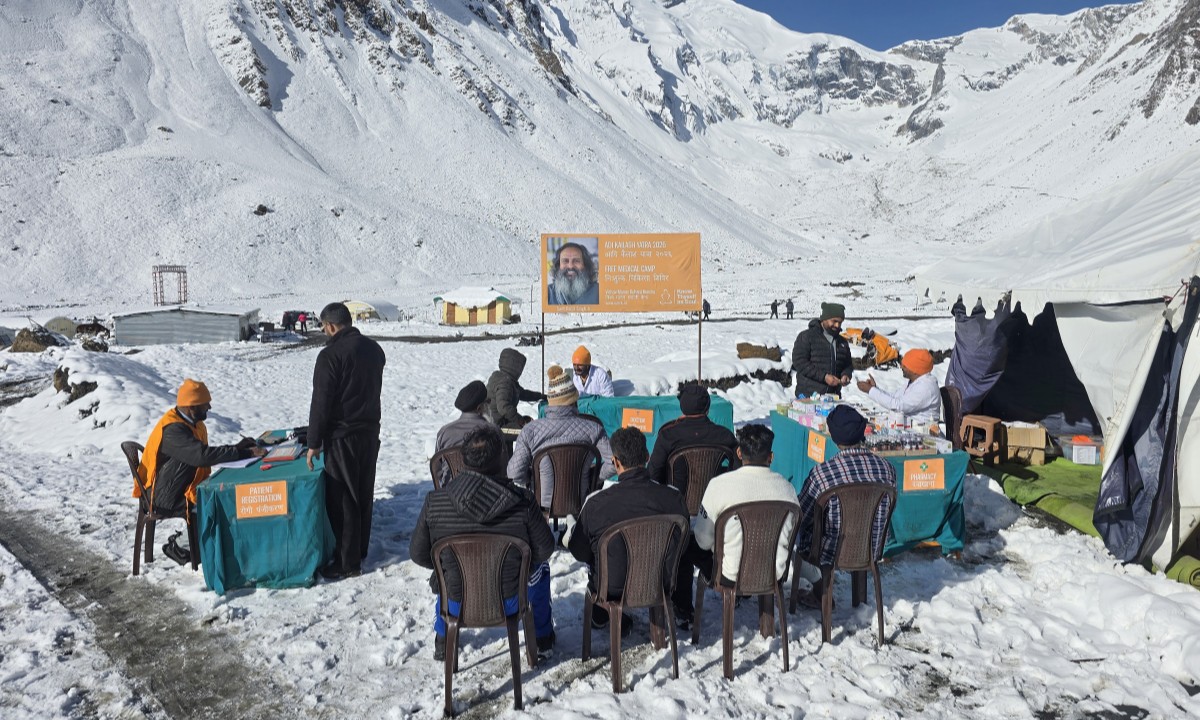
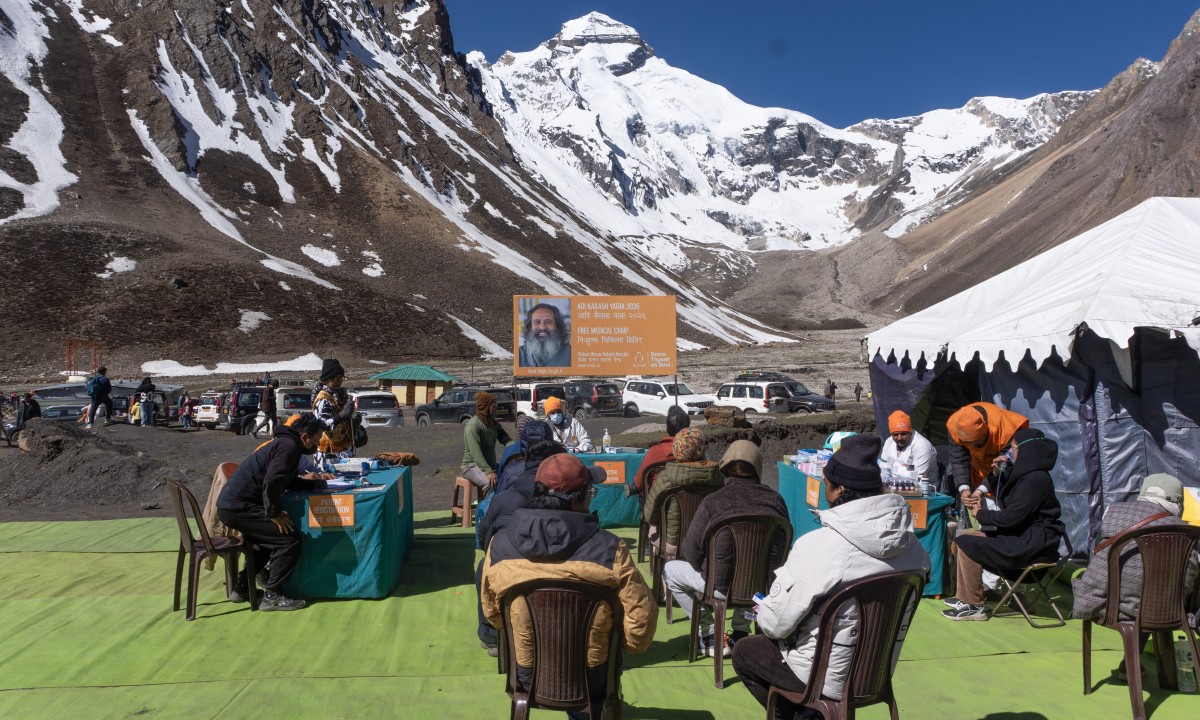
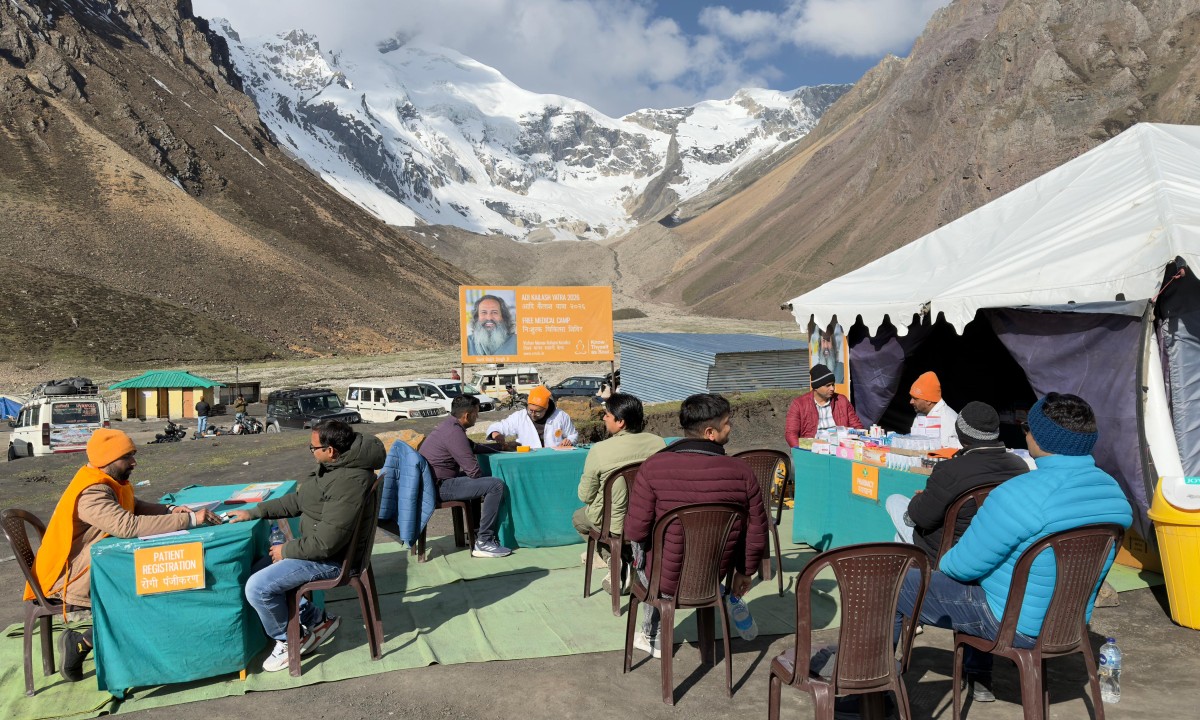
24-hour medical services
The weather quickly showed its strength. Mornings often brought rain or snowfall, and at times nearly a foot of snow covered the camp. Volunteers regularly cleared snow from around the tents and brushed it off the roofs to prevent sagging. By afternoon, strong winds swept through, sometimes pushing tables and chairs. Whenever conditions worsened, the team moved the outdoor setup inside the tents to keep serving pilgrims safely, sometimes operating entirely indoors for several days.
These weather conditions also shaped when pilgrims visited. Most came for darshan early in the day, starting around 7 am. By around 11 am, the camp was at its busiest, with pilgrims stopping by on their way to Adi Kailash as well as their return. Many arrived exhausted from the climb, shivering from the cold, or struggling to breathe in the thin air.
The freezing cold and low oxygen in the high altitude created a wide range of health issues. Most common were breathlessness, dizziness, nausea, acute mountain sickness, cold, fever, and stomach pains. Some pilgrims suffered hypertension with spikes in blood pressure. In several cases, pilgrims arrived with dangerously low oxygen levels, unable to continue with the yatra without immediate medical treatment. Immediately, the medical team gave these pilgrims oxygen and treatment, and then monitored their situation. After the pilgrims had sufficiently recovered, they were given disposable oxygen cylinders and advised to begin descending before their condition worsened.
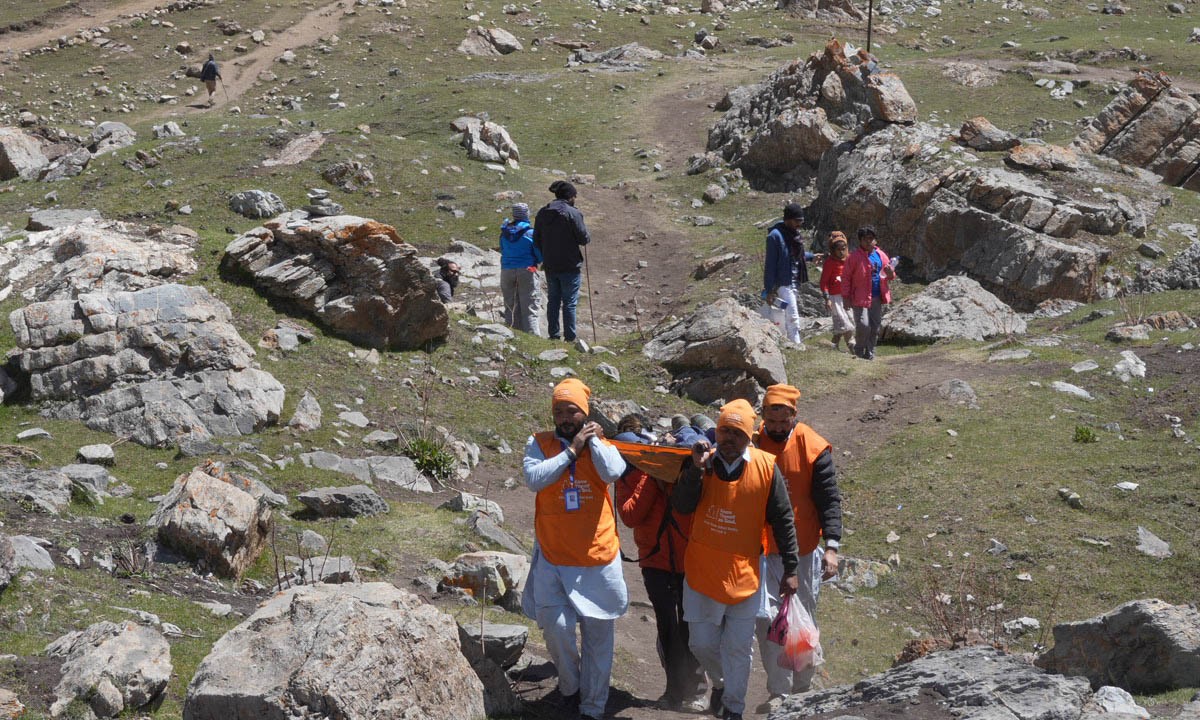
VMRK volunteers also responded to emergencies nearby. Whenever urgent conditions arose, they carried oxygen cylinders to help people on the spot and used stretchers to bring patients safely back to the camp.
Serving humanity with devotion
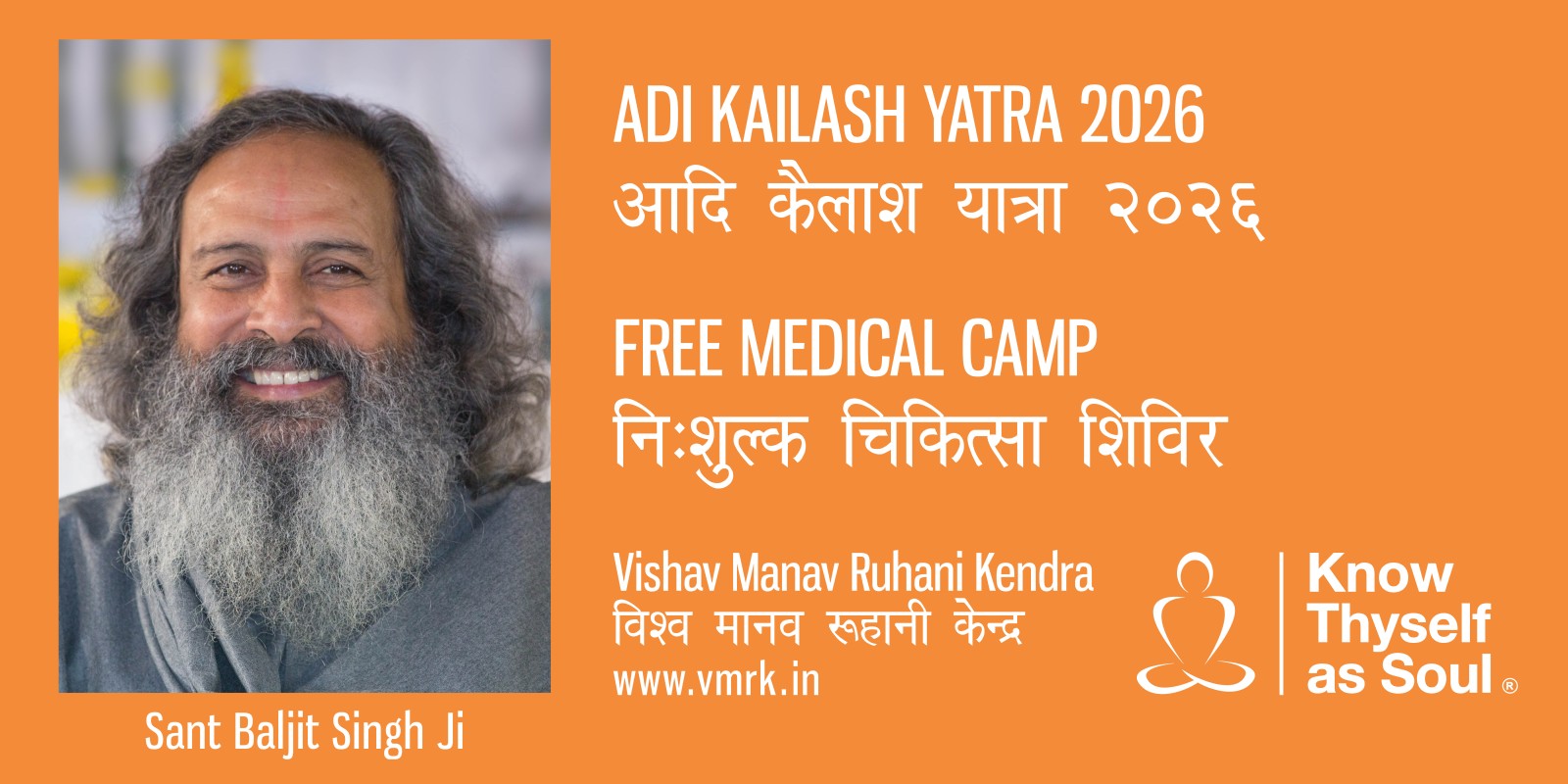
As each evening approached, the number of visitors slowly decreased. Still, eight medical professionals and volunteers stayed at the camp around the clock. The altitude affected them too, causing mild breathlessness and difficulty sleeping. Many rested in a semi‑upright position to breathe more easily. Despite these challenges, the volunteers served with dedication to help humanity as taught by Sant Baljit Singh Ji.
By the end of the 33‑day period, more than 2,670 pilgrims had received free medical care, including over 460 who required in‑house treatment.
DAYS OF FREE MEDICAL SERVICE AT VMRK'S ROUND-THE-CLOCK MEDICAL CAMP
PILGRIMS RECEIVED MEDICAL CARE FOR HIGH ALTITUDE HEALTH ISSUES
PATIENTS WERE TREATED AT OUR CLINICAL TREATMENT CENTER
Visitor feedback
Many people left comments in our visitor log, some are listed below:
Har Har Mahadev! We visited Adi Kailash today. My sister had nausea, vomiting, and felt uneasy, so we took treatment at the camp. She felt better, and by God’s grace, she visited near the Adi Kailash foothill. Again, while returning, the two of us felt very uneasy and had mountain sickness. We received oxygen here and are so happy and thankful for their treatment. May you help more and more people and spread love and care! Thank you so much!
Today, on June 16, my family and I came for Adi Kailash darshan. On the way to the temple, the health of my 8-year-old son started deteriorating. We took a lift and reached the temple; however, because of the high altitude, my son’s oxygen level was going down. From the temple, an Indian Army vehicle brought us to the VMRK medical camp, where medical aid was provided by the doctors. My son is doing well now, and we thank VMRK from the bottom of our hearts.
At the final stage of the Adi Kailash Yatra, a medical camp was set up under the inspiration of revered Sant Baljit Singh Ji, with an ample supply of medicines, a team of doctors, and the dedicated participation of volunteers. This initiative truly reflects the spirit of service to humanity. We should take inspiration from it and always remain ready to serve humanity. Note: I was amazed to see a medical camp setup at such a challenging high‑altitude location. It is indeed commendable.
We had all come for the Adi Kailash Yatra. After the Adi Kailash darshan, my sister-in-law’s blood pressure suddenly shot up. We had to rush to the medical camp set up under the inspiration of Sant Baljit Singh Ji. There, we received such good service that we fall short of words. We pray to God that your philanthropy continues in the same spirit. My deepest respect and heartfelt thanks to the entire team and Sant Baljit Singh Ji.