Vishav Manav Ruhani Kendra Serving Pilgrims

Vishav Manav Ruhani Kendra (VMRK) launched its pilgrimage services program in 2014 to support pilgrims undertaking the Kanwar Yatra. In the years that followed, VMRK organized an increasing number of week-long camps to serve kanwarias (pilgrims) of this annual yatra (pilgrimage). Since 2022, VMRK has continued to expand the program each year, extending the services to pilgrims and devotees across additional yatras (pilgrimages) and melas (religious festivals or fairs). These two video reports provide a summary of our pilgrimage services.

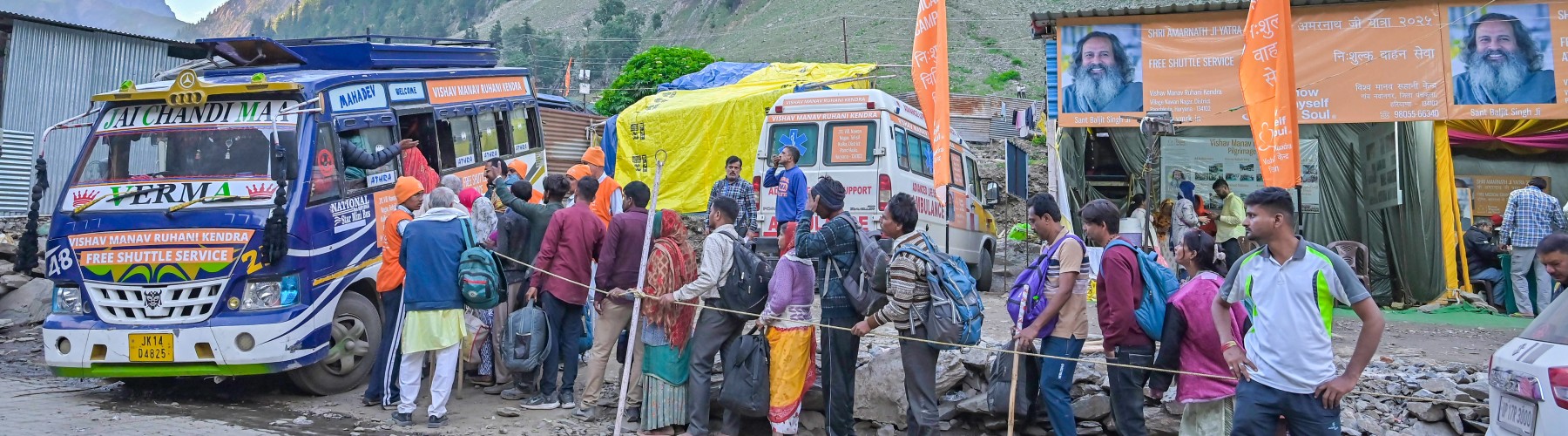
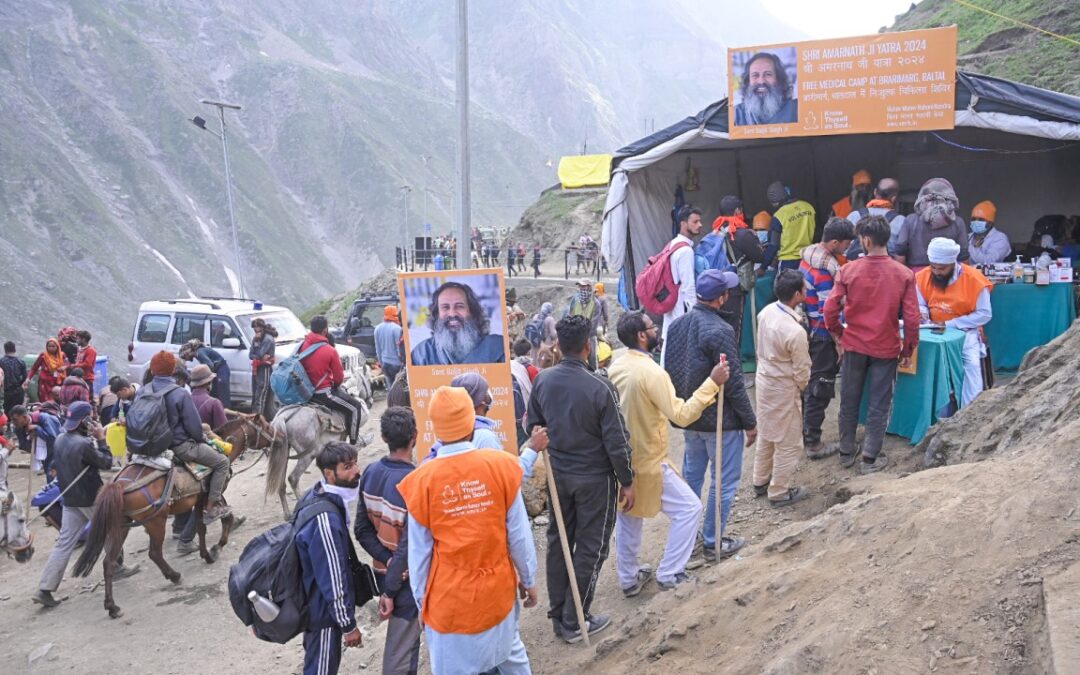
Serving pilgrims at Shri Amarnath Ji Yatra 2024

Serving pilgrims at Shri Amarnath Ji Yatra 2024

Each year, hundreds of thousands of pilgrims undertake the yatra (pilgrimage) to the Amarnath Holy Cave, located in the Indian state of Jammu and Kashmir. It is believed that in this cave, Lord Shiva narrated the secrets of immortality and the creation of the Universe...

read more
MORE ABOUT THIS YATRA

The Amarnath Holy Cave is a holy shrine located in the the Pahalgam tehsil of Anantnag district in the Himalayan sub-valley of Jammu and Kashmir, India. This holy cave is home to the Shiva Lingam, revered by Hindus as the physical manifestation of Lord Shiva. At an altitude of 3,888 meters, the cave is covered in snow most of the year. In summer, the cave is open to pilgrims.

The annual pilgrimage, Shri Amarnath Ji Yatra, occurs from July to August, during which pilgrims visit the Amarnath Holy Cave to pay reverence to Lord Shiva in the form of an iced stalagmite Shiva Lingam.

In 2022, Sant Baljit Singh Ji motivated Vishav Manav Ruhani Kendra (VMRK) to serve the devotees and pilgrims visiting the cave. Since then VMRK has been serving pilgrims at the Shri Amarnath Ji Yatra every year.

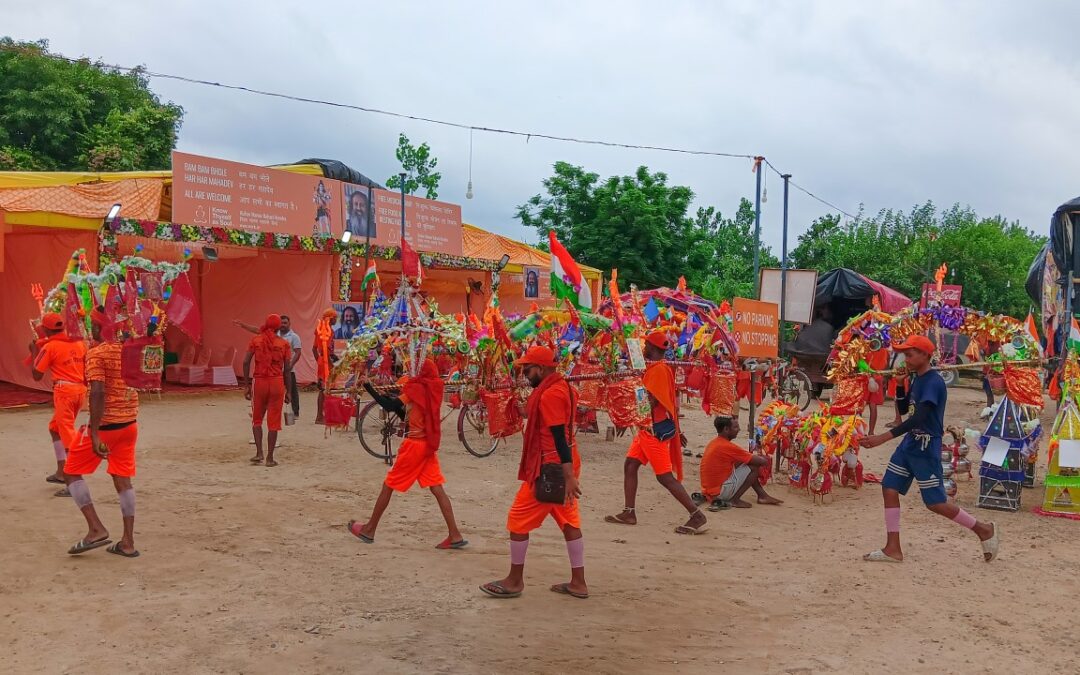
Kanwar Yatra 2024: 24-hour care and support

Kanwar Yatra 2024: 24-hour care and support

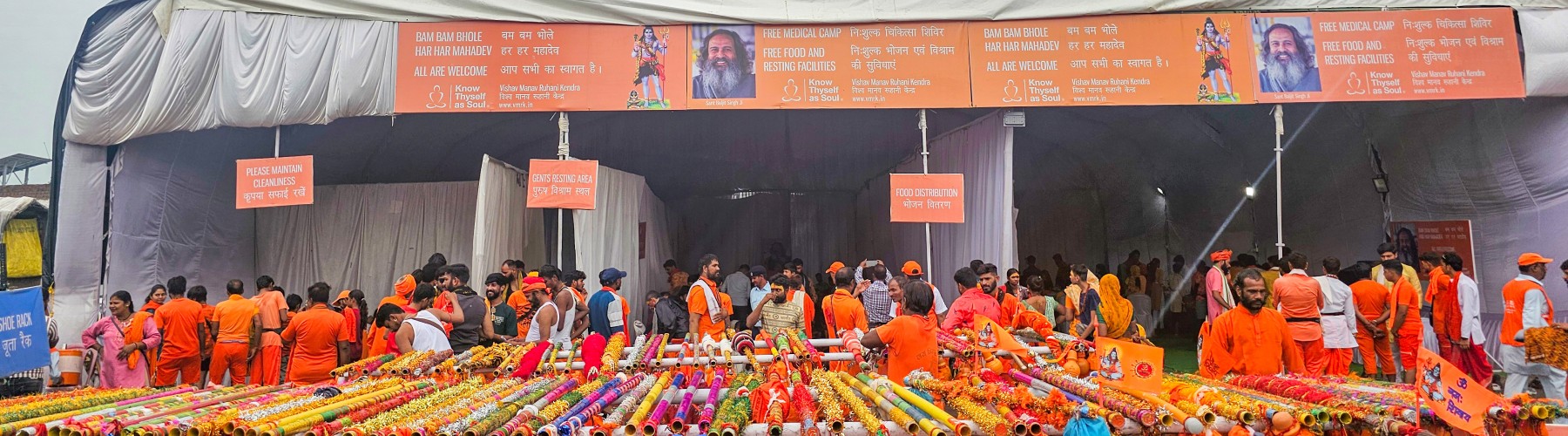
The annual Kanwar Yatra begins with the onset of the Sawan month. It is a pilgrimage marked by endurance, sacrifice, and devotion to Lord Shiva. The pilgrims, called kanwarias, walk hundreds of miles, often barefoot, to carry holy water from sacred rivers to their...

read more
MORE ABOUT THIS YATRA

Throughout the month of Sawan, one can see large numbers of the pilgrims walking along roads leading to the sacred rivers, such as the Ganges. Many make the journey with bare feet and balance on their shoulders a colorfully decorated pole, called a kanwar, which has containers suspended on either side. The pilgrims fill the containers with water from the sacred rivers, then carry it back to their native places, where they make a devotional offering of it in their local temples of Lord Shiva on Sawan Shivratri, the day devoted to Lord Shiva.

This annual pilgrimage, known as Kanwar Yatra, occurs during the monsoon season, so these pilgrims walk long distances in heavy rains, extreme humidity, and heat. The pilgrims wear saffron-colored clothes, and many wear malas (beads used for prayer and meditation) made from sacred rudraksha beads. Ancient Indian scriptures tell how Lord Shiva once came out of a deep meditation, and his tears fell to earth and turned into seeds that grew into rudraksha trees. Beads made from rudraksha tree seeds are known as “Lord Rudra’s teardrops.” The word rudraksha is a combination of two Sanskrit words—Rudra, the name of one of the forms of Lord Shiva, and aksha, teardrops. Especially during the month of Sawan, but also throughout the year, devotees wear sacred rudraksha malas in honor of Lord Shiva.

Vishav Manav Ruhani Kendra serves these pilgrims with camps that offer medical care, free food, and resting places.

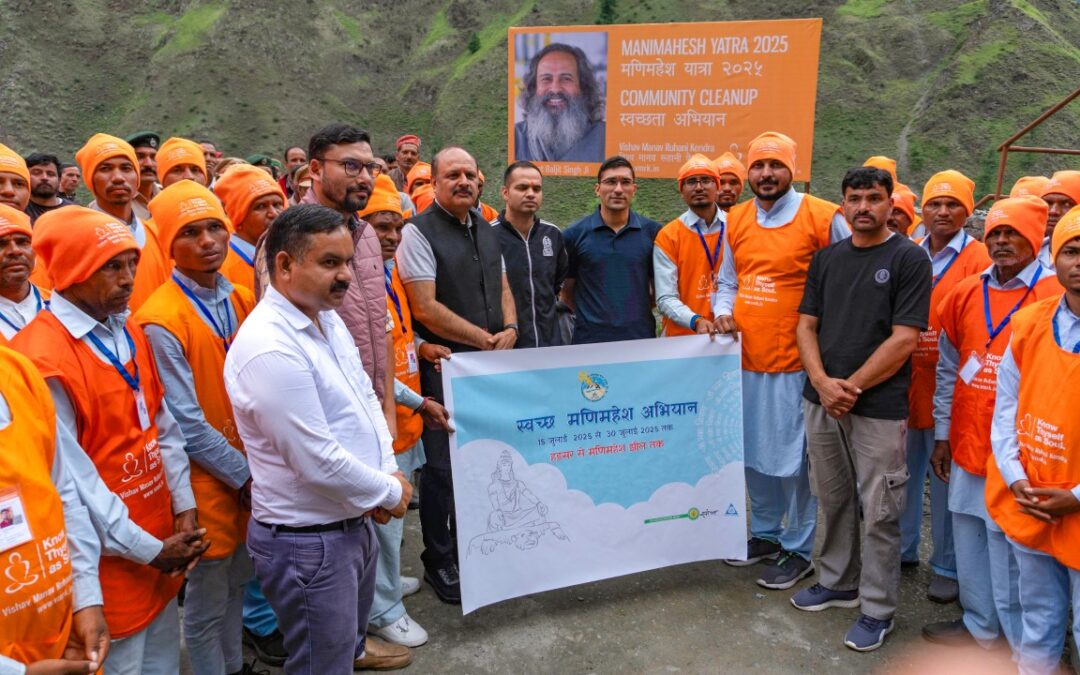
Cleanliness Campaign for Shri Manimahesh Yatra 2025

Cleanliness Campaign for Shri Manimahesh Yatra 2025

Shri Manimahesh Kailash is a sacred mountain in the Himalayan range, located in the Chamba district of the Indian state of Himachal Pradesh. Each year, a large number of pilgrims undertake the Shri Manimahesh Yatra, trekking to Manimahesh Lake, located at an elevation...

read more
MORE ABOUT THIS YATRA

The Shri Manimahesh Yatra is a pilgrimage to the foot of Manimahesh Kailash, a sacred mountain located in the Chamba district of Himachal Pradesh. The name Manimahesh signifies the gem that sits on the top of Lord Shiva’s head. It is believed that Lord Shiva created the Divine abode of Manimahesh Kailash after marrying Goddess Parvati.

Every year, this yatra is undertaken in August or September, starting in the sixth month of the Hindu calendar (called Bhadon), on Janmashtami (the eighth day after the new moon). The yatra ends on Radha Ashtami (the eighth day after the full moon). Pilgrims undertake this yatra over 2–3 days, trekking on unpaved paths that are very rocky on steep mountainous terrain to reach the holy Manimahesh Lake situated at an altitude of 4,080 meters.

Vishav Manav Ruhani Kendra (VMRK) is inspired by Sant Baljit Singh Ji to serve humanity. In 2023, VMRK extended its pilgrimage services by providing medical and ambulance services to serve the pilgrims during the Shri Manimahesh Yatra.

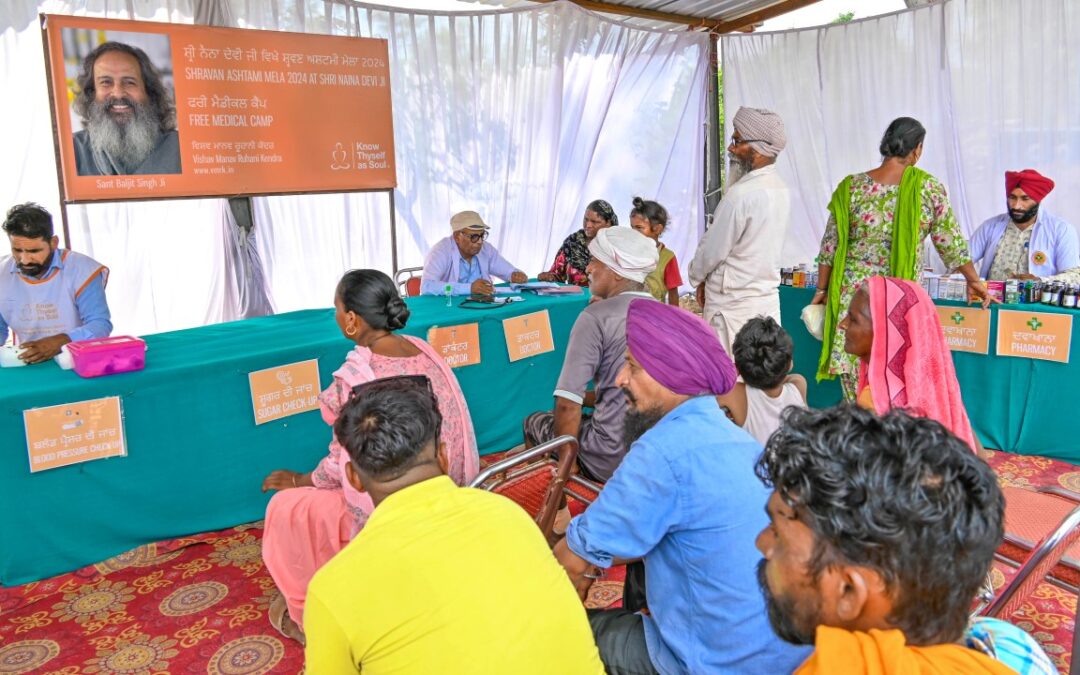
2024 Shravan Ashtami Fair at Shri Naina Devi Ji Temple

2024 Shravan Ashtami Fair at Shri Naina Devi Ji Temple

The sacred Shri Naina Devi Ji Temple is located on a hilltop in the Bilaspur district of the Indian state of Himachal Pradesh. Every year, the Shravan Ashtami Mela is organized at the Shri Naina Devi Ji Temple during the month of Shravan/Sawan. This 10-day mela (fair)...

read more
MORE ABOUT THIS TEMPLE

Shri Naina Devi Ji Temple is one of the most revered temples in India. Located in the Bilaspur district in the state of Himachal Pradesh, the temple sits on top of a hill, 1,219 meters above sea level, and overlooks the gigantic Gobind Sagar Lake.

This holy shrine is dedicated to Shri Naina Devi, one of the forms of Goddess Shakti. Throughout the year, hundreds of thousands of pilgrims and devotees from all walks of life visit the temple for darshan of Maa Naina Devi (Mother Goddess). During auspicious occasions such as Shravan Ashtami, Chaitra Navratri, and Ashvin Navratri the temple organizes fairs or festivals (known as mela). Large crowds attend these festivals to participate in the unique rituals, cultural programs, and fairs. At these events, the temple also arranges free community services for those in need. In particular, medical camps are provided around the temple grounds during these festivals. In 2023, Vishav Manav Ruhani Kendra extended its pilgrimage services program by organizing two medical camps to serve the pilgrims and devotees during the Shravan Ashtami Mela at Shri Naina Devi Ji Temple.

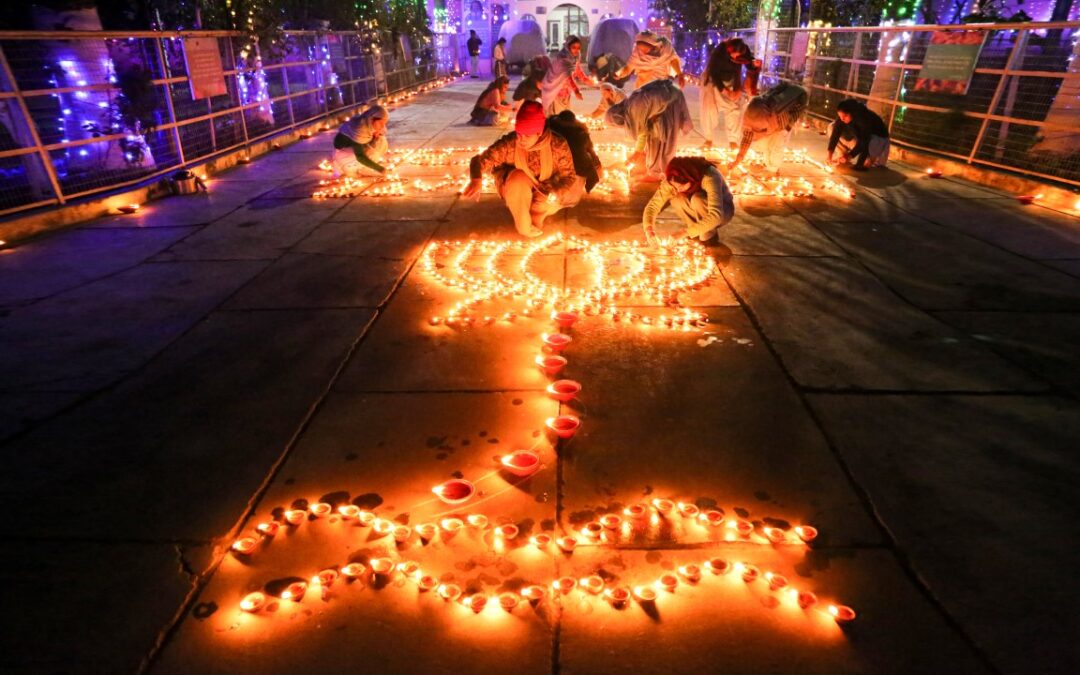
Celebrating consecration of Shri Ram Janmabhoomi Temple

Celebrating consecration of Shri Ram Janmabhoomi Temple

On January 22, 2024, the Prime Minister of India led the consecration ceremony of Shri Ram’s idol at Shri Ram Janmabhoomi Temple. Leading up to this day, he urged the nation to celebrate it as an auspicious occasion, akin to Diwali, by illuminating earthen lamps in...

read more
MORE ABOUT THIS TEMPLE

The Shri Ram Janmabhoomi Temple located in Ayodhya in the Indian state of Uttar Pradesh, has historical significance. It is considered sacred, being the birthplace of Shri Ram, an incarnation of Lord Vishnu.

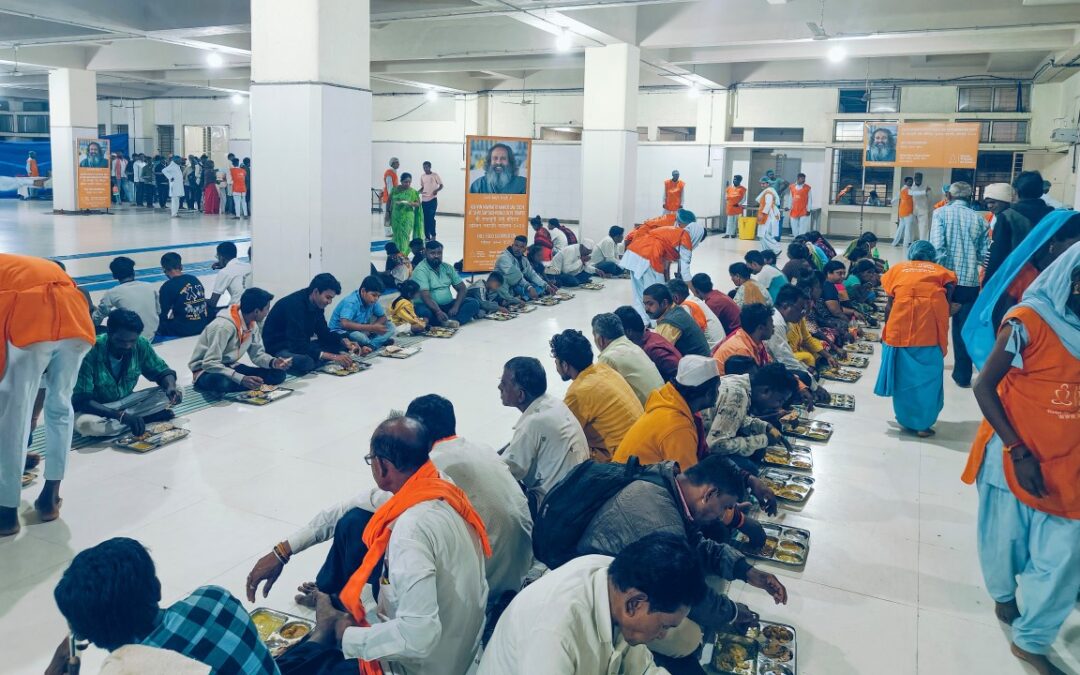
People visit the temple to pay reverence to Lord Ram. Vishav Manav Ruhani Kendra (VMRK) is taking the opportunity to serve them by offering free food.

MORE ABOUT THIS TEMPLE

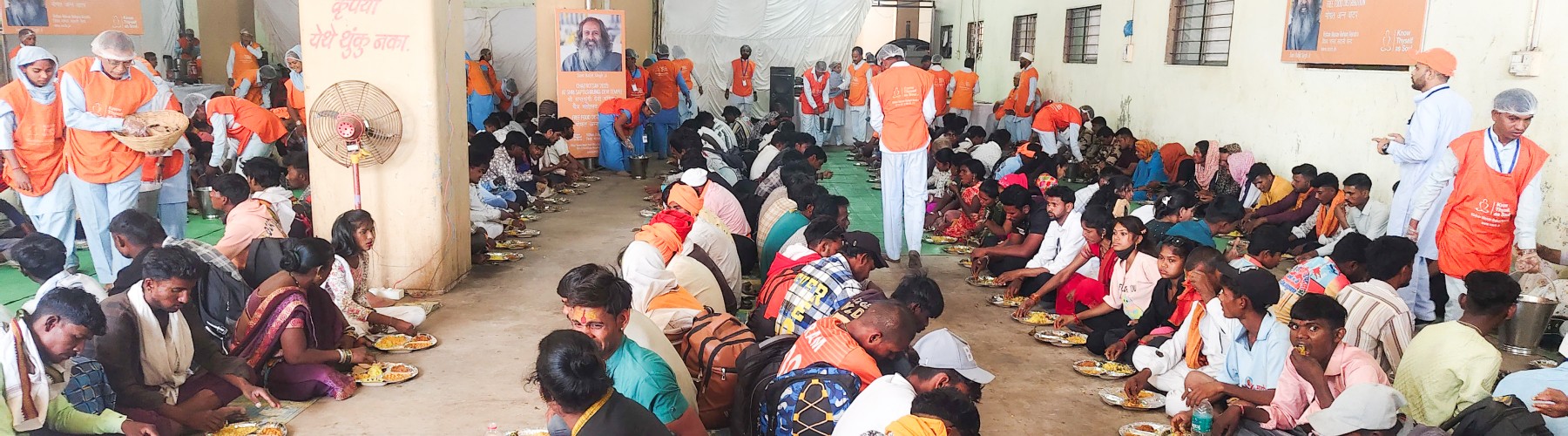
Shree Saptashrungi Nivasini Devi Temple is situated in the village Nanduri, within the Nashik district of Maharashtra, India. The temple, located at an elevation of around 1,400 meters above sea level, sits on a hill surrounded by seven peaks.

The holy shrine is one of the sacred temples in the country dedicated to Shree Saptashrungi Nivasini Devi, one of the forms of Goddess Shakti (Mother Goddess). While the temple attracts large gatherings of devotees around the year, there is a significant rise in numbers of devotees during various festivals celebrated at the temple, particularly the Chaitra (Spring) Navratri Utsav (festival), Ashvin (Autumn) Navratri Utsav, and Kojagiri Purnima Utsav. These festivals are celebrated with great enthusiasm and fervor at the temple, where devotees partaking in rituals and cultural events while seeking darshan of the goddess.

In 2024, Vishav Manav Ruhani Kendra extended its pilgrimage services by providing free food and medical services to the devotees during the Chaitra Navratri Utsav, and subsequently during the Ashvin Navratri and Kojagiri Purnima Utsav at Shree Saptashrungi Nivasini Devi Temple.

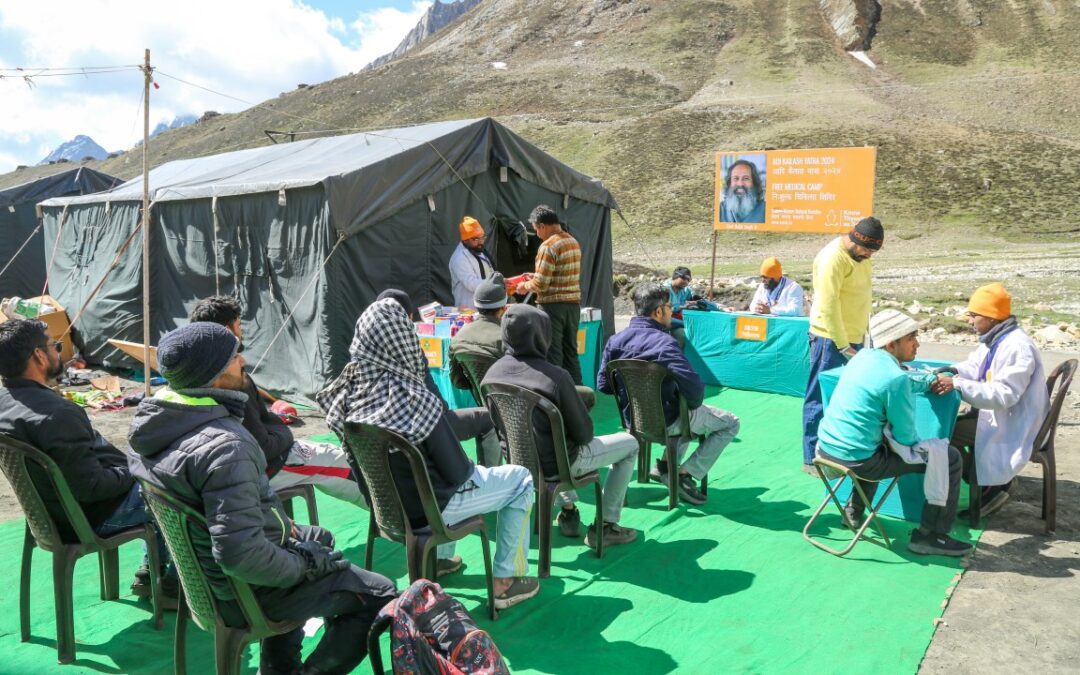
Serving pilgrims at Adi Kailash Yatra 2024

Serving pilgrims at Adi Kailash Yatra 2024

Each year, thousands of pilgrims undertake a multi-day journey to the foot of Adi Kailash, the end-point of the yatra (pilgrimage). The yatra commences with a journey on an off-road vehicle from Dharchula town, the junction point for various routes across the state....

read more
MORE ABOUT THIS YATRA

Adi Kailash is a sacred mountain in the Himalayan range located in Jolingkong, Pithoragarh district in the Indian state of Uttarakhand. It is believed to be one of the Panch Kailash (five divine abodes of Lord Shiva), which include Mount Kailash, Shrikhand Mahadev, Kinnaur Kailash, and Manimahesh.

The Adi Kailash Yatra is a pilgrimage to the foot of Adi Kailash that traverses rocky and steep mountainous terrain at high altitude, with several streams flowing along the way. Pilgrims embark on a two-day road journey from Dharchula to Jolingkong, and then trek 2–3 kilometers to the foot of the mountain, situated at approximately 5,600 meters above sea level. This yatra is primarily undertaken by pilgrims during May and June.

In 2024, Vishav Manav Ruhani Kendra (VMRK) expanded the outreach of its pilgrimage services by providing medical, ambulance, and refreshment services to the pilgrims during the Adi Kailash Yatra.

Serving pilgrims at Shrikhand Mahadev Yatra 2024

Serving pilgrims at Shrikhand Mahadev Yatra 2024

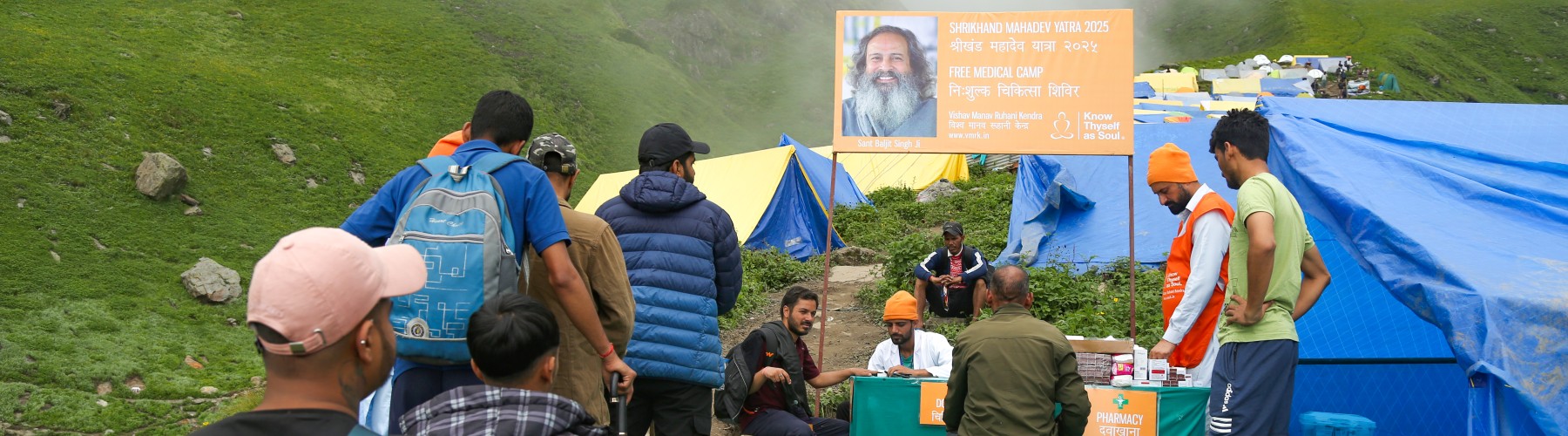
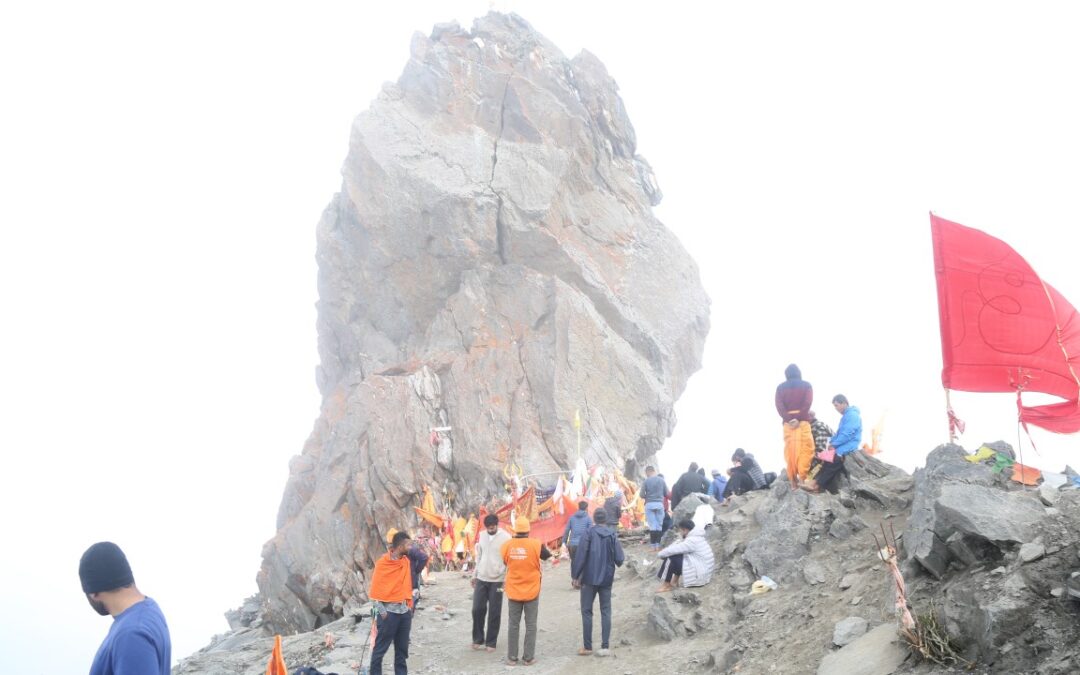
Annually, thousands of pilgrims undertake the Shrikhand Mahadev Yatra (pilgrimage) to reach the peak of Shrikhand Mahadev at an elevation of 5,200 meters. At the peak, pilgrims pay reverence to Lord Shiva, in the form of 72-foot pinnacle rock Shiva Lingam. The most...

read more
MORE ABOUT THIS YATRA

Shrikhand Mahadev is a sacred mountain believed to be one of the divine abodes of Lord Shiva and Goddess Parvati. It is located in the Himalayan range, in the Kullu district of Himachal Pradesh, India.

Each year, thousands of pilgrims undertake the Shrikhand Mahadev Yatra. It is a pilgrimage to the pinnacle rock Shiva Lingam situated at the Shrikhand Mahadev peak, at an elevation of 5,200 meters. The yatra typically begins from Jaon village, where pilgrims embark on a 32-kilometer trek to the peak. This one-way trek usually takes 2–3 days to complete. The entire path of this pilgrimage trek is arduous, traversing diverse mountainous terrains that include dense forests, steep and rocky meadows, and glacier-covered regions. The yatra is officially permitted typically in July.

In 2024, Vishav Manav Ruhani Kendra (VMRK) inspired by Sant Baljit Singh Ji, extended its pilgrimage services by providing medical services to pilgrims during the Shrikhand Mahadev Yatra.

Serving pilgrims at Kinnaur Kailash Yatra 2024

Serving pilgrims at Kinnaur Kailash Yatra 2024

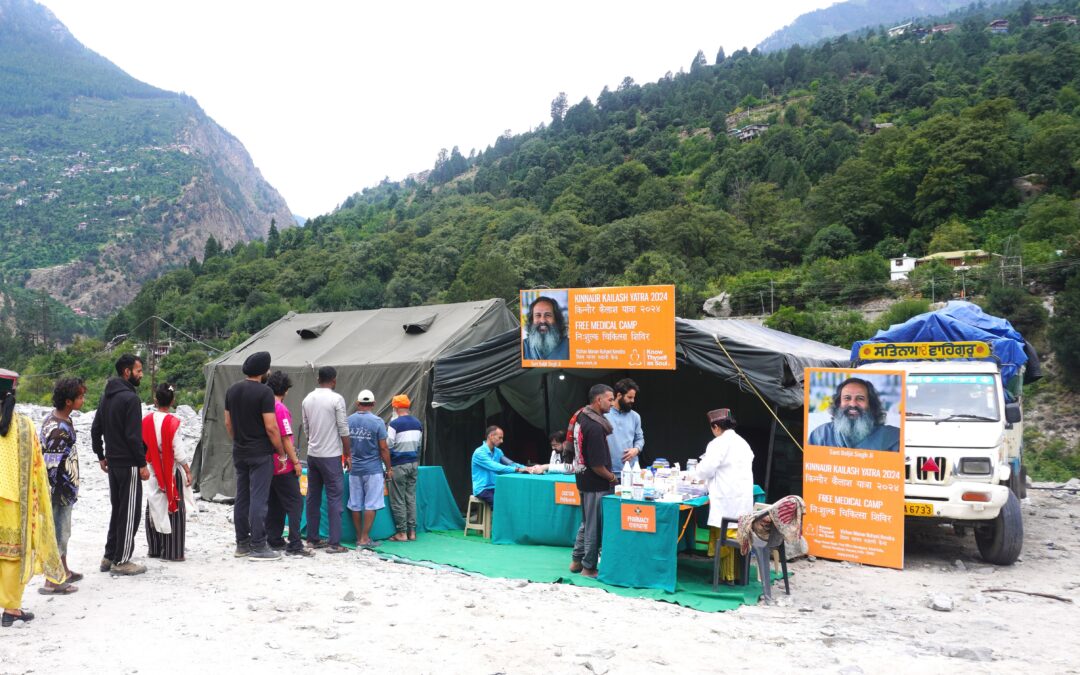
Every year, many pilgrims undertake the Kinnaur Kailash Yatra to pay reverence to Lord Shiva in the form of rock Shiva Lingam. This Shiva lingam is located at an altitude of 6,050 meters, near the peak of Kinnaur Kailash. The most popular pilgrimage route begins at...

read more
MORE ABOUT THIS YATRA

Kinnaur Kailash is a sacred mountain in the Himalayan range, standing at a height of 6,050 meters above sea level. The mountain is located in the Kinnaur district of the Indian state of Himachal Pradesh. It is believed to be the winter abode of Lord Shiva.

The Kinnaur Kailash Yatra is a pilgrimage to the vertical rock Shiva Lingam that stands 79-foot high near the peak of Kinnaur Kailash. The yatra typically begins from Tangling village, where pilgrims undertake an approximate 14-kilometer trek to the Shiva Lingam. The entire route is perilous, traversing through steep diverse mountainous terrains that include forests, meadows, and large boulder-strewn areas. Pilgrims usually take 3 days to complete this entire pilgrimage. This yatra is officially permitted typically in August.

In 2024, Vishav Manav Ruhani Kendra (VMRK) inspired by Sant Baljit Singh Ji, expanded the outreach of its pilgrimage services by providing medical services to the pilgrims during the Kinnaur Kailash Yatra.

Serving devotees at Maha Kumbh Mela 2025

Serving devotees at Maha Kumbh Mela 2025

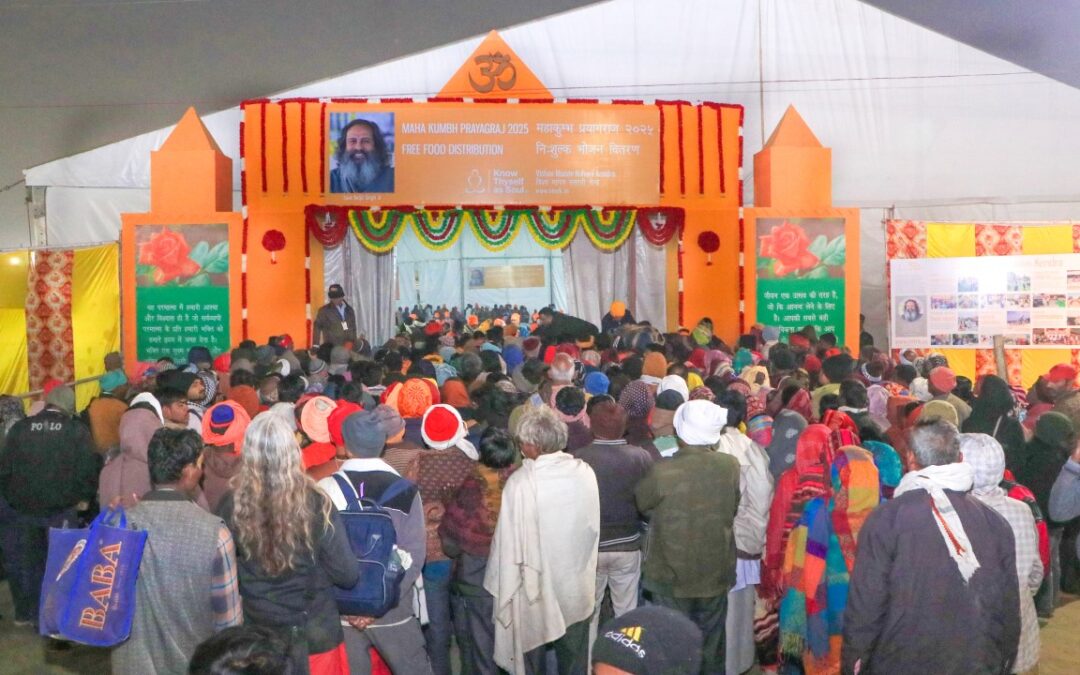
Maha Kumbh Mela 2025 was celebrated at Prayagraj in the Indian state of Uttar Pradesh from January 13 to February 26. It was a momentous occasion due to the rare astrological positions of the Sun, the Moon, and Jupiter. This alignment occurred after 12 cycles of the...

read more
MORE ABOUT THIS MELA

The Kumbh Mela (the festival of the sacred pitcher) is the largest religious gathering in the world, attended by millions of devotees from all over the world. According to beliefs, a Kumbh (a celestial pitcher) emerged during the divine event of Sagar Manthan (the churning of the cosmic ocean). This Kumbh contained amrita—the divine nectar of immortality. To possess this amrita, a celestial battle broke out between Gods and demons. This battle spanned twelve divine days, equivalent to twelve human years.

During the battle, a few drops of the amrita fell at four sacred locations in India, each situated along the banks of holy rivers: Haridwar, Ujjain, Nashik, and Prayagraj. These four locations mark the sites where the Kumbh Mela is celebrated four times over the course of twelve years, rotating between each location. The holy rivers corresponding to four locations are believed to turn into amrita, during the Kumbh Mela, offering devotees the opportunity to take a holy dip.

The celebration of Kumbh Mela at each site is based on a distinct set of astrological positions of the Sun, the Moon, and Jupiter. The Kumbh Mela, which occurs during a rare alignment of these planets is known as Maha Kumbh Mela (Maha meaning Great). This auspicious alignment occurs after 12 cycles of the 12-year Kumbh Mela, held every 144 years. In 2025, the Maha Kumbh Mela was celebrated at Prayagraj.

In 2025, Vishav Manav Ruhani Kendra (VMRK) inspired by Sant Baljit Singh Ji, provided free food, medical, and ambulance services to the devotees during Maha Kumbh Mela 2025 at Prayagraj.

No Results Found

The page you requested could not be found. Try refining your search, or use the navigation above to locate the post.

MORE ABOUT THIS TEMPLE

Shri Vitthal Rukmini Temple, located in Pandharpur in the Solapur district of Maharashtra, is one of the most revered temples in India. The holy temple is dedicated to Lord Vitthal (a form of Lord Krishna) and his consort, Goddess Rukmini.

While the temple is a hub of devotion throughout the year, it truly comes alive during the Ashadhi Ekadashi festival, which falls on the eleventh lunar day (Ekadashi) of the Hindu month of Ashadha (June-July of the Gregorian calendar). In commemoration of this occasion, hundreds of thousands of devotees embark on an on-foot pilgrimage, often barefoot, to the temple and back. These pilgrims are known as warkaris, a term derived from the Marathi words “wari”, meaning pilgrimage, and “kari”, meaning one who undertakes it.

The warkaris travel in large processions known as Dindis, starting from various locations as far as approximately 550 kilometers away. Covering these long distances, while singing holy songs, reading sacred texts, and dancing in devotion, they arrive on or a few days before Ashadhi Ekadashi to seek darshan of Lord Vitthal. This pilgrimage, known as the Ashadhi Ekadashi Wari, is a remarkable expression of devotion, sacrifice, and endurance.

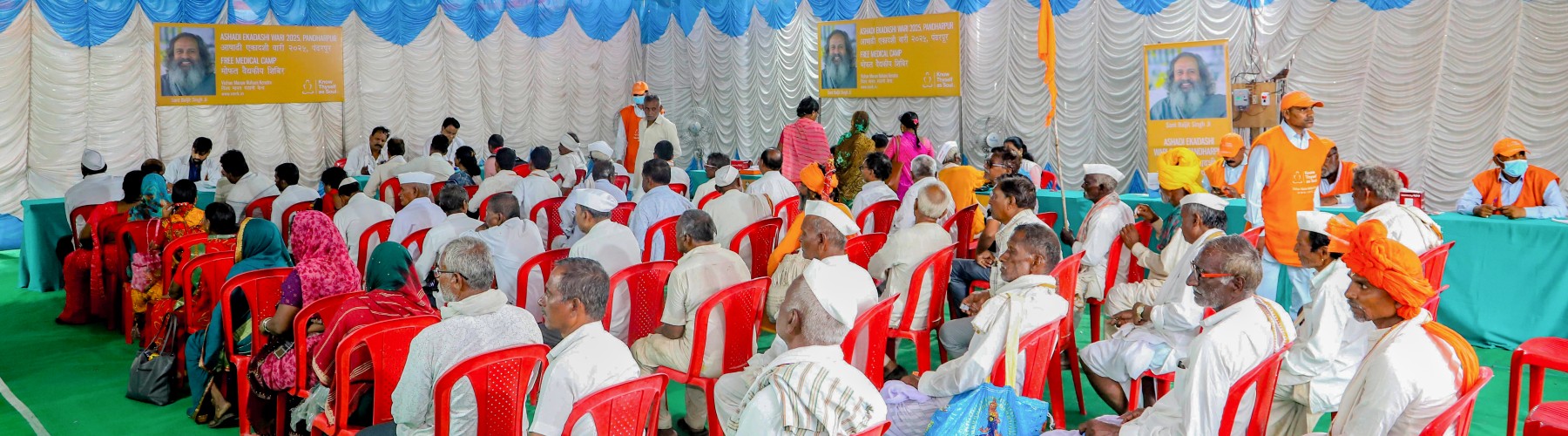
In 2025, Vishav Manav Ruhani Kendra (VMRK), inspired by the teachings of Sant Baljit Singh Ji, expanded the outreach of its pilgrimage services by providing medical services to the pilgrims and devotees during the Ashadhi Warkari Yatra.

No Results Found

The page you requested could not be found. Try refining your search, or use the navigation above to locate the post.

MORE ABOUT THIS TEMPLE

Shri Gogaji is a revered folk deity and warrior-saint, renowned as a protector of the people. It is believed that Shri Gogaji protects against snake bites and evil spirits and blesses his devotees with power and justice.

The mausoleum of Shri Gogaji, known as Shri Goga Ji Temple, is located in the village of Gogamedi, in the Hanumangarh district of Rajasthan, India. This temple is regarded as a sacred pilgrimage site and attracts millions of devotees each year.

During the Bhadrapad Mela (fair), celebrated annually from the Purnima (full moon day) of the Hindu month of Shravan (July–August) to that of Bhadrapada (August–September), the temple witnesses a huge influx of devotees. More than 2 to 2.5 million people from various Indian states visit the temple making it one of the largest religious gatherings in northern India. While large crowds gather each day during the mela, the temple sees the highest number of devotees in the days leading up to and including Goga Navami, which is considered especially auspicious.

During the mela, many devotees undertake the pilgrimage on foot from their residences, walking distances of up to hundreds of kilometers. Sant Baljit Singh Ji, in his teachings, often emphasizes service to humanity. In one of his teachings, he said, “When we support our communities, when we serve those in need, spreading peace and happiness, ensuring harmony among different sections of society, then we are contributing positively to God’s creation.” Inspired by his teachings, Vishav Manav Ruhani Kendra (VMRK) in 2025 extended its pilgrimage services by providing medical services to pilgrims during the Bhadrapad Mela at Shri Goga Ji Temple.

Serve everyone as part of the family of God.

Sant Baljit Singh Ji