
Shri Amarnath Ji Yatra 2026: VMRK serving pilgrims
For generations, the Shri Amarnath Ji Holy Cave has been a cherished pilgrimage destination in the Himalayas. At its heart lies a naturally formed ice stalagmite Shiva Lingam, the center of attraction for pilgrims. Each year, thousands make their way to it, chanting praises of God Shiva as they trek through steep trails, cold weather, rain and high altitude.
Amidst this challenging journey, Vishav Manav Ruhani Kendra (VMRK) has been helping pilgrims since 2022. With each passing year, VMRK has continued to expand and adapt its services based on pilgrims’ needs, as directed by the local administration.
Preparation and setup
This year, the administration permitted VMRK to offer patient assistance, food support for patients, IEC (Information, Education, and Communication) activities, and weather-protective clothing distribution. These services were offered along both Baltal and Pahalgam routes undertaken by pilgrims.
In preparation, volunteers at Lighthouse Center Nawan Nagar carefully packed and organized materials separately for each route. Beginning on June 26, multiple batches of volunteers departed from Lighthouse Center Nawan Nagar. They travelled to transport supplies, complete the necessary setup, and provide the designated services.
VMRK was assigned sites at Domail and Chandanwari, the starting points of the Baltal and Pahalgam routes, respectively. These sites became the base centers for VMRK’s services. At both sites, volunteers first cleared and leveled the designated areas. Next, they set up tents measuring 30 × 45 feet at Domail and 18 × 6 feet at Chandanwari. With the arrangements in place, VMRK commenced its services on July 8.
Patient assistance
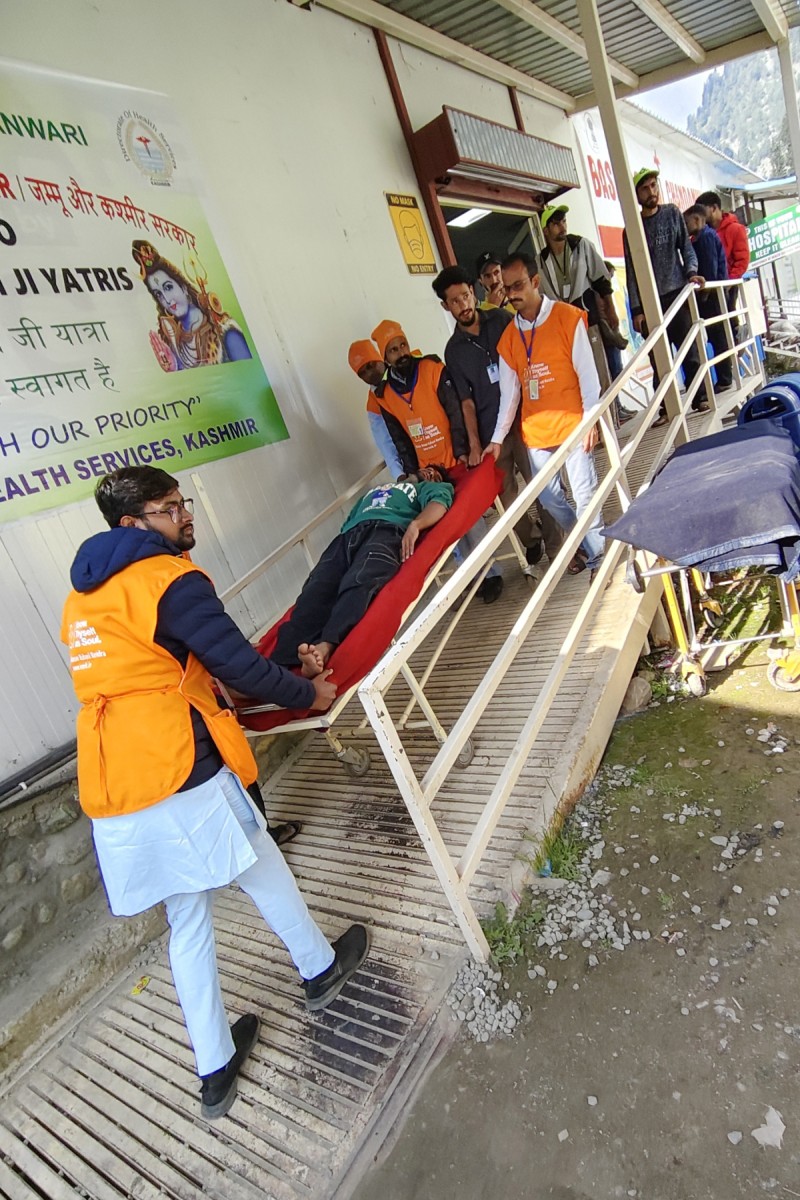
At Chandanwari Base Camp Hospital, VMRK volunteers took on different roles to support pilgrims who sought care at hospital. One team stayed at the entrance and guided pilgrims from registration to consultation and other sections of the hospital. Another group assisted the medical staff in the nursing ward with tasks such as dressing wounds and applying plaster casts when needed. Other volunteers remained in the inpatient ward to assist patients.
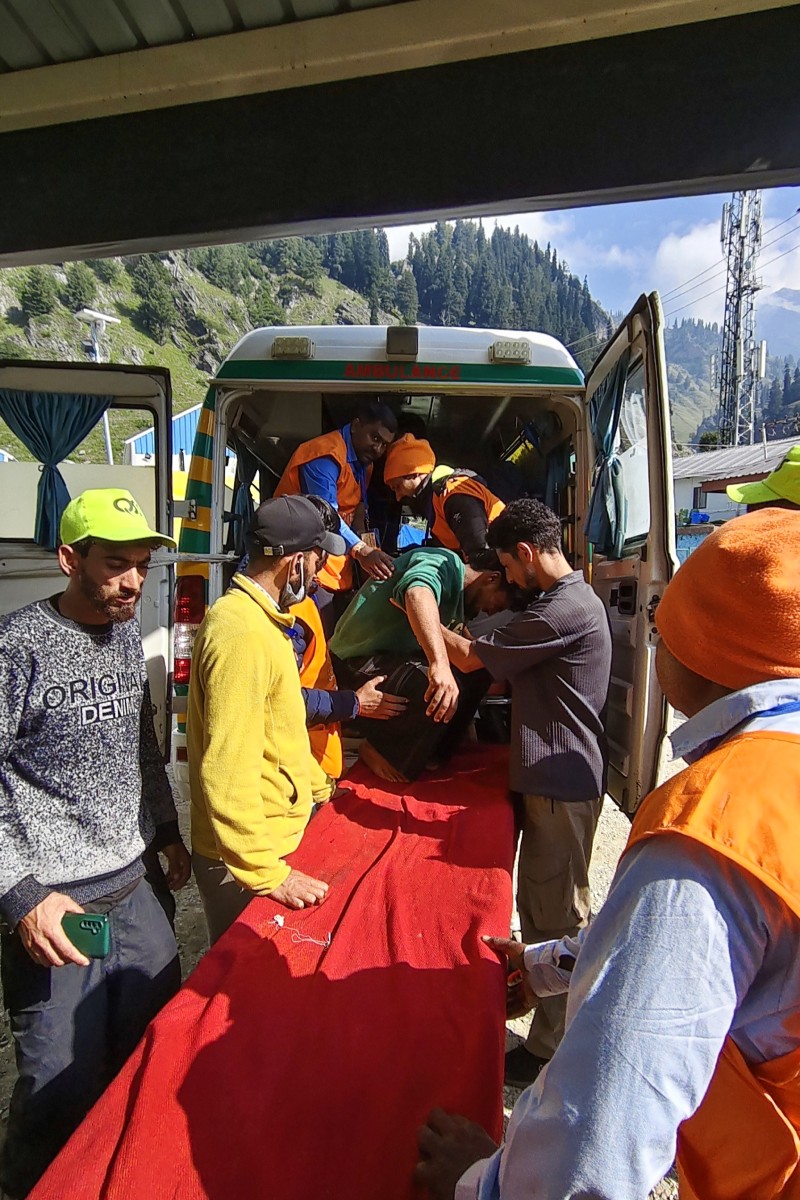
During emergencies, volunteers acted quickly. As soon as an ambulance arrived, they helped move patients using stretchers and wheelchairs. When patients needed to be referred to another hospital for further treatment, volunteers accompanied them as needed. Volunteers worked in day and night shifts to help around the clock.
Food support for patients
In Indian hospitals, patient companions (often called attendants) may support the patients with meals, basic personal care and hygiene, errands, etc. At Chandanwari Base Camp Hospital, VMRK volunteers provided hot meals to patients who had no companions, or when the patients requested this support. In such cases, volunteers happily obliged and arranged and delivered meals to these patients. Thus, they supported their recovery and well-being.
IEC (Information, Education, and Communication) activities
The administration sought VMRK’s assistance with IEC activities for the yatra and provided a soft copy of the pamphlet for distribution. The pamphlet described health and safety guidelines including symptoms, prevention, and the essential dos and don’ts related to high-altitude illness. VMRK printed large quantities of these pamphlets to reach as many pilgrims as possible.
Since most pilgrims begin their yatra early in the morning, volunteers chose this time for distribution, beginning as early as 3 am. They walked near the starting points of both treks, handing out pamphlets to pilgrims as they arrived. When needed, volunteers read the guidelines aloud and translated them into pilgrims’ local languages to help them understand the guidelines clearly.

Distributing weather-protective clothing
Many devotees come from warmer parts of India and are not prepared for the rainy and cold mountain weather. To help them, VMRK volunteers at Domail and Chandanwari set up tables alongside the pilgrimage routes and guided pilgrims to form a queue to receive warm clothing. On days when rain was expected—or already falling—volunteers also handed out raincoats so pilgrims could continue their trek while shielded from the rain.
This effort went beyond Domail and Chandanwari. When volunteers learned that Brarimarg, midway on the Baltal route, was experiencing heavy rain, they hired mules to carry raincoats to the site and handed them out to pilgrims there as well.
This support helped more than just pilgrims. Many sanitation workers and other workers in need who were serving during the yatra also received warm clothing and raincoats.
On August 8, the administration concluded the yatra, and VMRK concluded its services on the same day. VMRK served throughout the entire period, even when the yatra was suspended for multiple days. Over 780 patients were assisted, including local residents who visited during the suspensions. Additionally, over 5,000 pamphlets were distributed. More than 10,100 raincoats and more than 310 pieces of warm clothing were distributed.