
Medical assistance at Shravan Ashtami Mela 2025
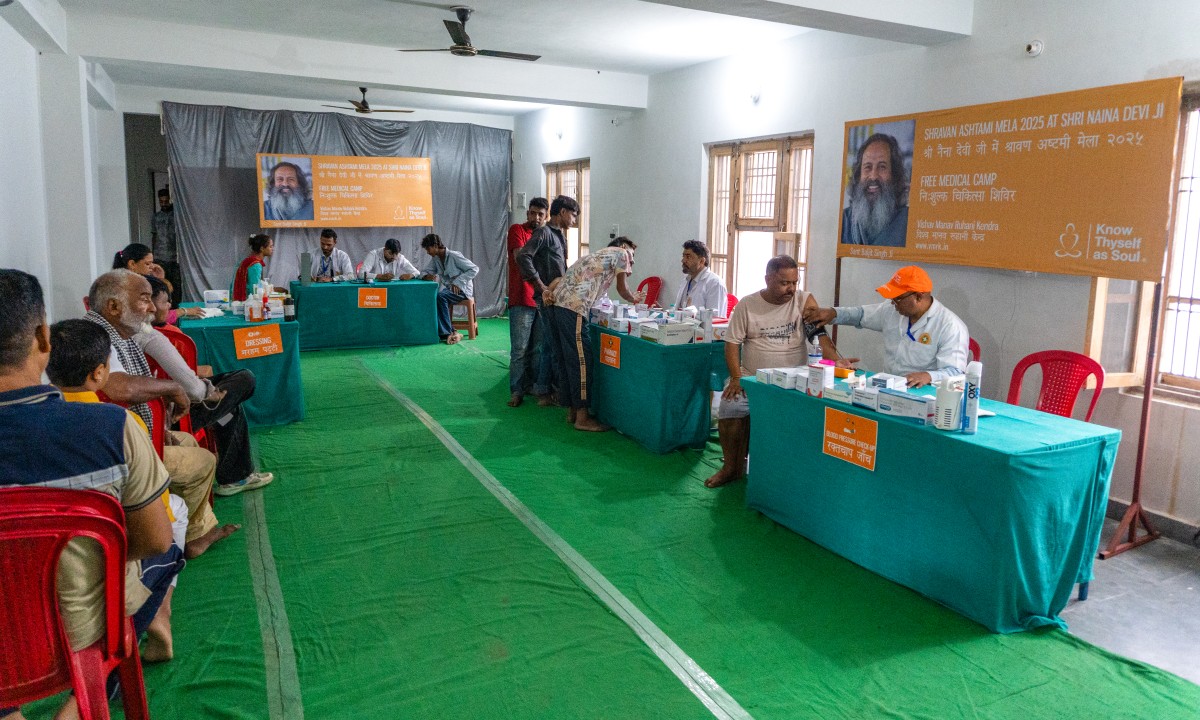

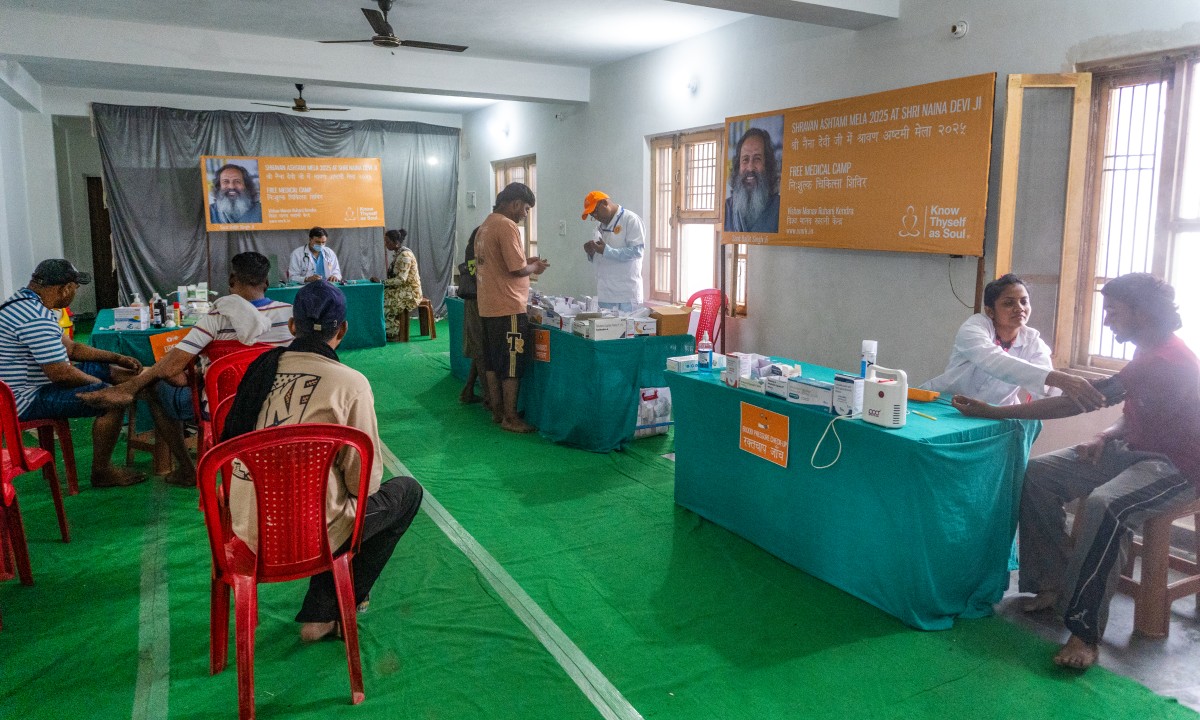
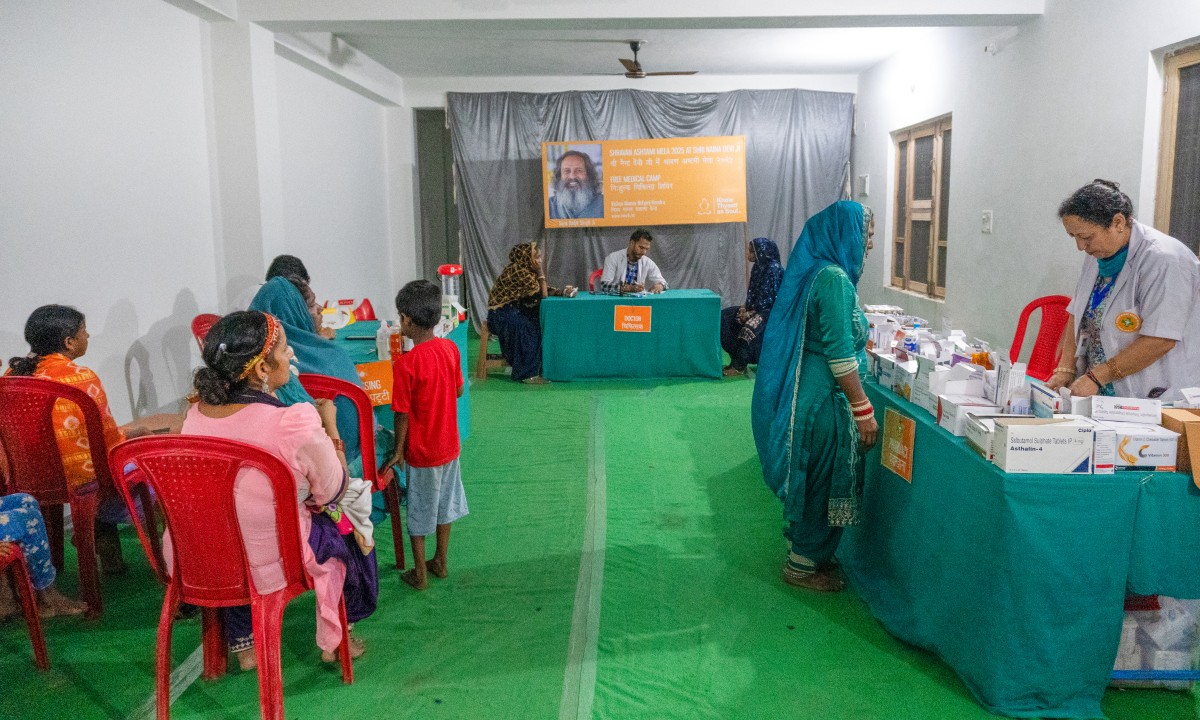
Each year, the Shravan Ashtami Mela (fair), celebrated at the Shri Maa Naina Devi Ji Temple, attracts a significant crowd of devotees. During this 10-day mela, it is common to see many devotees walking to the temple from their homes, while others use private or public transportation. Along the route, devotees often sing or play devotional songs, spreading the festive spirit. As pilgrims approach the temple, multiple routes converge to reach the temple at the hilltop. Of these routes, a large number of devotees choose to ascend the 1,084 steps that lead to the temple. These steps begin approximately 1.5 kilometers from the temple.
The local administration serving in the temple region knows Vishav Manav Ruhani Kendra (VMRK) very well for the medical services rendered during the Shravan Ashtami Mela since 2023. This year, when the administration once again approached VMRK to organize a medical camp and provide ambulance services, we were grateful for the opportunity. The designated site was a hall located near the steps leading up to the temple.
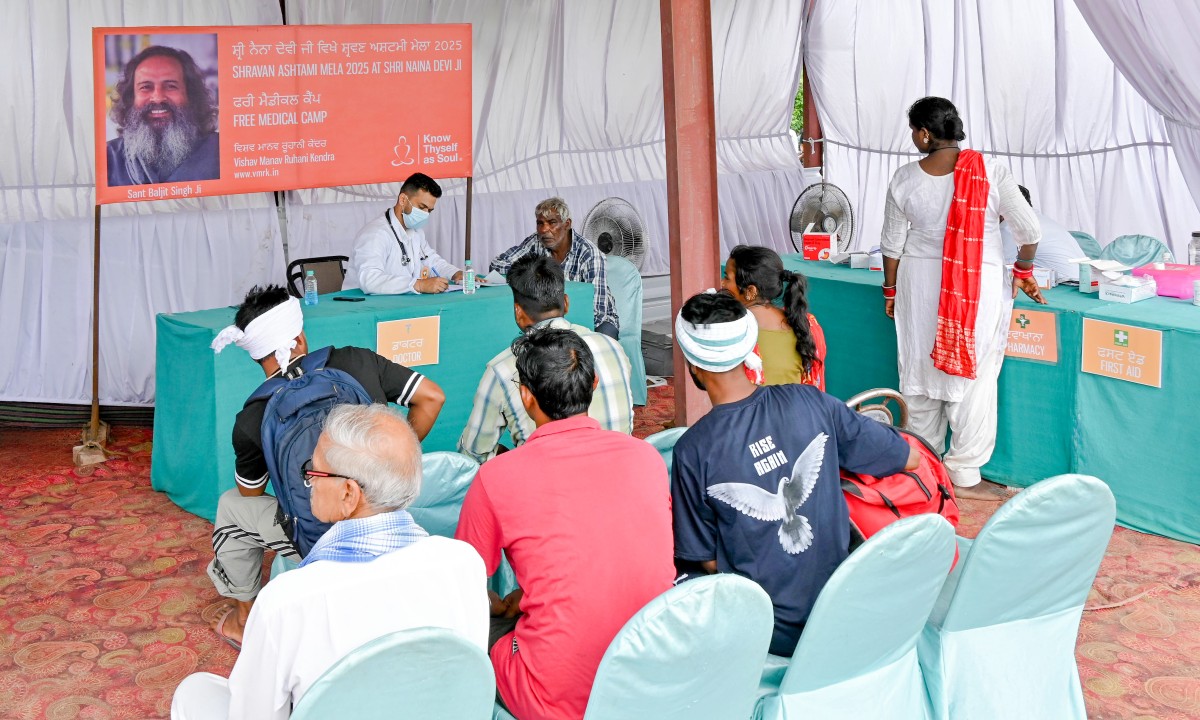
As in previous years, VMRK also set up another medical camp in Ghanauli village, 45 kilometers from the temple. This second medical camp served pilgrims traveling on the most frequented route.
Medical camp preparations
This year, the mela was celebrated from July 25 to August 3. In preparation for this pilgrimage service, a team of VMRK volunteers arrived from near and far at the VMRK center in Nawan Nagar. They meticulously packed medical supplies and equipment into a total of 34 boxes designated for both medical camps.
VMRK customized preparations for the medical services at each location. Oxygen cylinders were packed for the high altitude camp near the temple, to assist pilgrims with breathing discomfort due to the hilly terrain. VMRK volunteers also deep-cleaned an ambulance and its life-saving equipment was serviced by the respective agency to ensure proper functioning.
The medical camp in Ghanauli village was situated on the plains next to the highway. As the pilgrimage period coincides with the monsoon season, VMRK arranged for a local service provider to set up a waterproof metal shed for the camp. Noting that pilgrims also visited the camp to take shelter from the rain last year, VMRK increased the camp area this year to accommodate that and prevent overcrowding.
24-hour medical services
Each camp was divided into multiple sections: a registration area, a waiting area, a consultation area, a blood pressure monitoring station, a pharmacy counter, and a dressing corner. The medical camp near the temple had two additional areas. A private childcare space was set up for mothers to feed their babies. Separate to that, a two-bed clinical center provided in-house medical care for patients. Both medical camps operated around the clock to serve devotees arriving at any time of the day. These camps were staffed by a team of 4 doctors, 8 pharmacists, 2 nurses, and 28 volunteers.
TWO 24X7
MEDICAL CAMPS SERVED BY DOCTORS, PHARMACISTS, PARAMEDICAL STAFF, AND VOLUNTEERS
PILGRIMS RECEIVED FREE MEDICAL CONSULTATIONS, MEDICINES, AND FIRST AID
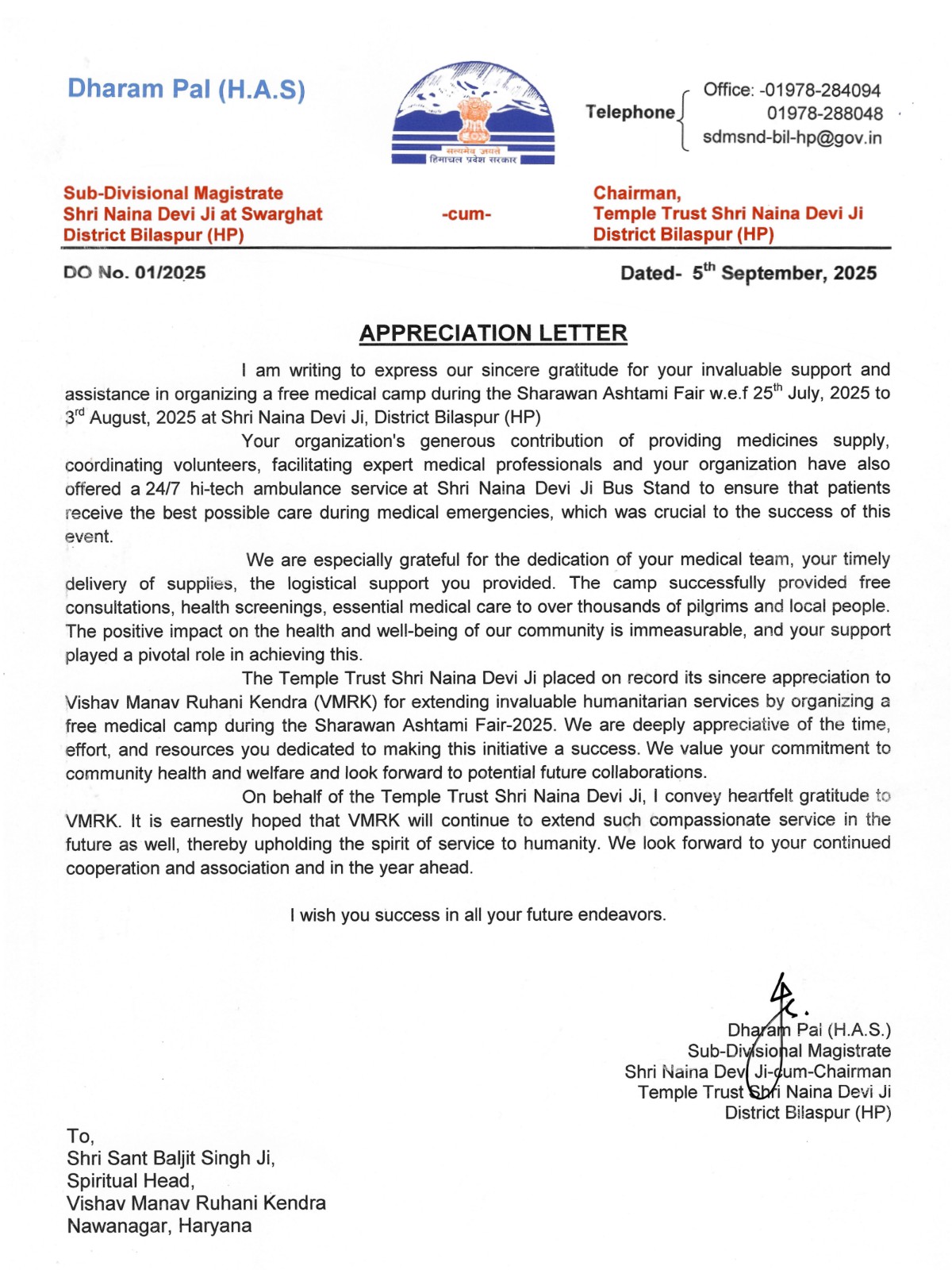
Vishav Manav Ruhani Kendra has provided free medical services to a large number of pilgrims visiting the temple. They have made a great effort in providing free care and medicine to so many patients.
Rahul Kumar, Deputy Commissioner Bilaspur
These camps attended to a large number of pilgrims who undertook the journey on foot. Walking long distances caused them to suffer from body aches, dizziness, and fever. Additionally, many of them had blisters from walking barefoot. Rain during the pilgrimage also caused severe rashes and injuries. The medical staff carefully nursed their wounds and offered them pain relief medication.
At the Ghanauli village camp, it was common for pilgrims traveling in vehicles to stop for treatment. Many of these individuals were journeying long distances, some in overcrowded buses or even trucks. They often had symptoms of motion sickness such as nausea, vomiting, dizziness, and headache. The medical team treated their ailments to enable them to continue their pilgrimage. The medical team also advised the patients to visit the medical camp near the temple to seek further care if needed.
At the camp near the temple, the medical team attended to pilgrims who came to the camp and medical emergencies enroute. Whenever a medical emergency was reported along the steps to the temple, our volunteers and medical team promptly went there to provide on-site care. Some patients had to be carried on a stretcher back to the camp. A fully equipped ambulance was stationed next to this camp to transport patients with severe health conditions to the nearest hospital for further diagnosis and treatment.
More than 5,130 pilgrims received medical services at both medical camps.