North India Monsoon 2025: hope amid floods
North India, August–September 2025
India’s summer monsoon between June and September is vital for farming, but non-stop torrential rainfall often leads to flash floods and landslides that bring sorrow to many families. This year, between August 22 and September 4, northern India saw nearly triple the usual rainfall, making it likely to be the second-wettest period in the past 50 years.
The downpour unleashed widespread damage. Landslides blocked roads in the hills, and homes collapsed or were swept away by raging torrents. In the plains, swollen rivers overflowed their banks, submerging thousands of villages and agricultural fields. In some regions, very high water levels left many residents stranded and evacuated from their homes. Unfortunately, many people lost their homes, access to food, and sources of livelihood.
Inspired by Sant Baljit Singh Ji’s teachings on selfless service, Vishav Manav Ruhani Kendra (VMRK) actively provided relief and hope to the flood survivors in the states of Uttar Pradesh, Himachal Pradesh, and Uttarakhand, and the union territory of Jammu and Kashmir. VMRK also provided relief in Punjab, see our blog post Punjab Monsoon 2025: from crisis to care.
Relief camp in Uttar Pradesh
In Uttar Pradesh, the city of Mathura was heavily affected. Torrential rainfall caused the Yamuna River to swell alarmingly, rising 50 to 60 centimeters above the danger mark. As floodwaters submerged nearby residential areas, thousands of residents were rescued from the inundated zones.
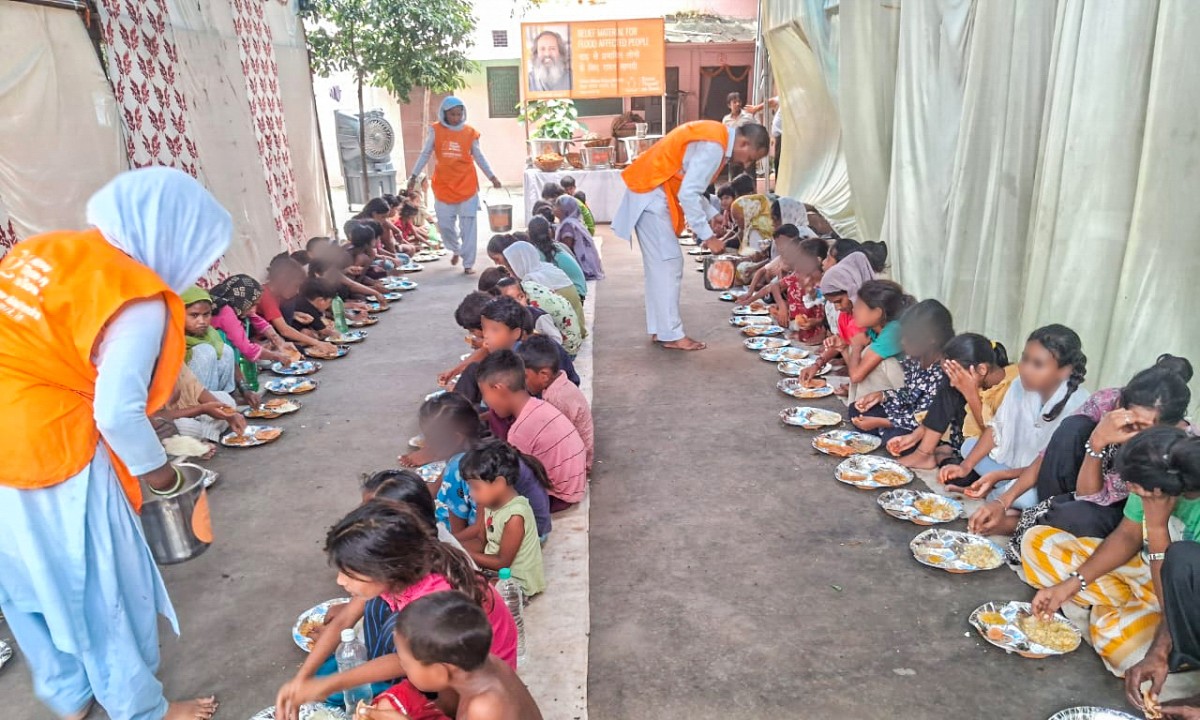
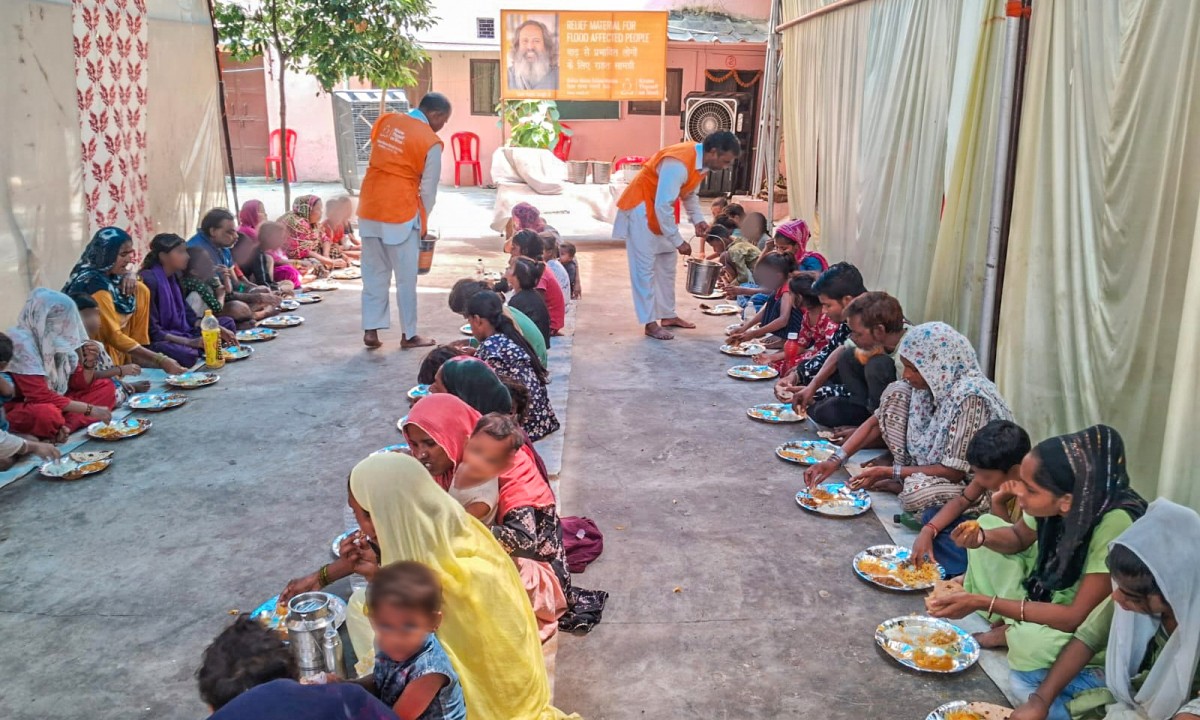
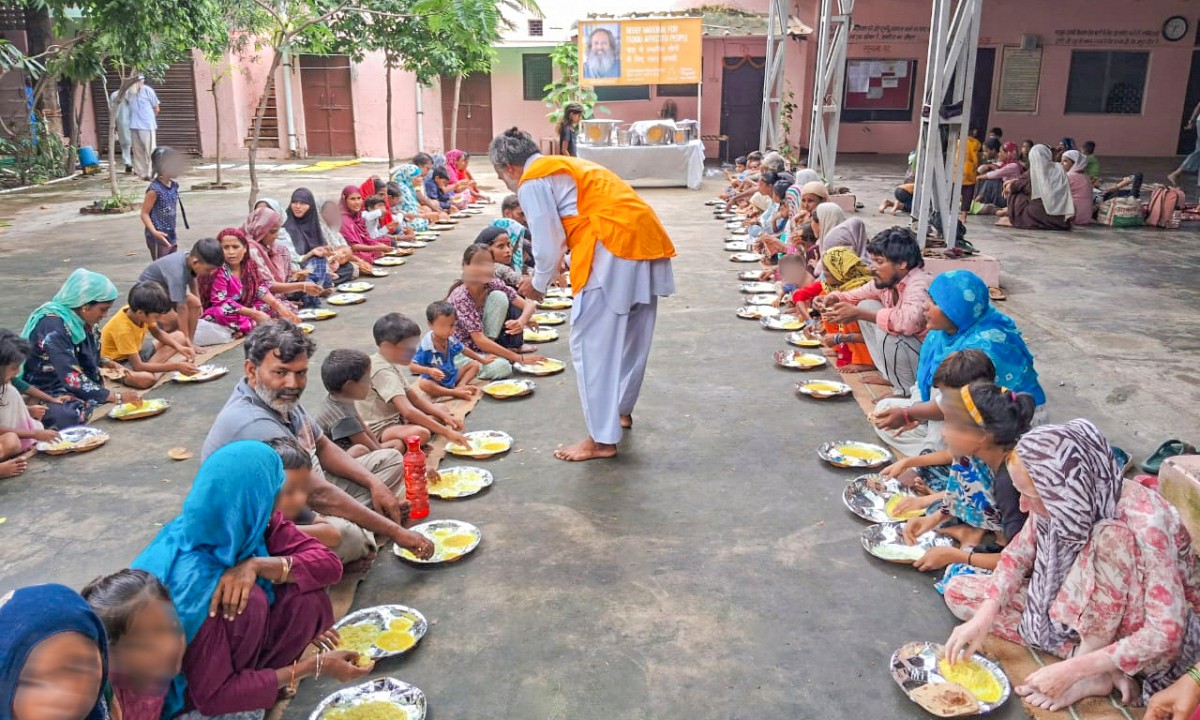
During the 2023 floods in Mathura, the local administration designated the VMRK center at Jai Singh Pura as a relief camp. This year, the administration once again reached out to VMRK for assistance. VMRK responded without hesitation and began operating the center as a relief camp from August 17. The number of flood-affected residents at the camp grew quickly, peaking at around 2,200 individuals. Every day, a team of 50 VMRK volunteers cooked and served three wholesome vegetarian meals, while also offering milk for children. The center also provided accommodation, clean foam mattresses, and hygienic washrooms.
Starting September 5, at the administration’s request, VMRK volunteers also prepared 1,000 breakfast packets and approximately 500 lunch packets daily. The administration used boats to distribute these packets to stranded residents in Mathura and nearby areas. On several occasions, our volunteers also assisted in the distribution process.
By September 12, the water levels had receded to normal. Even so, VMRK continued to shelter the flood survivors until September 17. This gave the administration time to thoroughly clean the neighborhoods before flood survivors returned home.
From August 17 – September 17, VMRK prepared and served more than 67,500 meals to the flood survivors.
Essential donations for Himachal Pradesh, Uttarakhand, Jammu and Kashmir
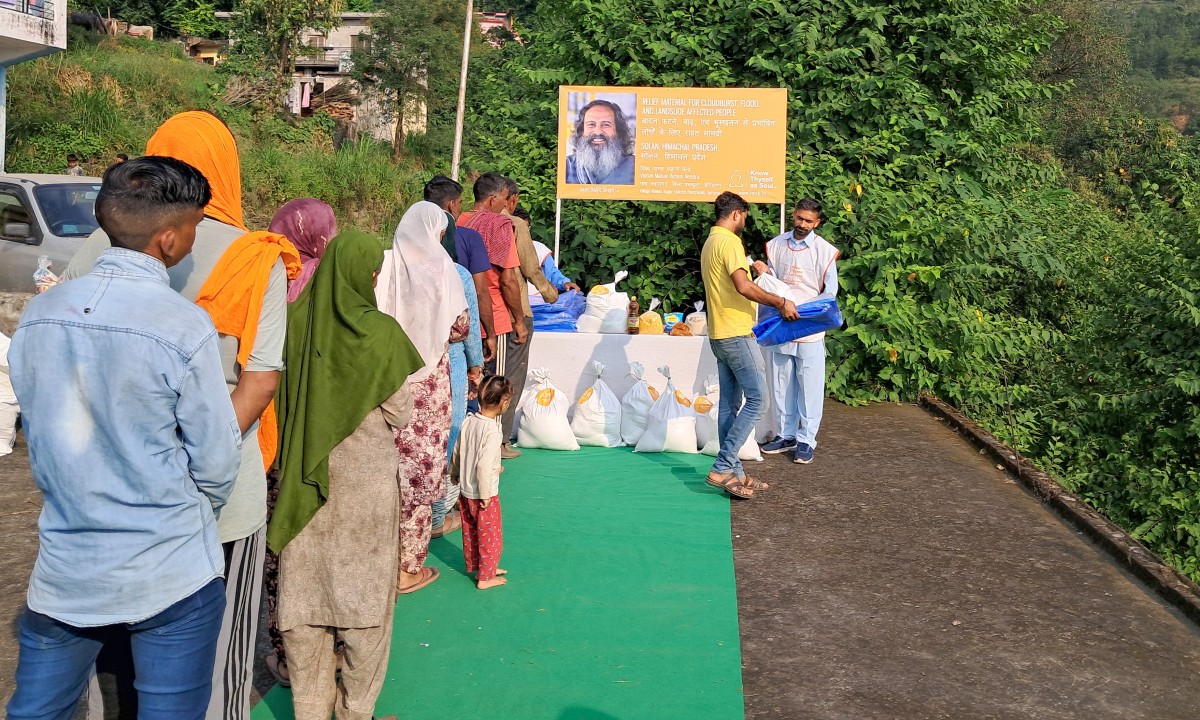
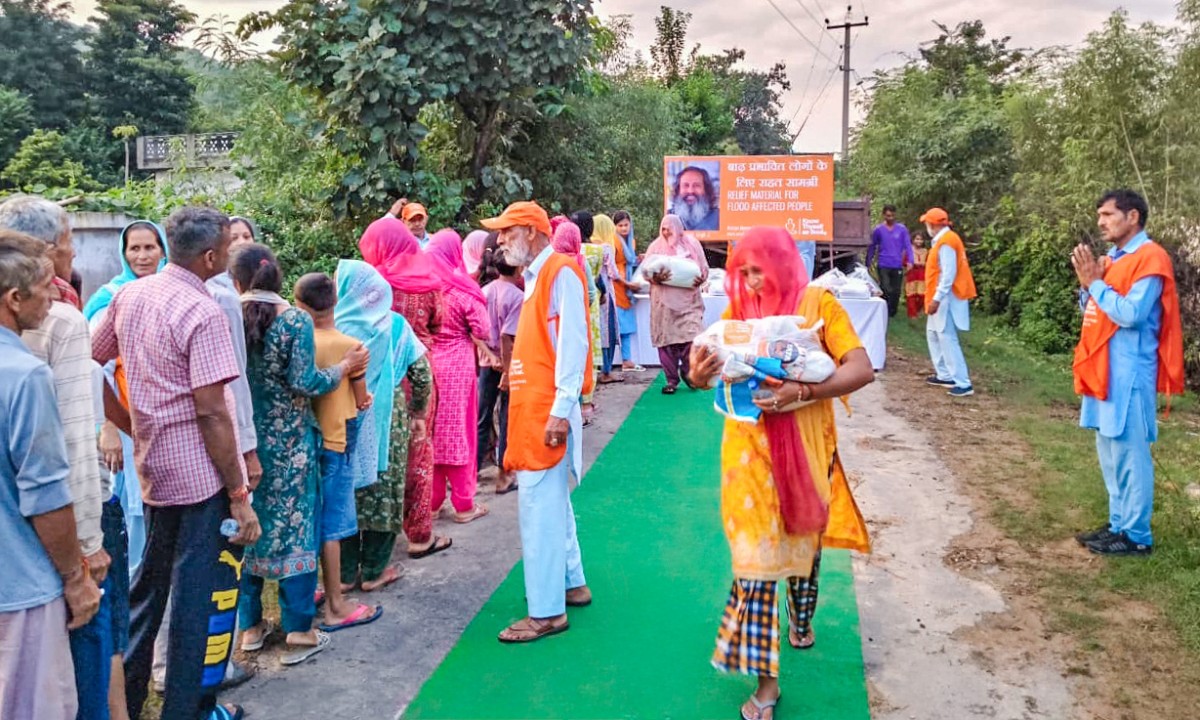
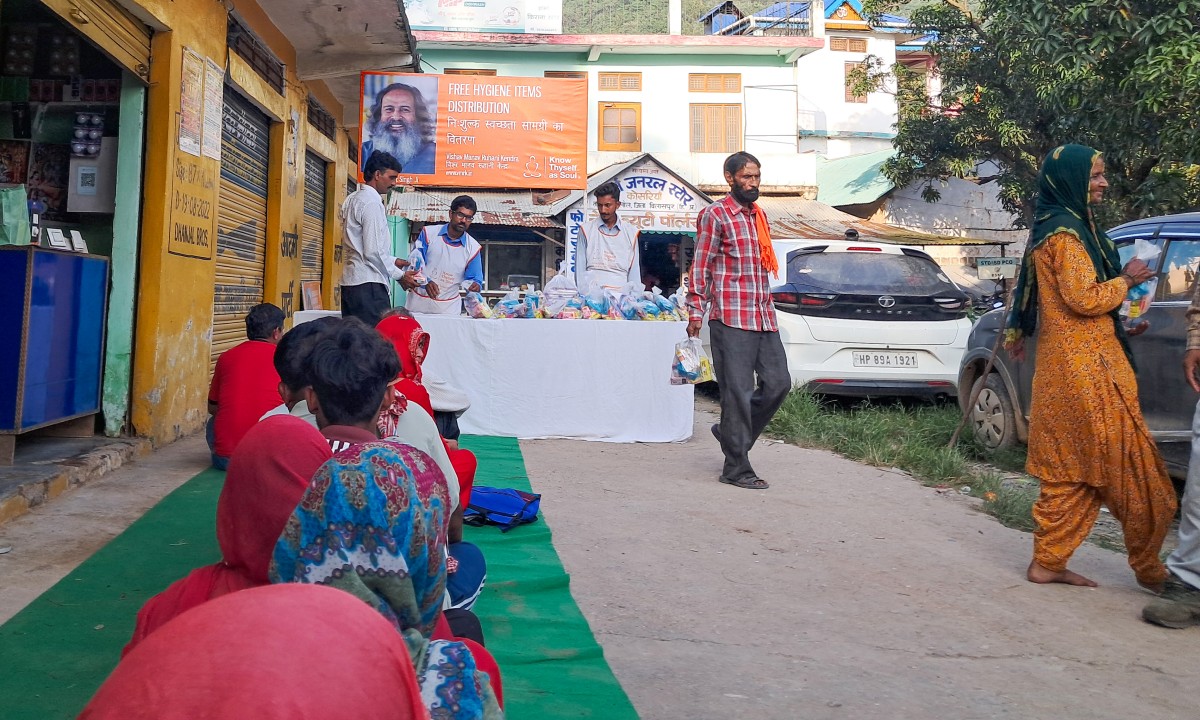
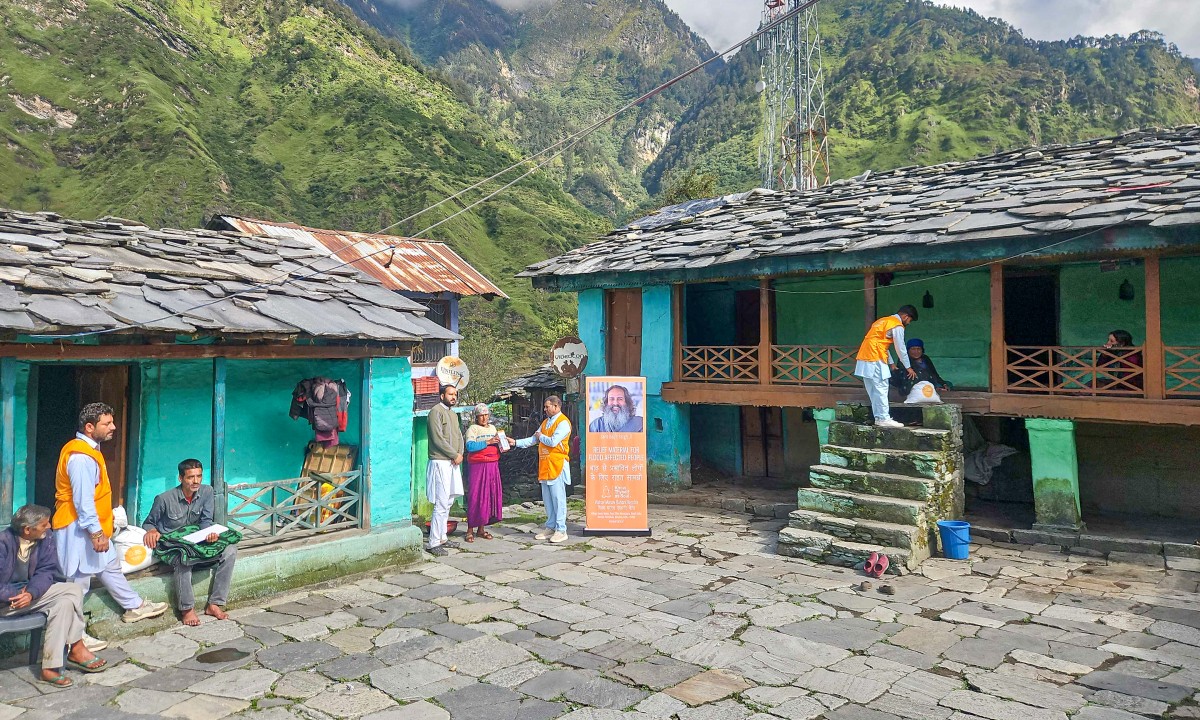
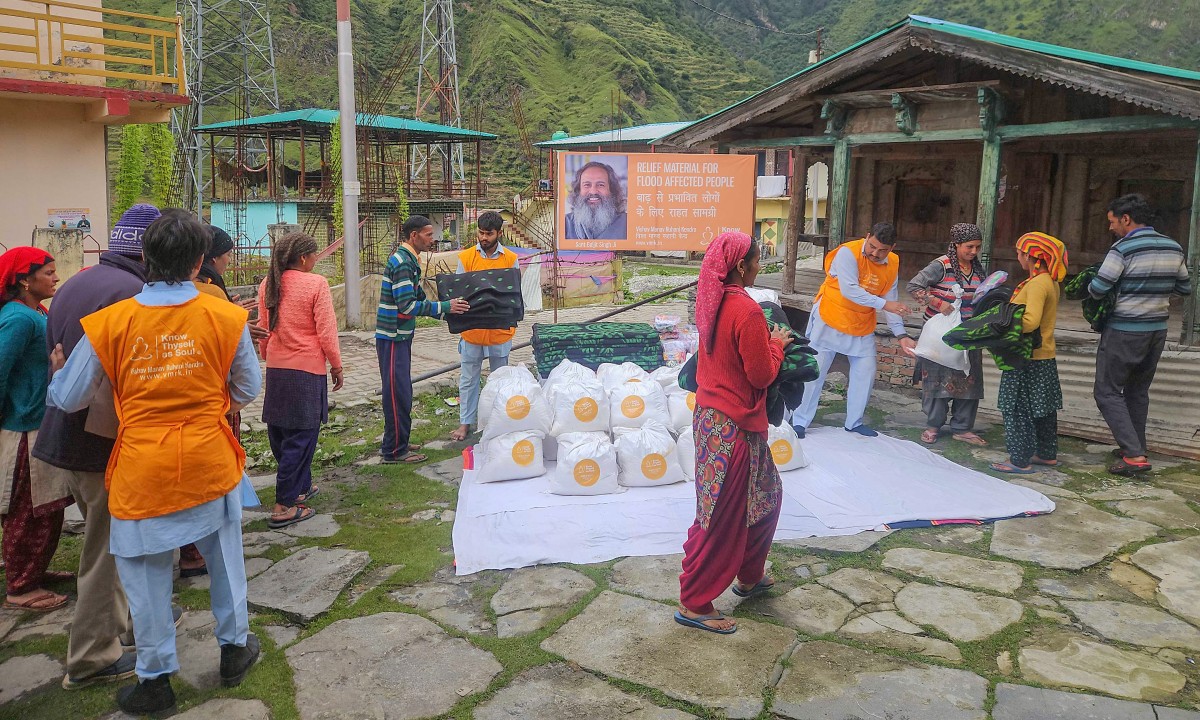
The hill districts of Jammu and Kashmir, as well as the hill states of Himachal Pradesh and Uttarakhand, were severely affected by landslides and flash floods. Roads became blocked and houses collapsed, sank, or suffered structural cracks. VMRK contacted the local administration to offer relief and responded quickly to their requests for aid. Starting September 2, VMRK prepared and distributed relief materials to meet the needs at each location, such as:
- ration kits consisting of 10 kg atta, 2 kg dal, 2 kg rice, 1 liter cooking oil, 1 kg salt, 100 gm turmeric powder, and 100 gm chili powder;
- hygiene kits with items such as bathing soaps, washing soaps, toothbrushes, toothpaste, a nail cutter, mosquito repellent cream, mosquito coils, and sanitary napkins;
- rechargeable LED solar lamps, blankets, and tarpaulins to provide shelter from the rain.
Reaching the affected communities was difficult. In Jammu and Kashmir, VMRK volunteers were on their way to Kathua district with relief materials in a pickup truck when they found the road completely blocked. They had to take an alternate route, which required crossing a shallow stream filled with many pebbles. The pickup truck could not cross this stretch. To move forward, VMRK volunteers arranged for a tractor and loaded it with the relief materials.
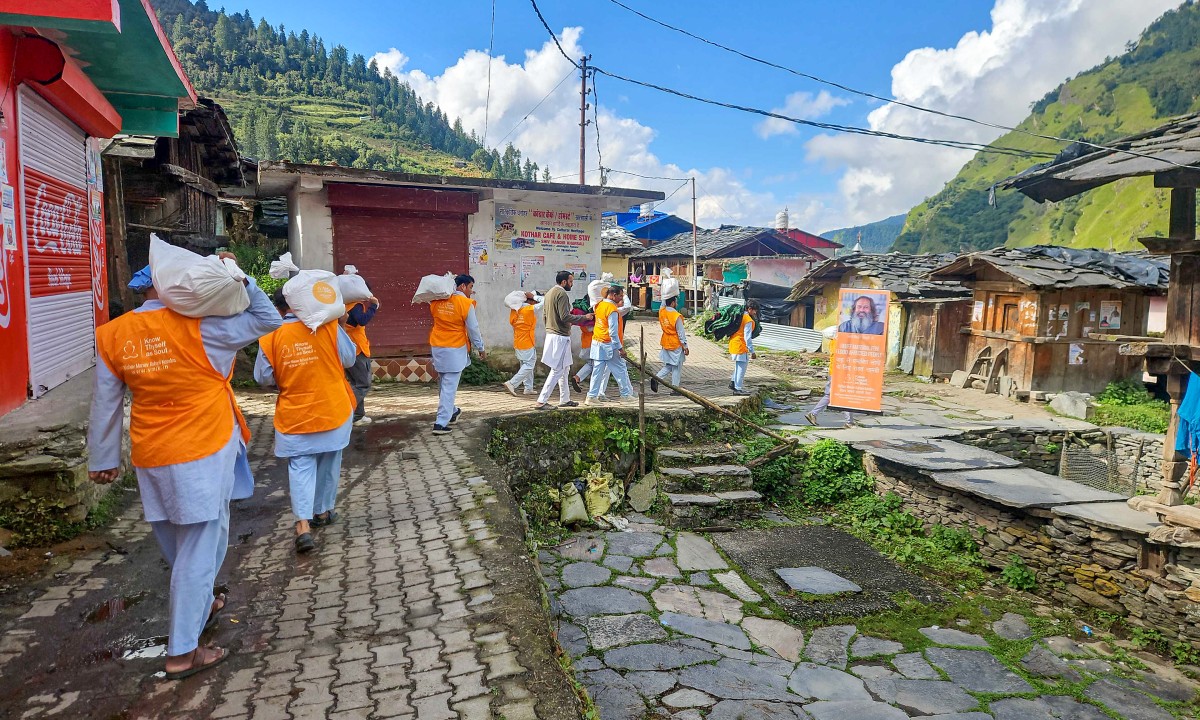
In Uttarakhand, the administration shared a list of affected villages in Barkot district. Some were nearly cut off after the monsoon. One of them was Kharsali village, near the Indian border at an elevation of over 2,600 meters. Most connecting roads had sunk. Our volunteers drove on muddy and rocky tracks left by landslides. At several points, the vehicles struggled on steep inclines. Volunteers got down, walked the stretch, or pushed the lightly loaded vehicle forward. The villagers were touched by these efforts. Some elderly hugged the volunteers, while others broke down in tears. As word spread, headmen from nearby villages also asked for help, which VMRK volunteers promptly provided.
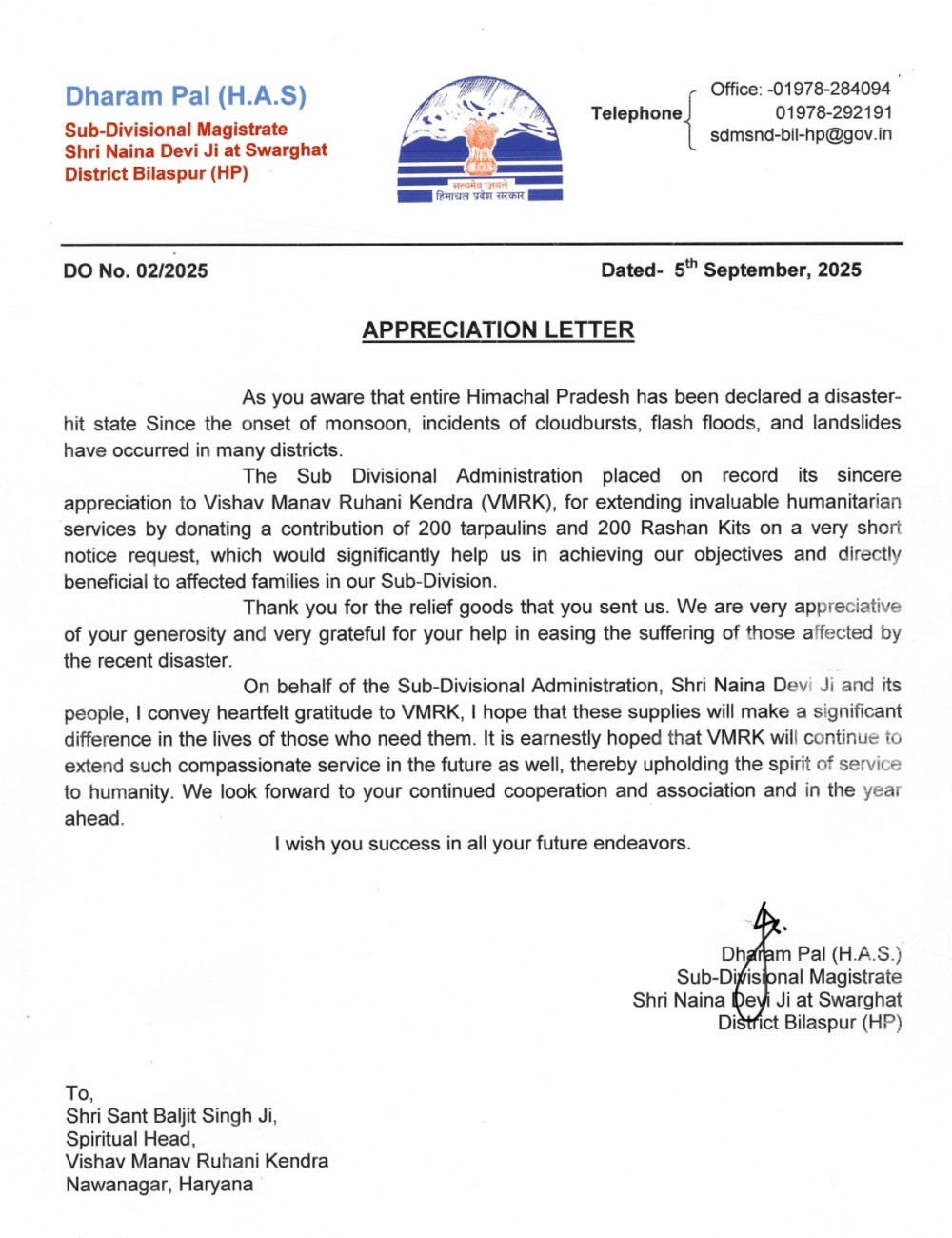
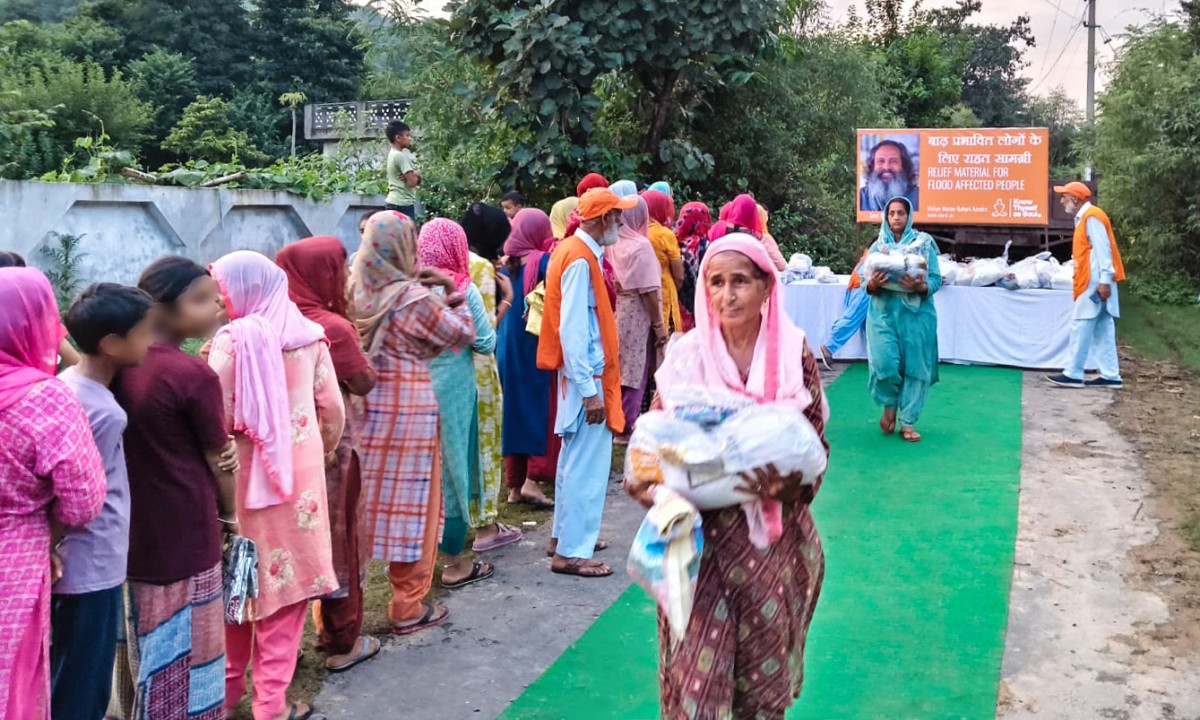
In Himachal Pradesh, VMRK provided relief in Bilaspur and Solan districts. The team faced muddy tracks with streams of water flowing across the routes. At times, fallen trees or large rocks blocked the roads, which volunteers cleared by hand. Wherever possible, the team reached individual villages, even those with only eight families. When direct access was not possible, relief materials were distributed at common points connecting multiple villages.
VMRK concluded its services across the three states on October 11. In total, VMRK reached more than 1,310 families and helped them meet their needs during this difficult time.

AUG 17 – SEP 17
VMRK CENTER AT JAI SINGH PURA OPERATED AS A RELIEF CAMP
FLOOD SURVIVORS TOOK SHELTER AT THE CENTER
MEALS PREPARED AND SERVED TO FLOOD SURVIVORS IN MATHURA
FAMILIES HELPED IN HIMACHAL PRADESH, UTTARAKHAND, JAMMU AND KASHMIR