Punjab Monsoon 2025: from crisis to care
SEP 2 – NOV 19
VMRK RAN FREE MEDICAL CAMPS IN MANY VILLAGES AFFECTED BY THE FLOODS
FLOOD SURVIVORS RECEIVED MEDICAL CARE FOR VARIOUS AILMENTS
HYGIENE KITS WERE DISTRIBUTED TO FLOOD SURVIVORS
HYDROCHLORIDE TABLETS DONATED TO PREVENT WATERBORNE DISEASES
Punjab, September–November 2025
During the summer monsoon, relentless rainfall far above normal levels devastated Punjab, a northern Indian state. The swelling of the Sutlej, Beas, and Ravi rivers, as well as seasonal streams, unleashed a severe deluge. Known as the “Granary of India,” Punjab saw more than 1,900 villages and over 148,000 acres of farmland submerged, disrupting the lives of more than 350,000 people.
Vishav Manav Ruhani Kendra (VMRK) responded with compassion and determination during this challenging crisis, delivering vital relief measures in some of the worst-affected districts of Punjab—Gurdaspur, Amritsar, Firozpur, Pathankot, Hoshiarpur, Ludhiana, and Kapurthala. Large numbers of VMRK volunteers from nearby regions rallied to help, with many traveling up to 50 kilometers daily to our charity sites. Volunteers from distant Indian states, including Maharashtra, also journeyed long distances to help provide aid during this time of need.
Alongside the relief efforts in Punjab, VMRK also provided relief in other northern Indian states. See North India Monsoon 2025: hope amid floods.
Medical camps
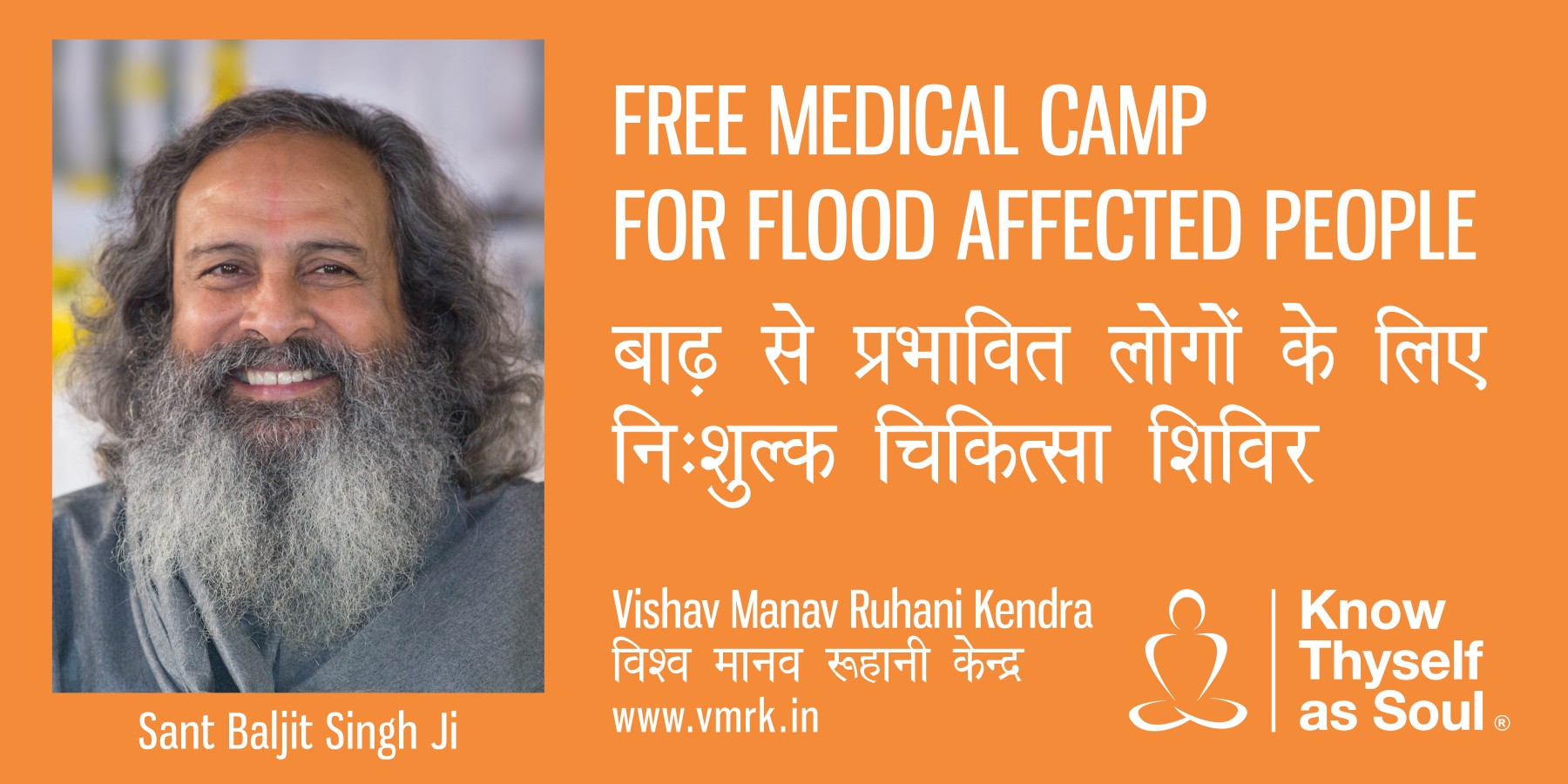
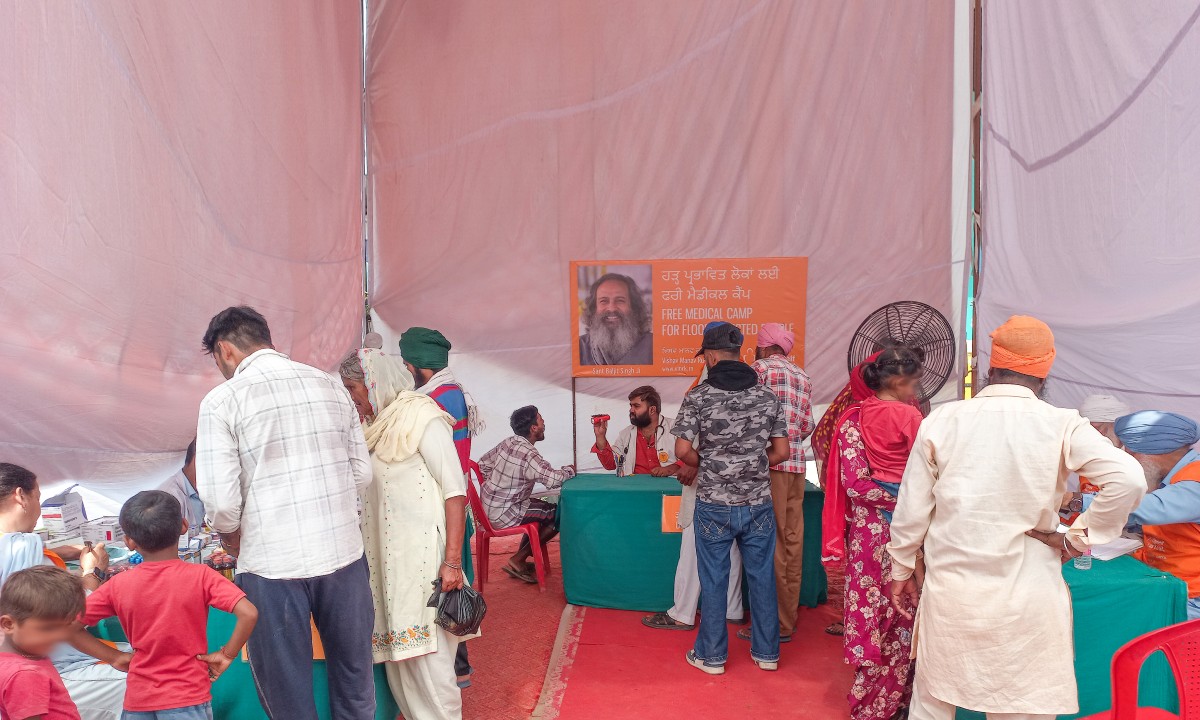
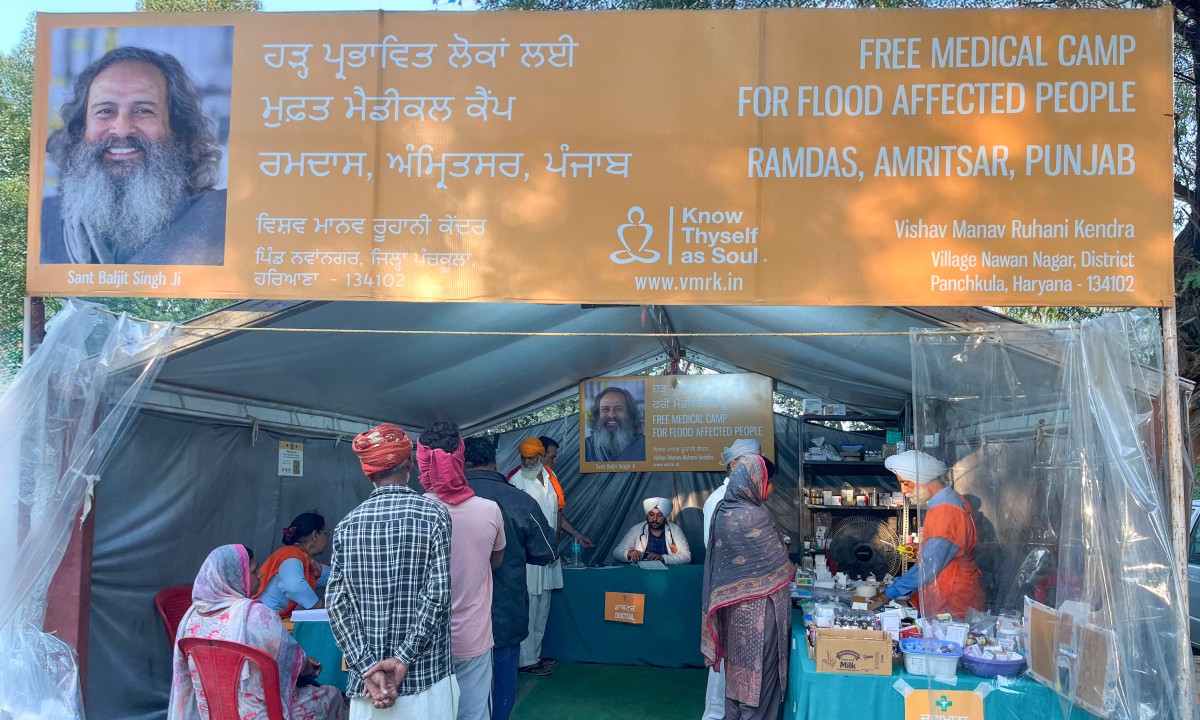
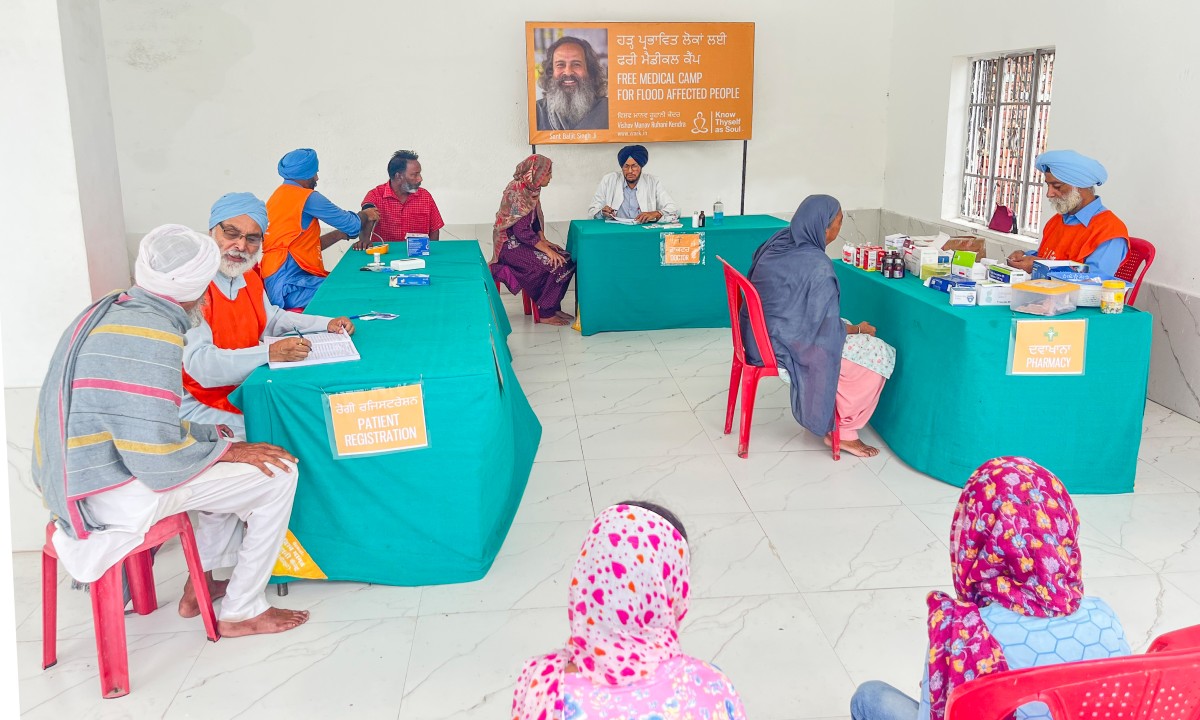
Knowing that health care is a critical response to flooding, VMRK conducted free medical camps beginning September 2. Multi-day VMRK free medical camps were set up in six villages that either connected surrounding villages or were close to riverbanks. The villages were Ramdas, Ajnala, Awan, Jalloke, Mukoda Pattan, and Kolian. VMRK also operated single-day camps in some of the most affected villages. Each day, the team set out in the ambulance to one or two villages and ran the medical camp as long as patients kept arriving. In villages without elevated dry ground, the team conducted the camp directly from the ambulance.
Patients came seeking treatment from colds, coughs, fevers, and stomach ailments like diarrhea. Since many had to wade through floodwaters, skin allergies were also common. Others came to refill their regular prescriptions that were disrupted by the flooding. In some villages, our volunteers delivered medicines straight to people’s homes when needed. To provide the flood survivors with essentials, the camp also stocked supplies like mosquito repellent cream, children’s diapers, sanitary napkins, and hydrochloride tablets for disinfecting drinking water.
After the floodwaters receded, new health problems emerged. Anticipating this, VMRK kept several medical camps open long past the initial crisis, with the last camp operating until November 19. Through this effort, more than 34,570 individuals received free medical care.
Essential donations
Because the floods disrupted sanitation systems, VMRK also distributed hygiene kits to protect against disease. Each kit included items such as bathing soaps, washing soaps, toothbrushes, toothpaste, a nail cutter, mosquito repellent cream, mosquito coils, and sanitary napkins.
In the early days, floodwaters rose several feet high, rendering roads impassable to cars and forcing us to transport materials by tractor. Water stretched endlessly across the landscape, blurring the boundaries between roads and farmland. To ensure safe passage and prevent vehicles from slipping into muddy fields, a volunteer walked ahead carefully to guide the way. Despite these challenges, VMRK managed to distribute 600 hygiene kits across the state.
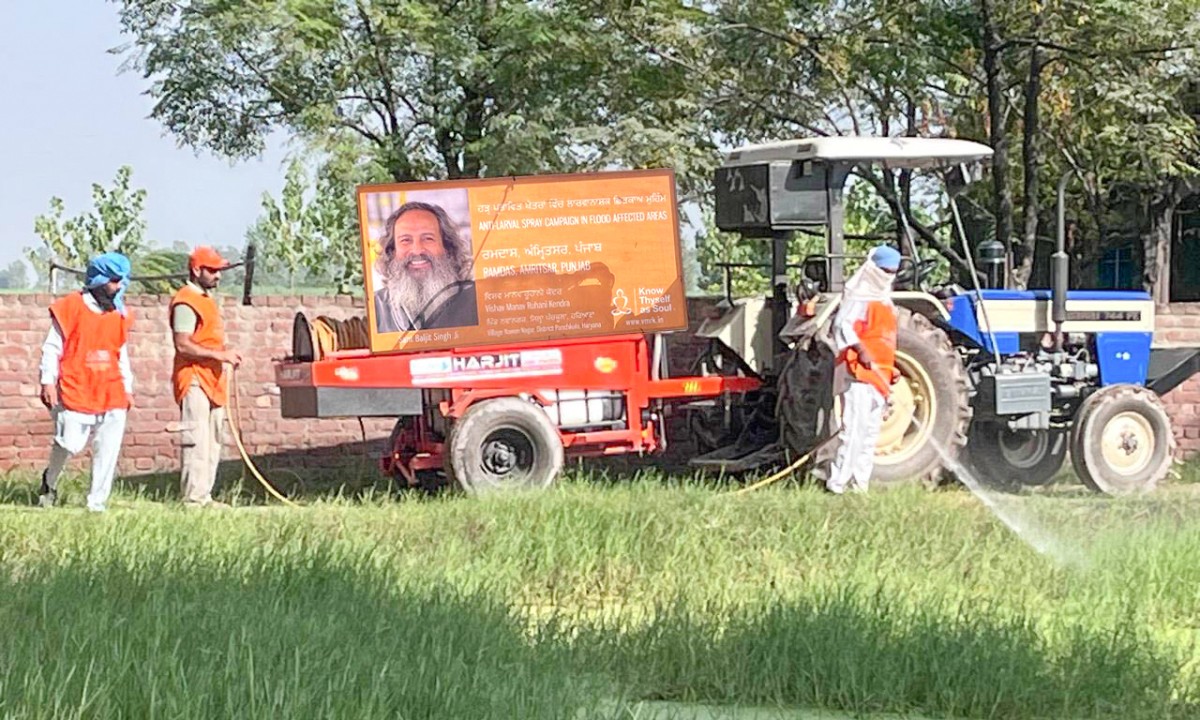
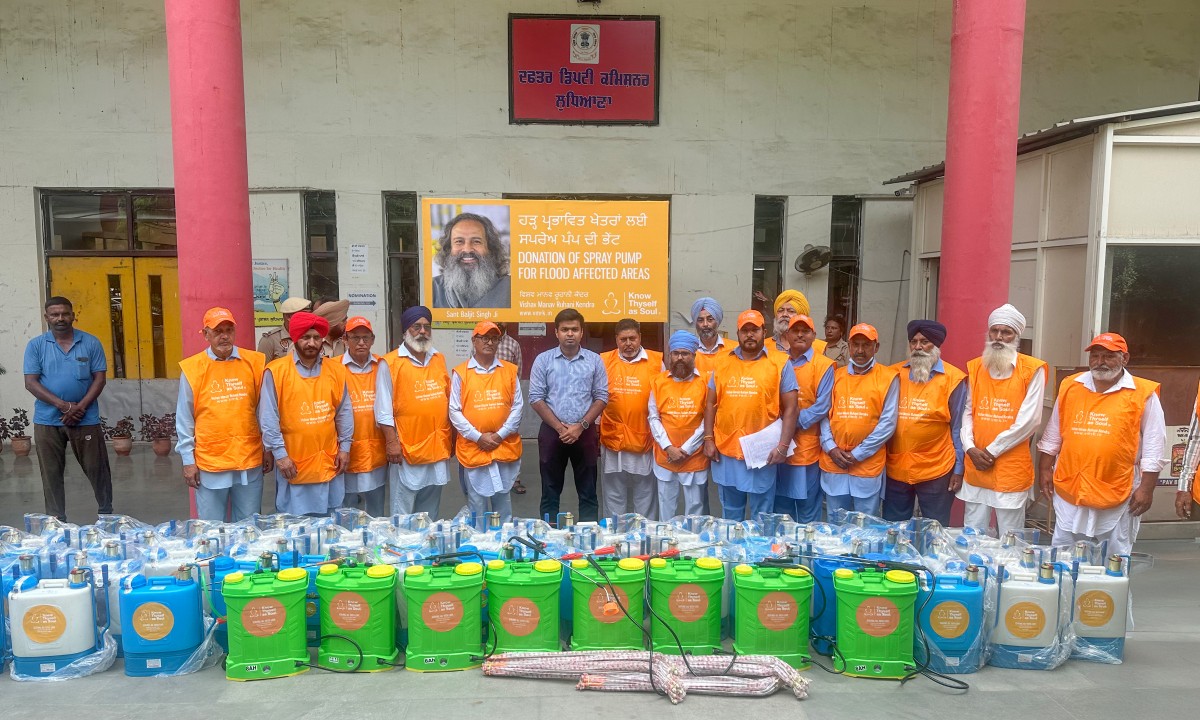
Recognizing that stagnant floodwaters create breeding grounds for mosquito-borne diseases, VMRK purchased and donated 50 anti-larvae spray machines to the local administration. Additionally, we donated 350,000 hydrochloride tablets to strengthen efforts against waterborne diseases.
Community cleanup
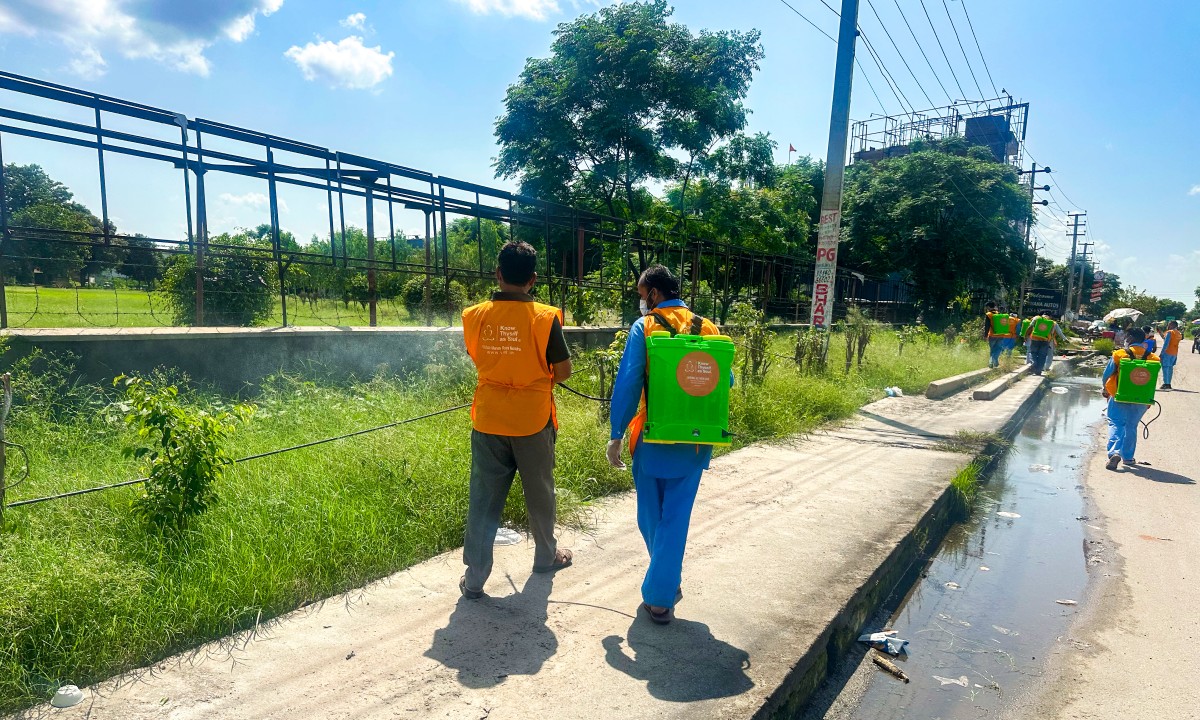
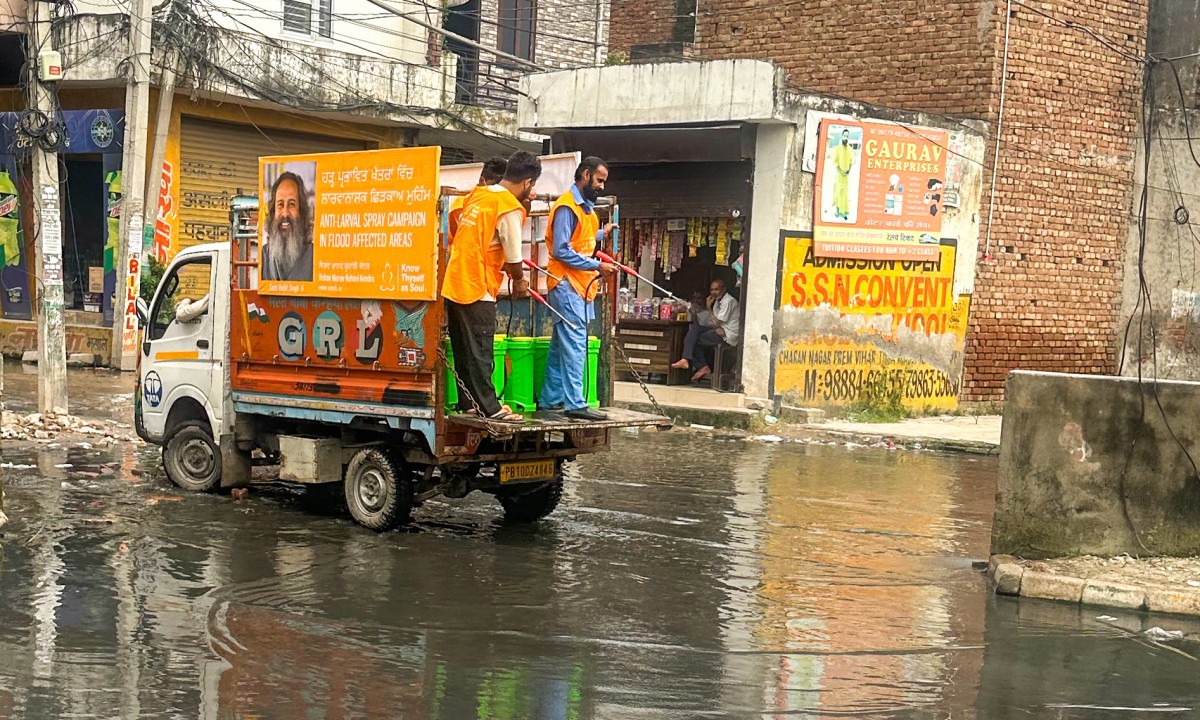
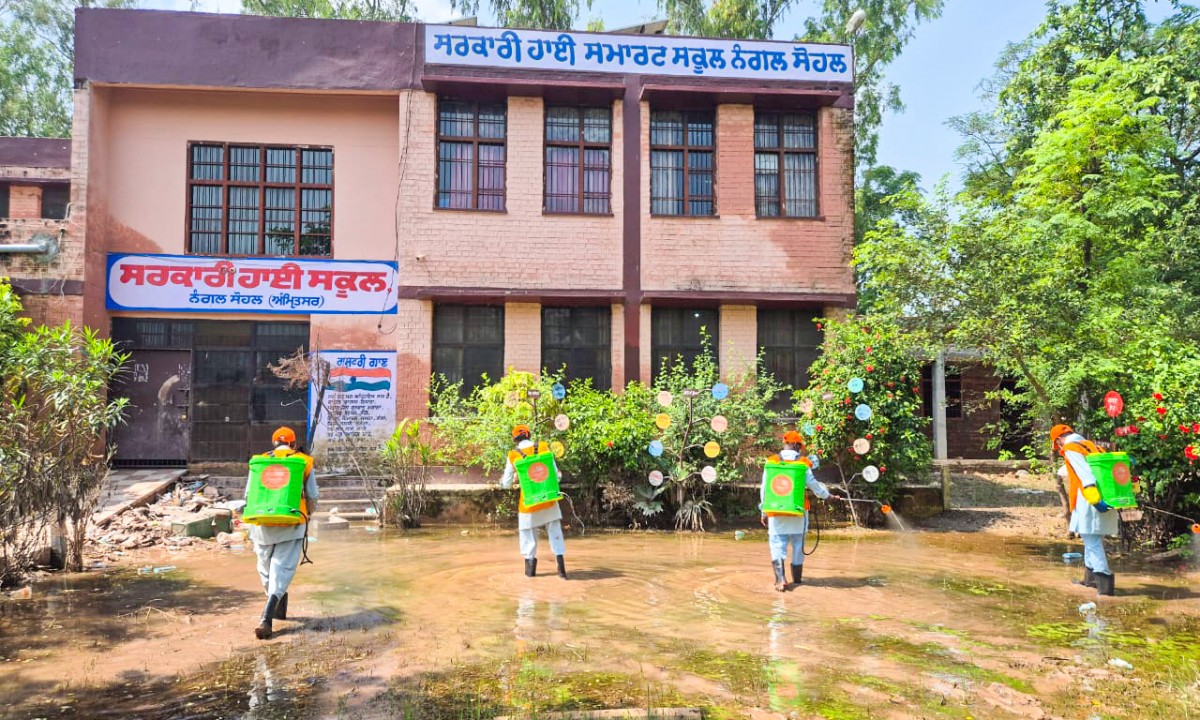
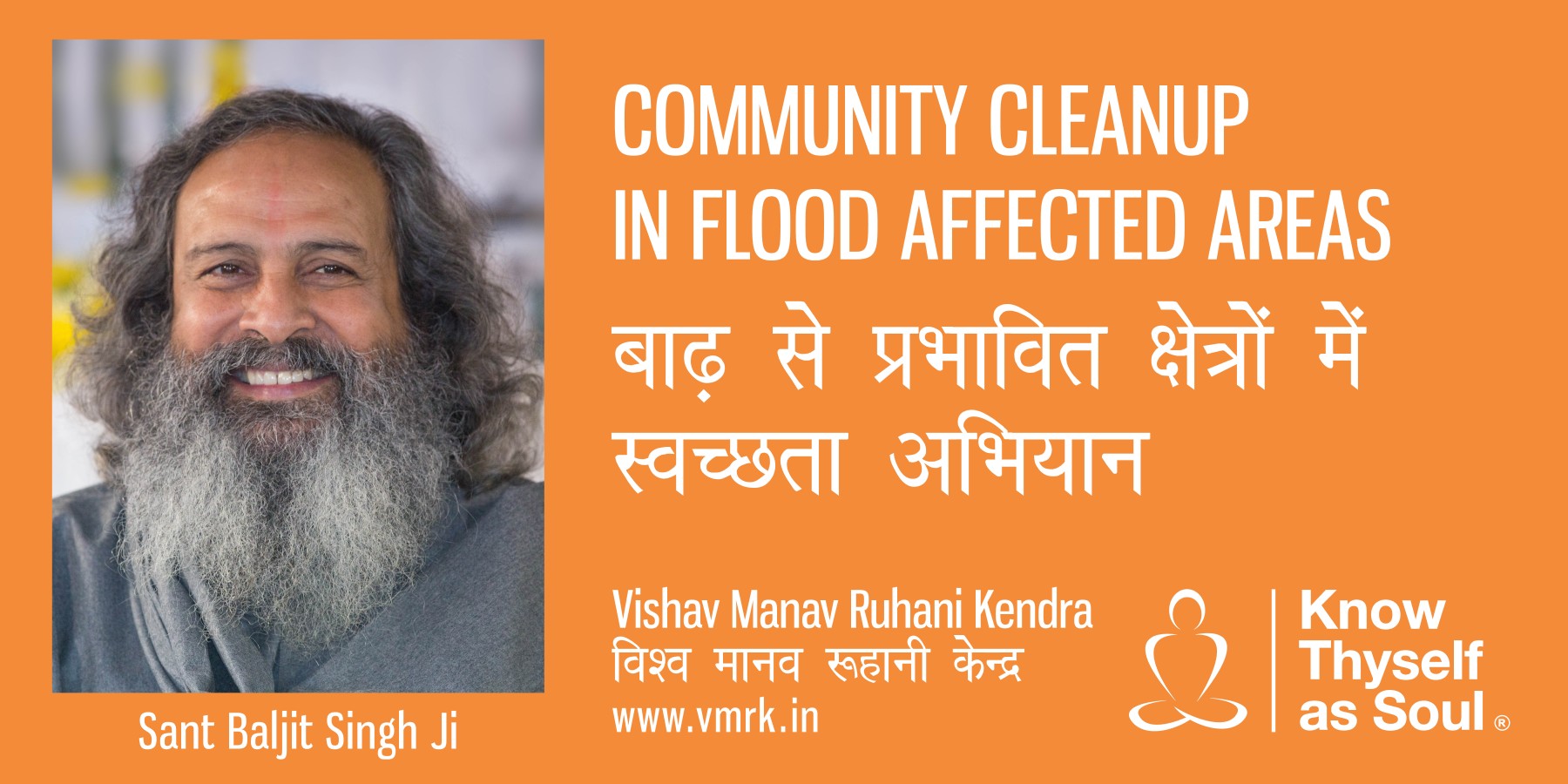
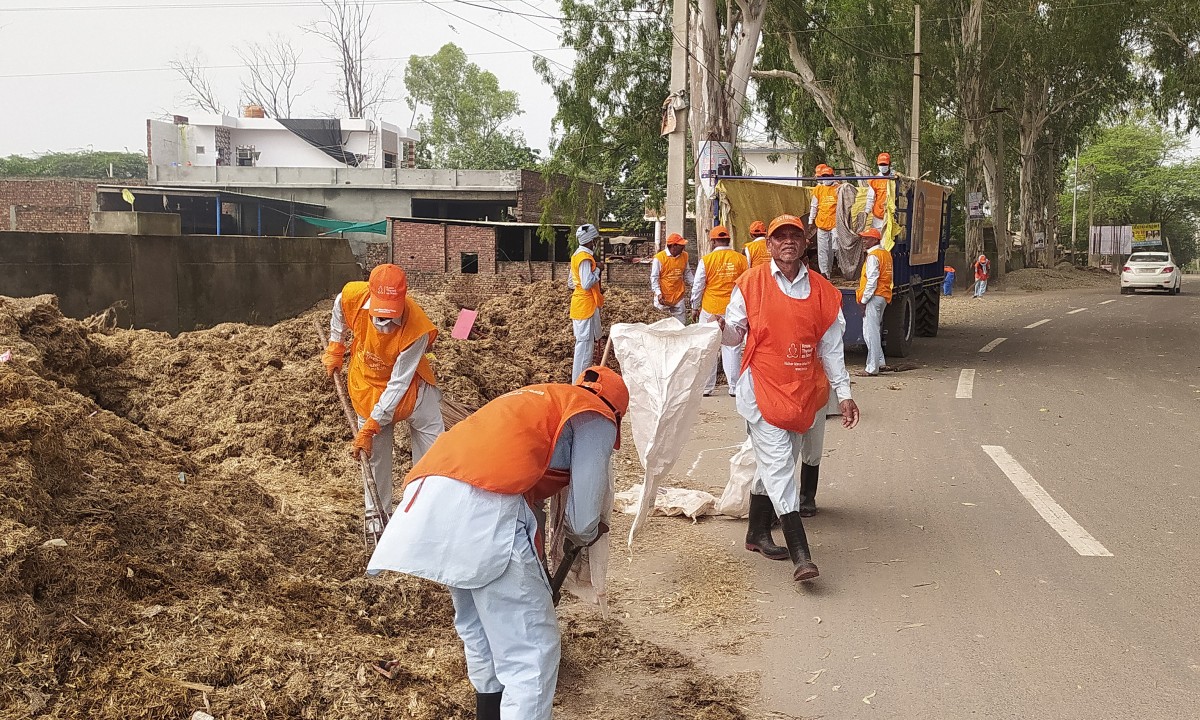
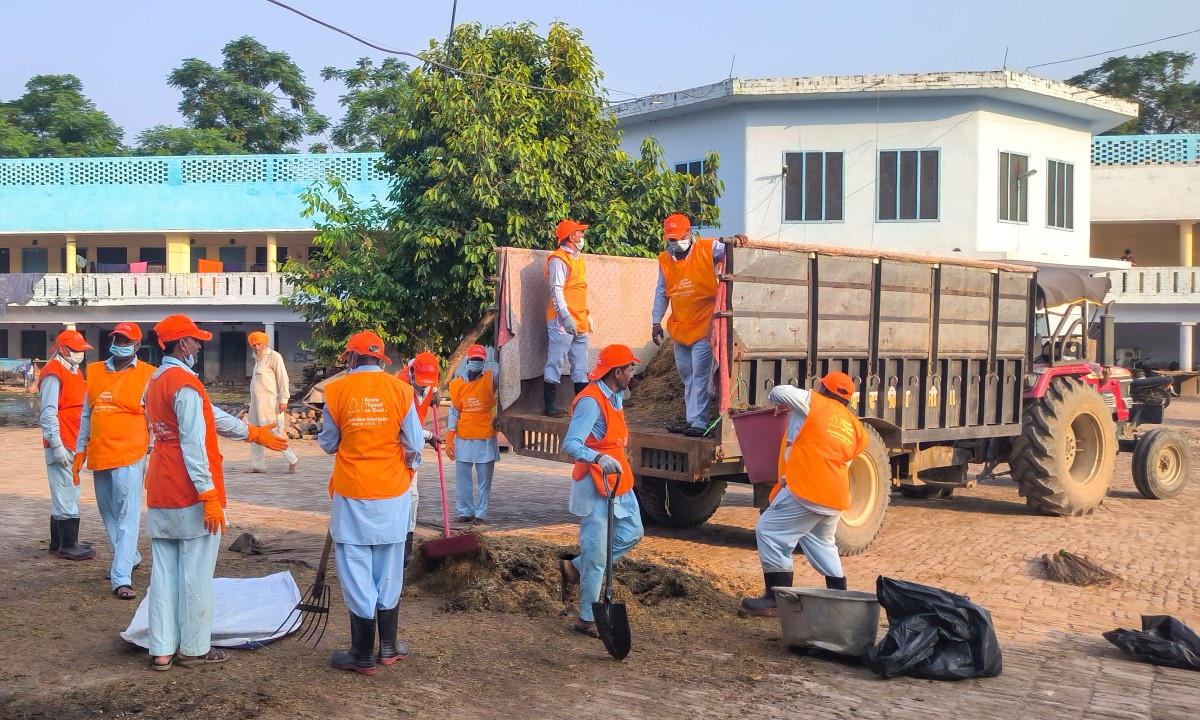
As the monsoon subsided, VMRK carried out cleaning operations across schools, public properties, and individual houses, following instructions from the local administration. Where the water had dried, our volunteers first cleared away the silt and debris left behind, then mopped and sanitized the floors before spraying insecticides using fogging machines. Where water remained stagnant, our volunteers wore knee-high boots and sprayed liquid anti-larval solutions. In some locations, a tempo truck was deployed, with volunteers spraying in all directions as the vehicle moved through the area.