
Bhadrapad Mela 2025 at Shri Goga Ji Temple
Every year, the Bhadrapad Mela is celebrated with great devotion and festivity at the Shri Goga Ji Temple. Many devotees use various means of transportation, yet it is common for large groups to perform the pilgrimage on foot. Many walk hundreds of kilometers as they chant devotional songs, while some play the deru (a small traditional drum) and others carry multicolored flags.
Although the entire mela attracts huge crowds, the highest surge in pilgrims arrive on the days leading up to and including Goga Navami, an auspicious occasion. Different beliefs celebrate Goga Navami on two separate dates. In 2025, the mela was held from August 9 to September 7, with Goga Navami observed on August 17 and again on September 1.
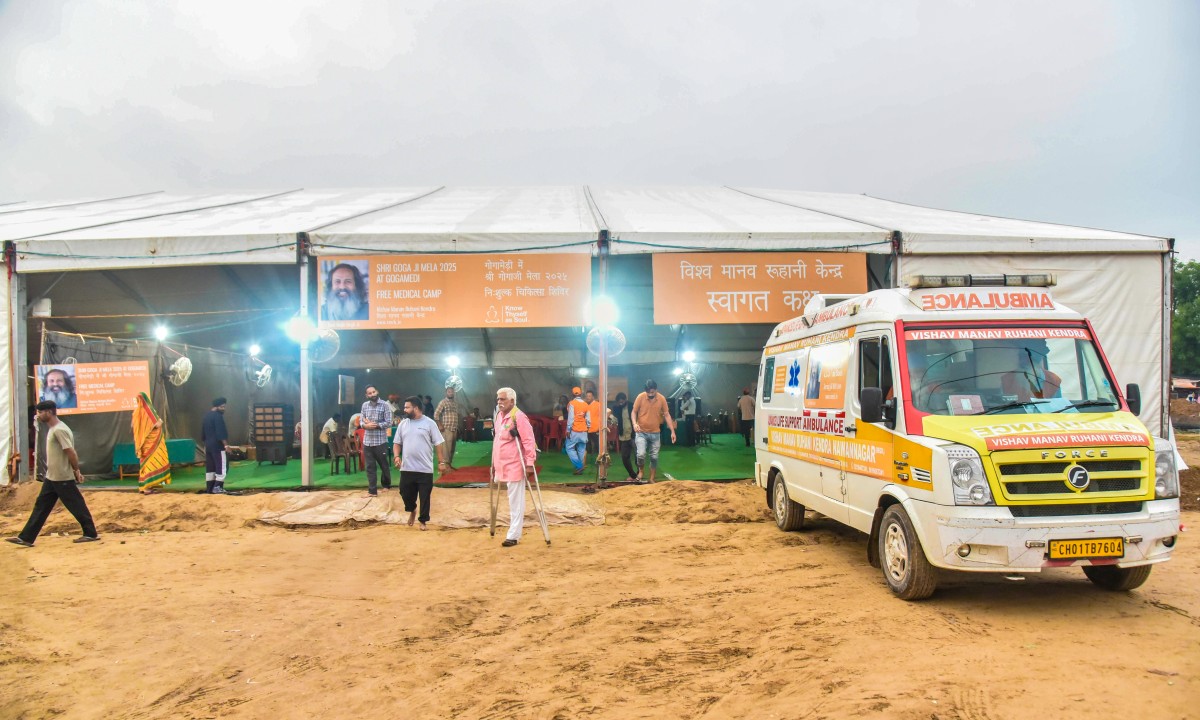
The local administration requested Vishav Manav Ruhani Kendra (VMRK) to organize a medical camp and provide ambulance services during the Bhadrapada Mela. They explained that there is no medical facility within 17 kilometers of the temple. With gratitude, VMRK readily accepted this opportunity to serve the devotees.
Preparation
A team of volunteers from nearby areas came to the VMRK center in Nawan Nagar to help with the preparations. They packed the medical supplies and equipment into 58 boxes and the rations for volunteers into bags. Each box and bag was methodically and clearly labeled to list the contents. On August 9, all packed items were loaded onto a truck. The following morning, the truck departed the center with a team of medical staff and volunteers, and arrived near the temple later that evening.
A few days later, the ambulance, after serving pilgrims during the Shri Amarnath Ji Yatra 2025, returned to the Nawan Nagar center. The volunteers immediately deep-cleaned the ambulance and dispatched it shortly thereafter for service during the Bhadrapad Mela.
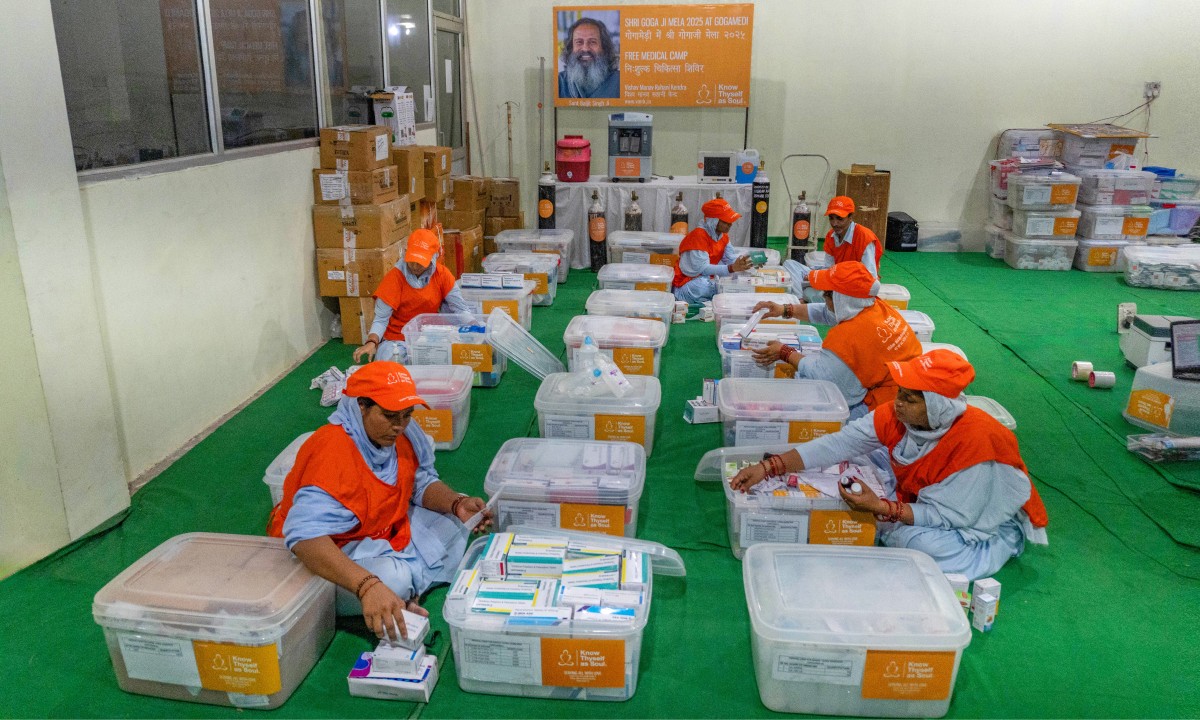
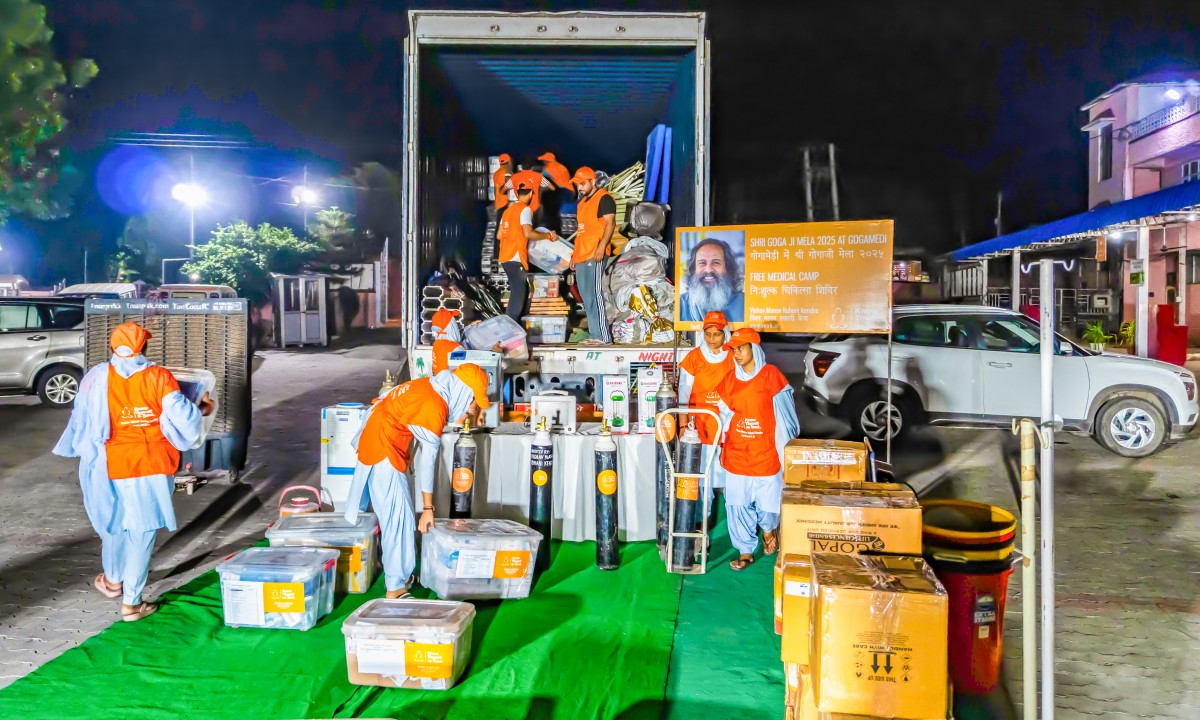
Getting ready to serve
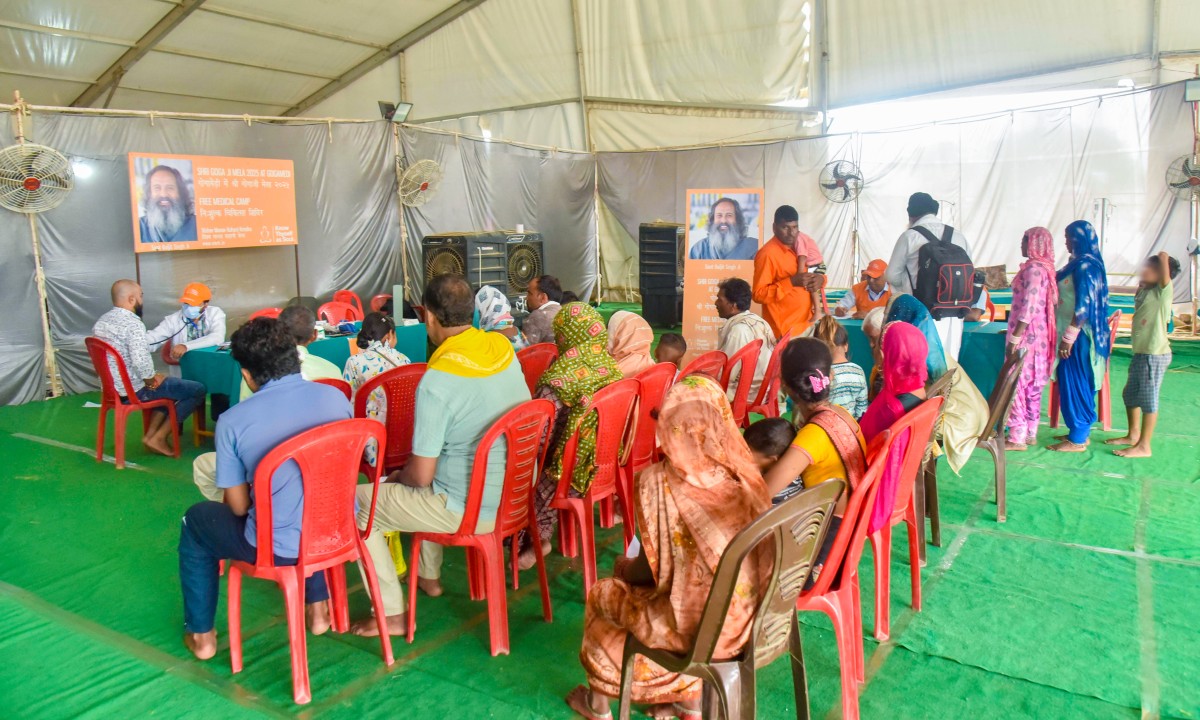
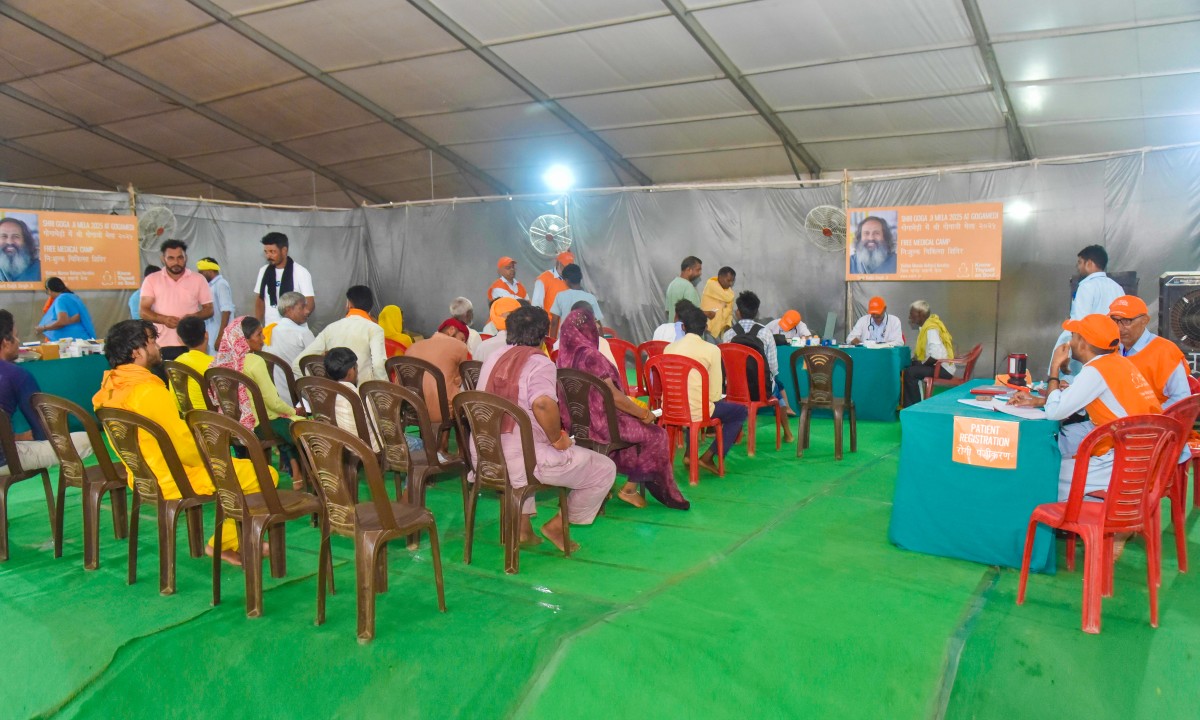
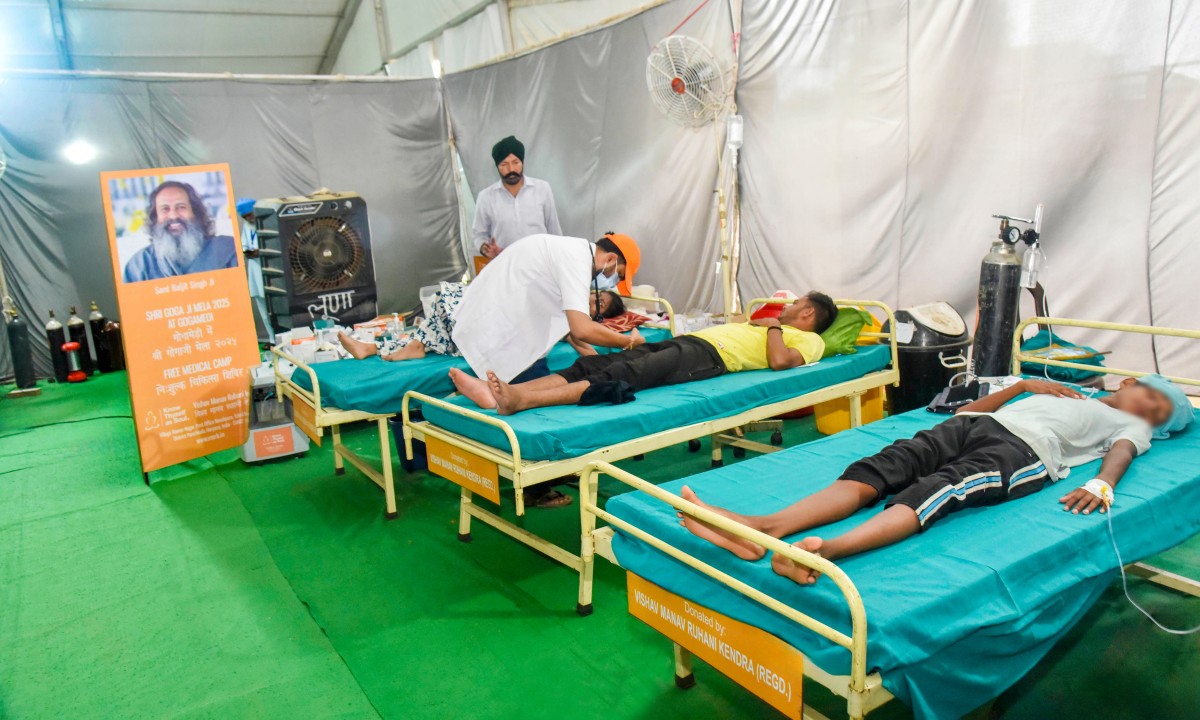
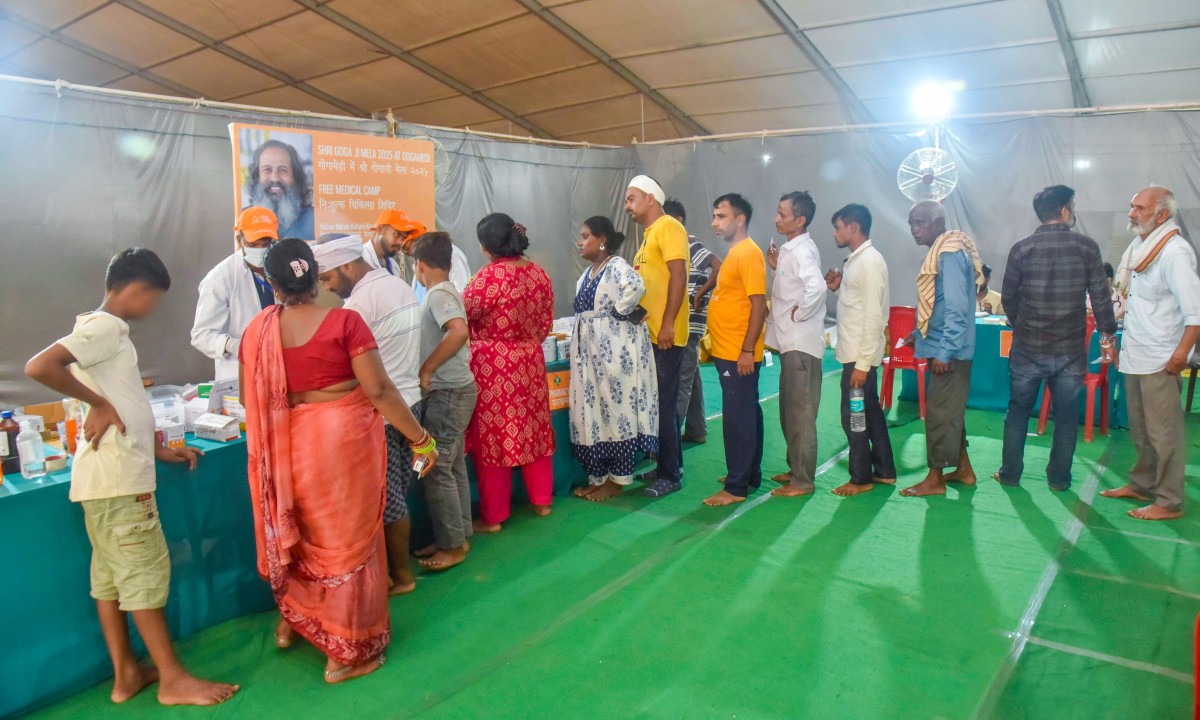
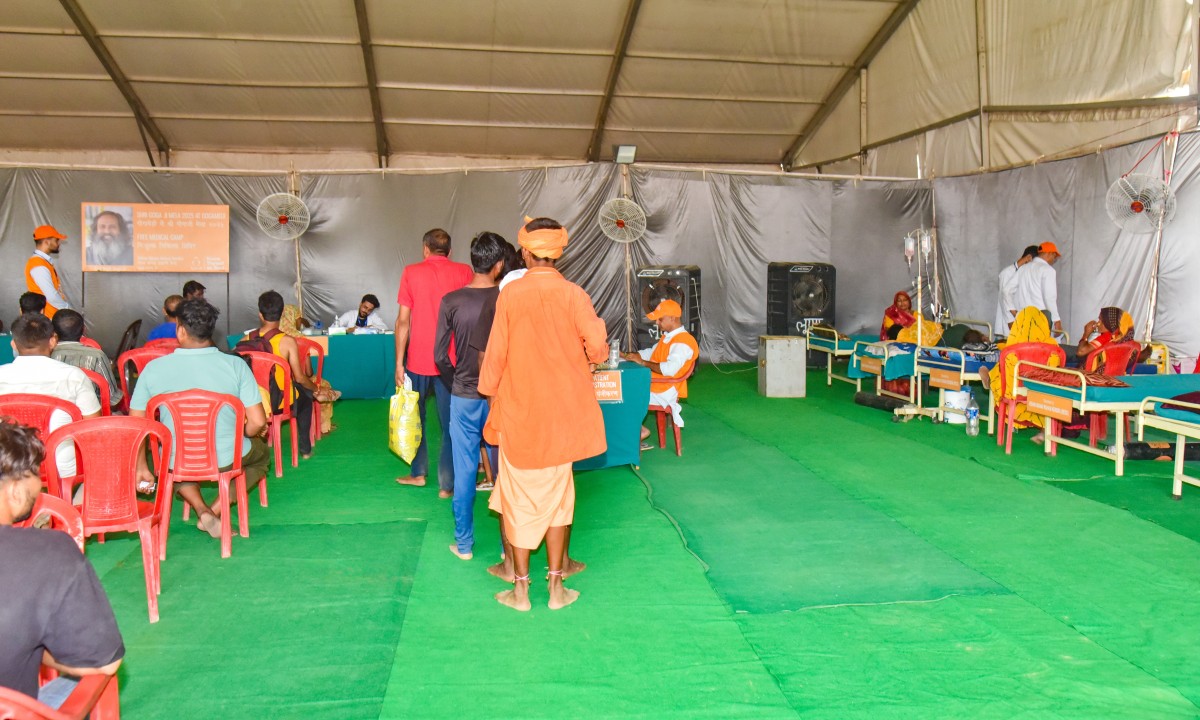
The administration assigned VMRK a tent measuring 50 feet by 80 feet, located about half a kilometer from the temple. Inside the tent, one section had multiple tables for patient registration, consultation, dispensing medicines, first aid, and vital checks. Rows of chairs were arranged for pilgrims to await their turn for consultation. Another section contained a 10-bed clinical treatment center to provide in-house medical care.
24-hour medical services
The medical camp became operational on August 11, staffed by a team of 5 doctors, 2 pharmacists, one paramedical staff, a nurse and 24 volunteers. A speaker system installed within a few kilometers of the temple made regular announcements about the camp. Additionally, VMRK volunteers visited nearby pilgrim accommodations to inform them about the free medical service.
The temple is located in a desert region, where daytime temperatures during the mela soared to extreme levels, peaking at around 45°C this year. Pilgrims on foot had to endure the harsh weather and physical exertion of walking long distances. Many of them came to the camp with severe dehydration, weakness, and sunstroke symptoms. They also suffered injuries from fainting spells.
Pilgrims arriving in vehicles experienced similar difficulties, waiting in long, zigzag queues extending up to one kilometer from the temple. The average waiting time was about 2.5 hours for darshan, increasing to 7–8 hours around Goga Navami. The medical staff provided rehydrating drinks and administered glucose or normal saline while fans and air coolers kept the camp cooler for patients.
PILGRIMS RECEIVED FREE MEDICAL CONSULTATIONS, MEDICINES, AND FIRST AID
PATIENTS RECEIVED TREATMENT AT THE CLINICAL CENTER
Given that devotees arrived from far-off places, traveler’s diarrhea was also common among devotees. For the first time in recent years, VMRK saw a large number of young children, many less than a year old, visiting the camp. They often suffered from fever and vomiting. VMRK specifically arranged for a pediatrician to treat the children.
Each day, a continuous flow of devotees arrived at the camp throughout the day and into the late-night hours. As awareness of the camp spread, a considerable number of local residents also availed themselves of its services. Daily attendance at the medical camp averaged 754 pilgrims, peaking at over 1,890 on the busiest days. The medical team and volunteers served in shifts to attend to everyone.
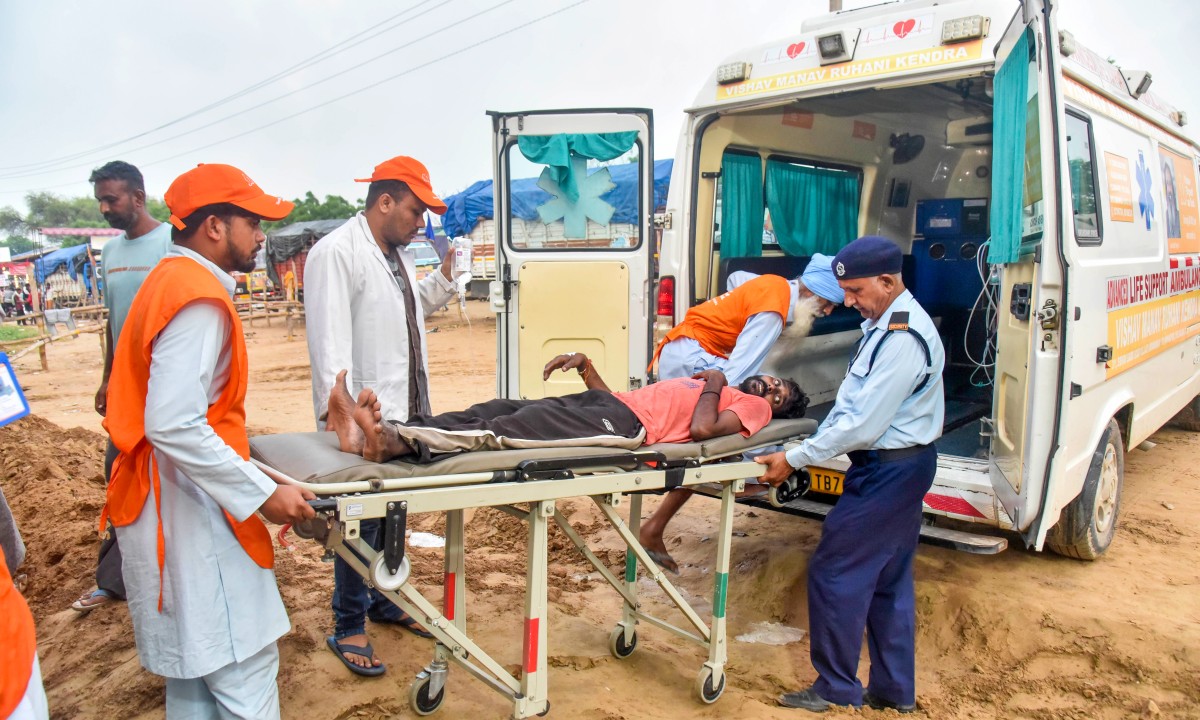
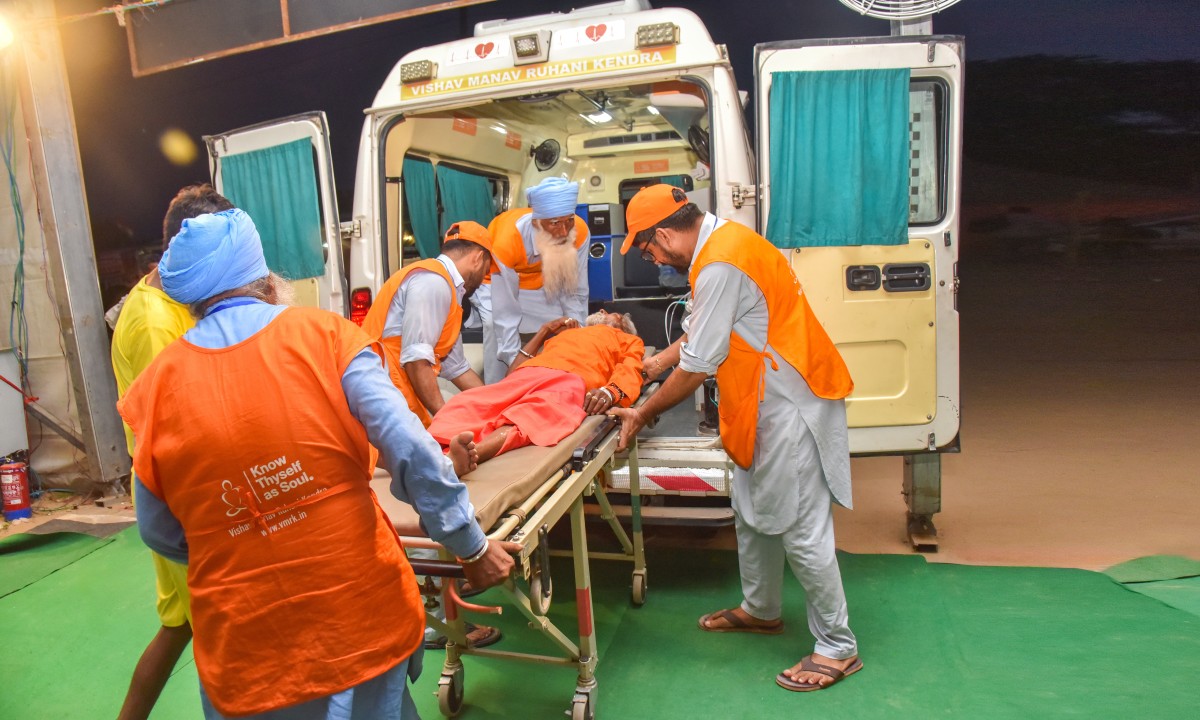
VMRK’s fully equipped ambulance provided around-the-clock services. Whenever an emergency case was reported, the ambulance brought the patient to the medical camp for treatment. The ambulance also drove patients who needed hospital care to the nearest hospital.
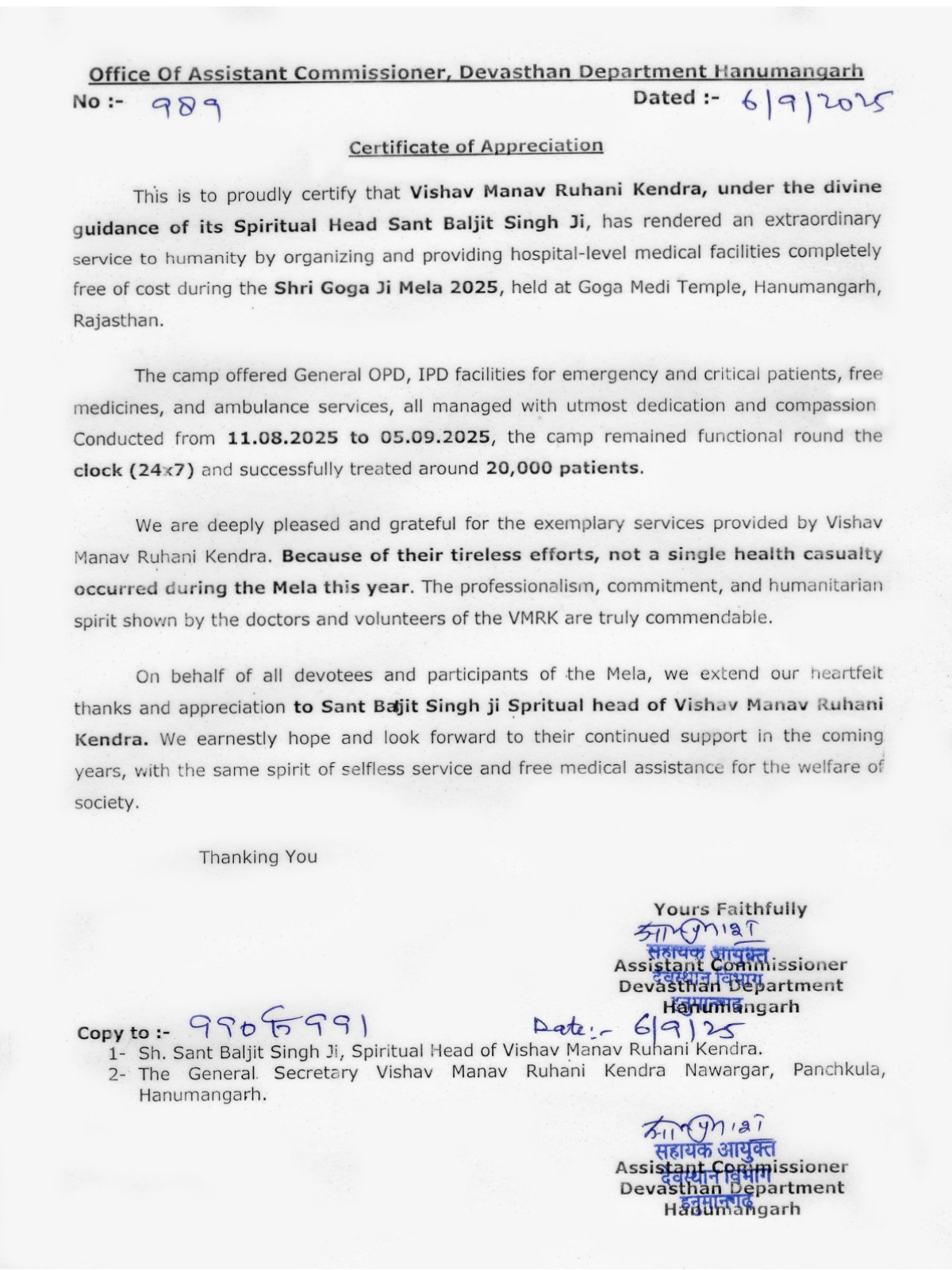
On September 5, the number of patients significantly dropped. VMRK, in coordination with the local administration, concluded its service the same day. Over 26 days, VMRK provided free medical services to more than 19,610 pilgrims. Among them, over 1,170 patients received treatment at the clinical center.
VMRK received the following certificate in appreciation for the medical services rendered at the mela.
Visitor feedback
Many people left comments in our visitor log, some are listed below:
I have never seen this type of medical service being offered before. My six-month-old son had a fever of 103° Farenheit and an infection. I had lost all hope, as there were no medical facilities near the temple. But then I found the VMRK medical camp, where doctors provided treatment. I am grateful for the way the VMRK doctors treated my six-month-old baby and saved his life. Thank you so much, Sant Baljit Singh Ji, for organizing this medical camp.